
Feeling exhausted no matter how well you eat or how much you exercise? If you're living with Hashimoto's thyroiditis and struggling with unexplained weight gain, low energy, or a metabolism that simply won't cooperate, you are not alone. Millions of Americans over 40 face this exact challenge every day. Learning how to boost metabolism with Hashimoto's can help you better understand the connection between thyroid health, energy production, and metabolic function. The good news? Science gives us a clear roadmap.
Hypothyroidism and Metabolism: What's the Connection?
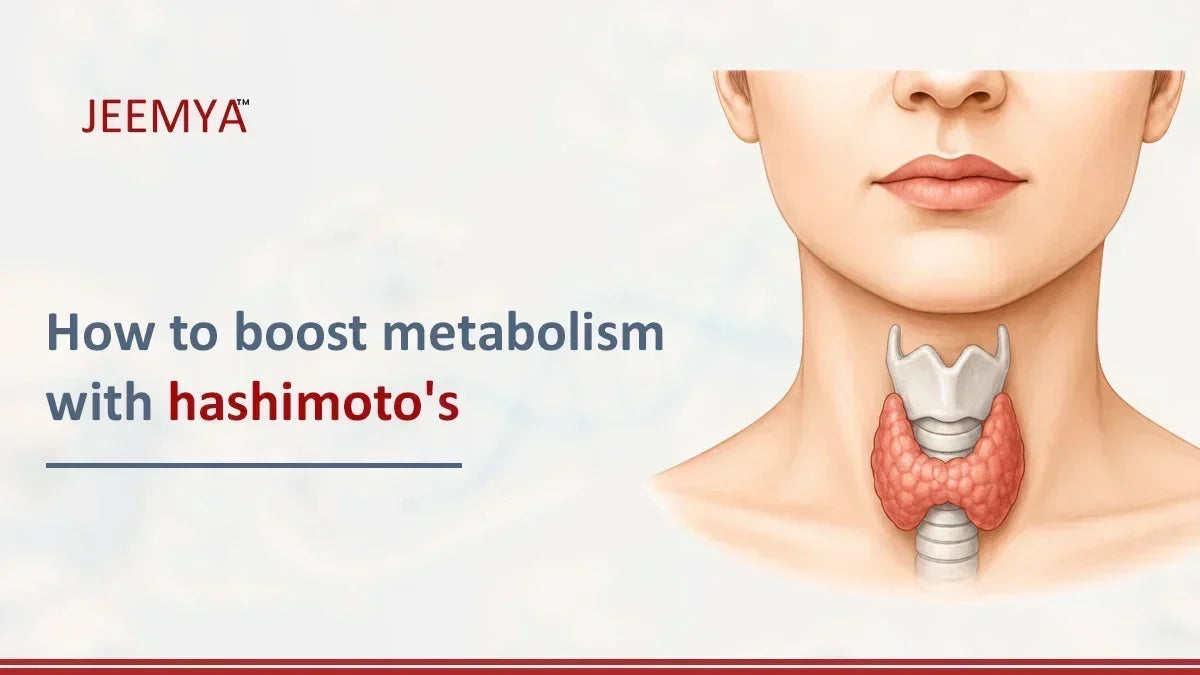
Your thyroid gland is a small, butterfly-shaped organ in your neck but its impact on your body is enormous. It produces thyroid hormones (T3 and T4) that regulate virtually every aspect of your metabolism, from how fast your cells burn calories to how efficiently your heart, muscles, and brain function.
In Hashimoto's thyroiditis, the immune system gradually attacks thyroid tissue. Over time, this leads to hypothyroidism, a state in which the thyroid produces insufficient amounts of T3 and T4. The downstream effect on metabolism is significant:
- Your Basal Metabolic Rate (BMR), the number of calories your body burns at rest, decreases
- Your Resting Metabolic Rate slows, meaning even everyday activities burn fewer calories
- Chronic inflammation, a defining feature of Hashimoto's, further disrupts fat metabolism and promotes fat storage
- Elevated cortisol from ongoing immune stress compounds metabolic slowdown
The result is a frustrating cycle: low energy makes movement harder, a slower metabolism makes weight management harder, and both feed back into fatigue and inflammation.
Understanding this connection is the first step to working with your body not against it.
7 Ways on How to Boost Metabolism with Hashimoto's
Learning how to boost metabolism with Hashimoto's starts with understanding how thyroid health influences energy levels, muscle maintenance, and metabolic function. The following strategies can help support a healthier metabolism and complement your overall wellness approach:
1. Prioritize Strength Training to Protect Lean Muscle Mass
Lean muscle mass is your metabolic engine. Muscle tissue burns significantly more calories at rest than fat tissue. Hypothyroidism accelerates muscle loss which means preserving and building muscle is non-negotiable.
2–3 sessions of resistance training per week can meaningfully support your resting metabolic rate. Compound movements squats, deadlifts, rows, presses recruit the most muscle fibers and deliver the highest metabolic return per session.
Always consult your healthcare provider before beginning a new exercise program.
2. Use Aerobic Exercise Strategically, Don't Overdo It
Aerobic exercise improves cardiovascular efficiency and supports calorie burn. However, excessive cardio can elevate cortisol, which in turn suppresses thyroid function and promotes fat storage the opposite of what you want.
The strategic approach:
- Moderate-intensity cardio (brisk walking, cycling, swimming) 3–4 times per week
- Keep sessions under 45–60 minutes to avoid cortisol spikes
- Combine with strength training for best metabolic results
3. Build an Anti-Inflammatory Diet Around Complex Carbohydrates and Lean Proteins
Chronic inflammation is one of the most powerful metabolic suppressors in Hashimoto's. An anti-inflammatory diet doesn't just reduce symptoms it directly supports your body's ability to manage weight and energy.
Key principles:
- Complex carbohydrates (sweet potato, quinoa, oats, legumes) provide sustained energy without blood sugar spikes
- Lean proteins (chicken, fish, legumes, eggs) trigger the thermic effect of food meaning your body burns more calories digesting them
- Omega-3 rich foods (fatty fish, flaxseed, walnuts) actively reduce inflammatory markers
- Limit ultra-processed foods and refined sugars, which amplify inflammation
Avoid aggressive caloric restriction. Cutting calories too severely triggers adaptive thermogenesis your body down-regulates metabolism further to conserve energy, making recovery even harder.
4. Address the Critical Micronutrients Your Thyroid Depends On
This is where nutrition becomes genuinely targeted. Four micronutrients are especially relevant to thyroid function and metabolic health in Hashimoto's:
Selenium
Selenium is the most concentrated essential trace mineral in the thyroid gland. It is required for the synthesis of thyroid hormones and powers the antioxidant selenoproteins that protect the thyroid from oxidative damage. Research published via the NIH indicates that individuals with Hashimoto's frequently exhibit lower selenium levels, and that selenium support may help reduce TSH and thyroid antibody levels while decreasing oxidative stress.
Zinc
Zinc acts as a cofactor in thyroid hormone receptor activity and helps regulate the hypothalamic-pituitary-thyroid (HPT) axis the command center of thyroid hormone production. It also plays a central role in immune system function, including the development of lymphocytes that are dysregulated in autoimmune thyroid disease.
Vitamin D
Vitamin D deficiency is significantly more prevalent in people with Hashimoto's than in the general population. Vitamin D performs an immunomodulatory role promoting immune tolerance and influencing the inflammatory pathways that drive Hashimoto's progression. Research suggests that addressing Vitamin D deficiency (typically with 2,000–4,000 IU/day under medical supervision) may support antibody balance and help slow progression toward overt hypothyroidism.
Iodine
Iodine is the raw material your thyroid uses to produce T3 and T4. However, in the context of Hashimoto's, iodine intake requires careful calibration excessive iodine can worsen autoimmune activity. Discuss optimal iodine levels with your healthcare provider.
These are nutrients your body uses in normal physiological processes. Dietary supplements are not intended to diagnose, treat, cure, or prevent any disease.
5. Prioritize Sleep, Your Metabolic Reset Window
Sleep deprivation and insomnia directly disrupt metabolic function. During deep sleep, your body regulates cortisol, supports growth hormone release, and carries out critical cellular repair. For those with Hashimoto's, poor sleep elevates inflammatory markers and disrupts the hormonal signals that govern appetite and energy balance.
Targets for metabolic support:
- 7–9 hours of consistent, quality sleep per night
- A consistent sleep-wake schedule even on weekends
- A cool, dark bedroom environment
- Limiting screen exposure within 60 minutes of bedtime
6. Manage Stress to Control Cortisol
Cortisol is the enemy of thyroid function. Chronic psychological and physiological stress keeps cortisol elevated which suppresses thyroid hormone conversion, promotes abdominal fat storage, and worsens autoimmune inflammation.
Evidence-supported stress management tools include:
- Mindfulness meditation (even 10 minutes daily reduces cortisol measurably)
- Adaptogenic botanicals: compounds like KSM-66® Ashwagandha have been studied for their role in supporting the body's stress response and cortisol regulation*
- Breathwork, yoga, and nature exposure
- Structured downtime and social connection
7. Support Mitochondrial Health and Cellular Energy Production
This is the frontier of metabolic science and it matters deeply for anyone over 40 with Hashimoto's. Your metabolism ultimately runs at the cellular level, inside billions of mitochondria that convert nutrients into usable energy (ATP). When this process is impaired, no amount of exercise or diet optimization can fully compensate.
This is where NAD+ enters the picture.
What Is NAD+ and Why Is It Important for Energy Production?
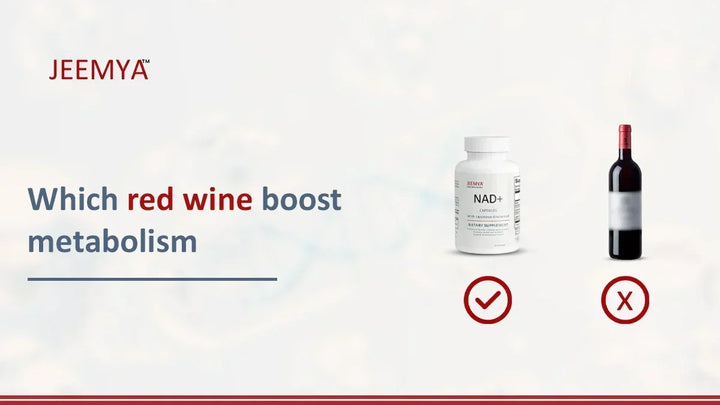
NAD+ (Nicotinamide Adenine Dinucleotide) is a coenzyme present in every living cell. It is the central molecule in cellular energy metabolism facilitating the electron transfer reactions that power ATP production, the citric acid cycle, and mitochondrial oxidative metabolism.
Here is why NAD+ becomes critical after 40:
- NAD+ levels decline naturally with age and with metabolic stress both of which are amplified in Hashimoto's
- When NAD+ is depleted, mitochondria shift away from efficient oxidative energy production contributing directly to the fatigue and metabolic sluggishness Hashimoto's patients describe
- NAD+ also activates sirtuins proteins that regulate mitochondrial function, DNA repair, and cellular stress response
- Human clinical trials have demonstrated that NAD+ precursors can meaningfully increase circulating NAD+ levels, with promising signals for improved metabolic health, muscle insulin sensitivity, and mitochondrial function
NAD+ does not replace thyroid hormone replacement therapy. It works at the cellular level to support the body's energy production machinery which matters profoundly when your thyroid-driven metabolic signaling is compromised.*
This statement has not been evaluated by the Food and Drug Administration. This product is not intended to diagnose, treat, cure, or prevent any disease.
Explore Science-Backed Metabolism Support with Jeemya
At Jeemya™, we build our formulas around the science not marketing trends. For adults navigating the metabolic challenges of aging and autoimmune thyroid conditions, our portfolio includes several products designed to support the pathways discussed in this article.
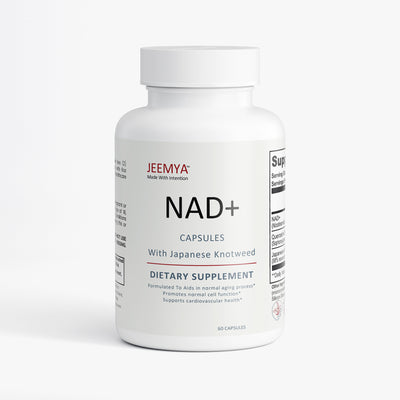
Jeemya’s NAD+: Triple-Action Cellular Energy Stack
60 caps / 30 servings | Made in USA
Jeemya's NAD+ formula combines three of the most studied longevity compounds in a single, clinically aligned capsule:
|
Ingredient |
Amount |
Role |
|
NAD+ (Nicotinamide Adenine Dinucleotide) |
500mg |
Mitochondrial energy cofactor: supports cellular ATP production* |
|
Quercetin Dihydrate |
250mg |
Senolytic flavonoid: supports cellular defense and reduces oxidative stress* |
|
Japanese Knotweed Resveratrol 98% |
150mg |
Sirtuin activator: supports healthy aging and cellular longevity pathways* |
This is not a single-ingredient NAD+ supplement. The combination of NAD+ + Quercetin + high-purity Resveratrol addresses the cellular energy and aging pathway from three distinct mechanisms simultaneously a level of formulation depth rarely found at this price point.
Explore more about cellular metabolism and what supplements boost metabolism on the Jeemya hub.
Jeemya’s Ashwagandha Plus: Cortisol & Stress Support
60 caps / 30 servings | Made in USA
For cortisol management a critical lever in metabolic support for Hashimoto's Ashwagandha Plus features KSM-66® Ashwagandha Extract at 600mg (5% withanolides), the most clinically studied ashwagandha preparation available. Paired with Panax Ginseng, Maca Root, Vitamin D3, and B-vitamins, this is Jeemya's cleanest adaptogen formula.*
Jeemya’s Bone & Heart: Vitamin D3 + K2 MK-7
60 caps / 30 servings | Made in USA
Given the strong association between Vitamin D deficiency and Hashimoto's progression, maintaining optimal Vitamin D status is a foundational priority. Bone & Heart delivers Vitamin D3 (Cholecalciferol) 125mcg alongside Vitamin K2 MK-7 and BioPerine® for enhanced bioavailability the gold-standard bone and cardiovascular support combination.*
Also explore: how to boost metabolism after menopause | how to boost your metabolism without exercise | what are the 5 superfoods that boost metabolism
Frequently Asked Questions
Does Hashimoto's disease slow down metabolism?
Yes, significantly. Hashimoto's thyroiditis leads to hypothyroidism over time, reducing the output of T3 and T4 thyroid hormones. Since these hormones regulate your Basal Metabolic Rate and Resting Metabolic Rate, their decline directly slows how efficiently your body burns calories even at rest. Chronic inflammation inherent to Hashimoto's compounds this effect.
Why is it harder to lose weight with Hashimoto's?
Multiple overlapping mechanisms make weight management harder with Hashimoto's: a reduced metabolic rate, elevated cortisol from chronic immune activation, inflammation-driven fat storage, fatigue that limits physical activity, and often disrupted sleep. Aggressive caloric restriction can trigger adaptive thermogenesis—a survival response that slows metabolism further, making the problem worse.
What are the best ways to support metabolism with Hashimoto's?
The most evidence-supported strategies include resistance training to preserve lean muscle mass, anti-inflammatory nutrition anchored in lean proteins and complex carbohydrates, targeted micronutrient support (Selenium, Zinc, Vitamin D, Iron/Ferritin), stress and cortisol management through adaptogenic botanicals and mindfulness, quality sleep, and supporting mitochondrial energy production through NAD+ pathways.*
Can NAD+ supplements support cellular energy?
Yes, with an important distinction. Human clinical trials have consistently demonstrated that NAD+ precursor supplementation can increase circulating NAD+ levels in blood and tissues. Promising evidence points to support for mitochondrial oxidative metabolism, muscle insulin sensitivity, and metabolic function — particularly in aging populations. NAD+ supplements support the body's cellular energy machinery at the mitochondrial level. They are not a replacement for prescribed thyroid hormone therapy and should be used as part of a comprehensive wellness approach.*
Scientific References
- NIH Office of Dietary Supplements: Selenium Fact Sheet for Health Professionals Roles of selenium in thyroid hormone synthesis, selenoprotein function, and autoimmune thyroid disease https://ods.od.nih.gov/factsheets/Selenium-HealthProfessional/
- NIH Office of Dietary Supplements: Zinc Fact Sheet for Health ProfessionalsZinc as a cofactor in thyroid hormone receptor activity and HPT axis regulation https://ods.od.nih.gov/factsheets/Zinc-HealthProfessional/
- NIH Office of Dietary Supplements: Vitamin D Fact Sheet for Health Professionals Vitamin D deficiency prevalence in Hashimoto's thyroiditis; immunomodulatory role in autoimmune disease progression https://ods.od.nih.gov/factsheets/VitaminD-HealthProfessional/
- NIH Office of Dietary Supplements: Iodine Fact Sheet for Health Professionals Iodine's role in thyroid hormone biosynthesis and considerations in autoimmune thyroid disease. https://ods.od.nih.gov/factsheets/Iodine-HealthProfessional/
- National Center for Complementary and Integrative Health (NCCIH) Ashwagandha Evidence review on Ashwagandha (Withania somnifera) for stress, cortisol, and adaptogenic support. https://www.nccih.nih.gov/health/ashwagandha
- PubMed: van Zuuren EJ, Albusta AY, Fedorowicz Z, Carter B, Pijl H. Selenium Supplementation for Hashimoto's Thyroiditis: Summary of a Cochrane Systematic Review. Eur Thyroid J. 2014 Mar;3(1):25-31. doi: 10.1159/000356040. Epub 2013 Nov 21. PMID: 24847462; PMCID: PMC4005265. disease. https://pubmed.ncbi.nlm.nih.gov/24847462/
- PubMed — NAD+ Metabolism and Its Roles in Cellular Processes During Ageing Covarrubias AJ, Perrone R, Grozio A, Verdin E. NAD+ metabolism and its roles in cellular processes during ageing. Nat Rev Mol Cell Biol. 2021 Feb;22(2):119-141. doi: 10.1038/s41580-020-00313-x. Epub 2020 Dec 22. PMID: 33353981; PMCID: PMC7963035. https://pubmed.ncbi.nlm.nih.gov/33353981/
- NIH Office of Dietary Supplements — Niacin (NAD+ Precursor) Fact SheetBackground on nicotinamide and its role in NAD+ biosynthesis and cellular energy metabolism.🔗 https://ods.od.nih.gov/factsheets/Niacin-HealthProfessional/
⚠️ Disclaimer: The information in this article is intended for educational purposes only. It is not medical advice and does not replace consultation with a licensed healthcare provider. Dietary supplements are not intended to diagnose, treat, cure, or prevent any disease. Always consult your physician before beginning any new supplement regimen, particularly if you have a diagnosed thyroid condition or are taking prescription medications.
0 comments