
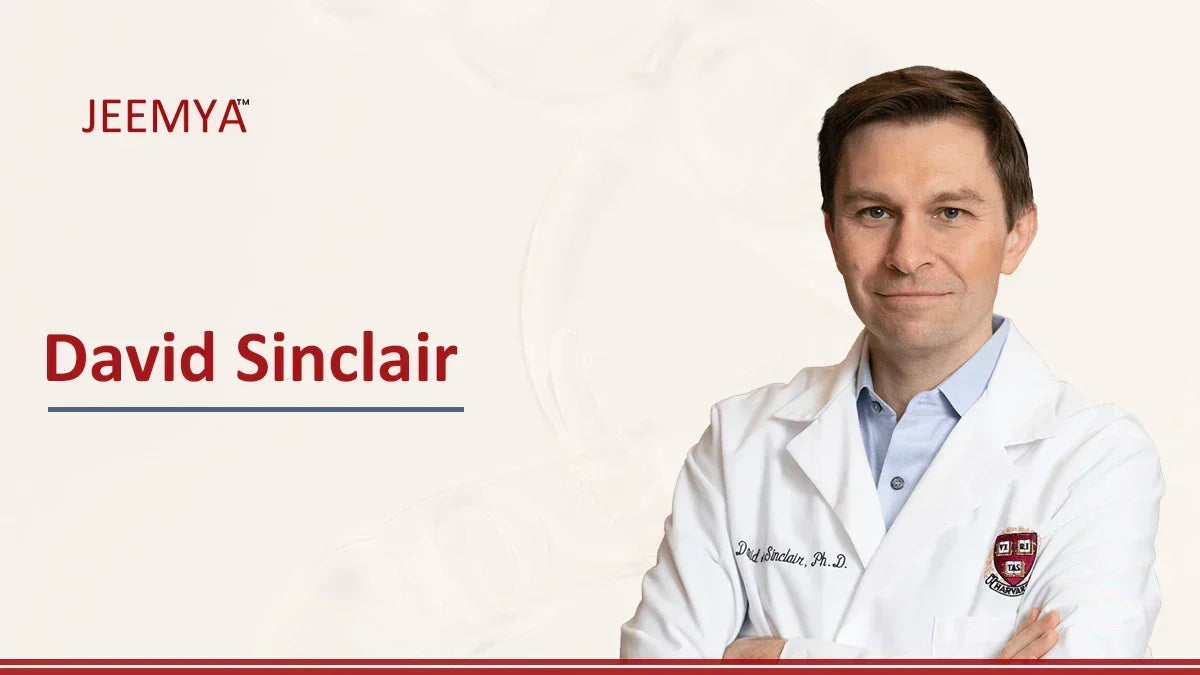
If you've spent any time researching healthy aging, you've almost certainly encountered the name Dr. David Sinclair. He is a Professor of Genetics at Harvard Medical School, co-director of the Paul F. Glenn Center for Biology of Aging Research, and one of the most widely cited scientists in the field of longevity science. TIME magazine named him one of the 100 most influential people in the world, and his 2019 bestselling book Lifespan: Why We Age and Why We Don't Have To brought decades of laboratory research into living rooms across America.
But what drives a Harvard geneticist to spend his career studying a molecule called NAD+?
The answer begins at the cellular level.
Dr. Sinclair's research is built around a central observation: as we age, our cells lose the ability to do their jobs efficiently. DNA accumulates damage. Mitochondria, the energy-producing engines inside every cell, become less productive. And the proteins that regulate how our genes are expressed begin to malfunction. His work, rooted in epigenetics and the science of biological age, proposes that many of these changes are not simply inevitable they are connected to the decline of a single critical molecule: NAD+, or nicotinamide adenine dinucleotide.
NAD+ is not a vitamin. It is a coenzyme, meaning it is required for hundreds of chemical reactions in your body to take place at all. According to Dr. Sinclair's published research, NAD+ sits at the intersection of cellular energy metabolism, DNA repair, and the activation of proteins called sirtuins which he describes as master regulators of biological aging.
The problem? NAD+ levels fall significantly with age. By the time most people are in their 40s and 50s, their cellular NAD+ levels may be roughly half of what they were in their 20s. For Dr. Sinclair, this decline is not a footnote in the aging story it is a central chapter.
David Sinclair's Longevity Approach: The Role of NMN and NAD+
Dr. Sinclair's publicly stated approach to longevity is multi-layered, touching on diet and nutrition, exercise, sleep, intermittent fasting, and psychological state. He has spoken extensively about the role of hormesis the concept that mild biological stressors (like fasting or vigorous exercise) can activate protective cellular pathways, including those that depend on NAD+.
But supplementation is also a documented part of his personal wellness routine.
Based on his public interviews and statements, Dr. Sinclair's consistent supplement regimen has included:
- NMN (Nicotinamide Mononucleotide) 1,000 mg daily, taken in the morning with a fat source to support absorption
- Resveratrol 1,000 mg daily, also taken with fat (resveratrol is poorly absorbed without it)
- Vitamin D3 approximately 4,000 – 5,000 IU daily
- Vitamin K2 to support cardiovascular and bone health alongside D3
- Omega-3 fatty acids for systemic anti-inflammatory support
- TMG (Trimethylglycine) to support methylation processes associated with NMN metabolism
Important note: Dr. Sinclair does not publicly endorse specific supplement brands in order to avoid conflicts of interest. The regimen described above is drawn from his public interviews and statements and does not constitute a product recommendation.
What makes this regimen scientifically interesting particularly for adults over 40, is the logic behind combining NMN and resveratrol. In Dr. Sinclair's framework, NMN is the raw material that raises NAD+ levels inside cells. Resveratrol, derived from sources like Japanese knotweed (Polygonum cuspidatum) and grape skins, is a sirtuin activator meaning it may help the sirtuins that depend on NAD+ do their job more effectively. He has described NMN as the "fuel" and resveratrol as the "accelerator."
David Sinclair's Findings on NMN Supplementation
Dr. Sinclair's laboratory at Harvard has been at the forefront of NAD+ and NMN research. His team's foundational work, conducted primarily in animal models, demonstrated that supplementing with NMN could replenish declining NAD+ levels and support healthier cellular function in aging subjects.
Among the most publicized findings from his broader research program:
- Sirtuin activation is NAD+-dependent. Sirtuins, particularly SIRT1 and SIRT3 cannot function without adequate NAD+. Since sirtuins are involved in DNA repair, inflammation regulation, and mitochondrial health, their activity is directly tied to how well your cells age.
- NAD+ decline tracks with biological age. Studies from his group helped establish the correlation between falling NAD+ levels and the cellular hallmarks of aging reduced energy output, impaired DNA repair, and mitochondrial dysfunction.
- NMN is efficiently converted to NAD+ in mammalian tissue. His preclinical work showed that NMN, administered orally, crosses into cells and is converted into NAD+, raising intracellular concentrations.
It is important to note that much of Dr. Sinclair's foundational NMN research was conducted in animal models. Human clinical trial data has since begun to accumulate and while promising, the science is still evolving.
Can NMN Help Increase NAD+ Levels?
This is the question that has driven enormous scientific and consumer interest and as of 2026, human clinical trial data offers a clearer, more nuanced answer than ever before.
The short answer: yes, NMN supplementation appears to increase circulating NAD+ levels in humans. But the clinical picture is more complex than a simple before-and-after.
A January 2026 study published in Nature Metabolism one of the most rigorous comparative trials to date, examined three NAD+ precursors: NMN, nicotinamide riboside (NR), and nicotinamide (Nam). The results showed that both NMN and NR approximately doubled circulating NAD+ levels after just 14 days of supplementation, while nicotinamide showed only a transient, acute effect. The study also revealed an interesting mechanism: gut bacteria appear to play a role in converting NMN and NR into precursor compounds that the body uses to build NAD+.
A separate 2026 clinical study found that consistent supplementation with NMN and NR at 1,200 mg/day over several weeks produced gradual, sustained increases in NAD+ levels measured in both blood and brain tissue.
A March 2026 meta-analysis of randomized controlled trials reported that NMN supplementation was associated with a small but statistically significant reduction in resting diastolic blood pressure, with a particularly notable effect in adults aged 60 and older.
However, intellectual honesty matters here. A May 2026 systematic review covering 33 clinical trials concluded that while NAD+ precursors safely and consistently raised serum NAD+ levels in the short term, the evidence for broader healthy aging outcomes was described as "thin and inconsistent." Many observed benefits were modest, and long-term data remains limited. No current clinical evidence supports the claim that NMN extends human lifespan or reverses aging.
The scientific consensus as of mid-2026 is that NMN is promising particularly for supporting metabolic health, physical energy, and cellular function in middle-aged and older adults — but it is not a magic pill, and its full clinical profile is still being established.
How NMN Acts as a Precursor to NAD+
Understanding why scientists focus on NMN rather than simply supplementing NAD+ directly requires a brief biochemistry note and it is genuinely useful knowledge for anyone considering NAD+ support.
NAD+ itself is a large molecule. When taken orally, it does not efficiently cross cell membranes to enter the cells where it is needed. The body largely breaks it down in the digestive process before it reaches tissues.
NMN takes a different route. NMN is a smaller molecule a direct precursor, that the body can absorb and convert into NAD+ through a well-established enzymatic pathway called the salvage pathway. Once inside cells, NMN is phosphorylated by enzymes (specifically NMNAT enzymes) to produce NAD+.
This is why researchers including Dr. Sinclair have focused significant attention on NMN and its cousin molecule NR (nicotinamide riboside) as delivery vehicles for raising NAD+. Both are what scientists call NAD+ precursors: compounds the body can actually use to manufacture more of this critical coenzyme where it is needed most inside the cell.
As of May 2026, NMN is lawfully marketable as a dietary supplement in the United States, following the FDA's 2025 reversal of its earlier 2022 exclusion determination. This regulatory clarity has opened the door to a new generation of NAD+ support products formulated around the precursor pathway.
The Relationship Between Cellular Energy, NAD+, and NMN
For adults over 40, the most practically relevant dimension of NAD+ science is the energy connection.
NAD+ is essential to the mitochondrial electron transport chain the process by which your cells convert food into usable energy (ATP). Without adequate NAD+, this process becomes less efficient. This is one reason why the subjective experience of aging often includes a feeling of reduced stamina, slower recovery, and less consistent mental energy.
Beyond raw energy production, NAD+ is required by:
- PARP enzymes the primary DNA repair proteins in your cells
- Sirtuins (SIRT1–SIRT7) regulators of gene expression, inflammation, and mitochondrial biogenesis
- CD38 an enzyme that becomes more active with age and consumes NAD+ as it does so, contributing to age-related NAD+ decline
This triple demand energy, repair, and regulation is why NAD+ occupancy at the cellular level has become such a focal point in aging research. When NAD+ is plentiful, all three of these systems have the cofactor they need. When NAD+ is scarce as it naturally becomes after 40 all three can become compromised.
Maintaining healthy NAD+ levels through precursor supplementation is the strategy at the heart of Dr. Sinclair's approach — and increasingly, it is backed by a growing body of human clinical research.
Take the Next Step Toward Healthy Aging with Jeemya
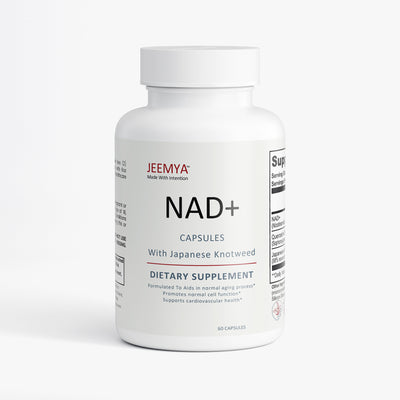
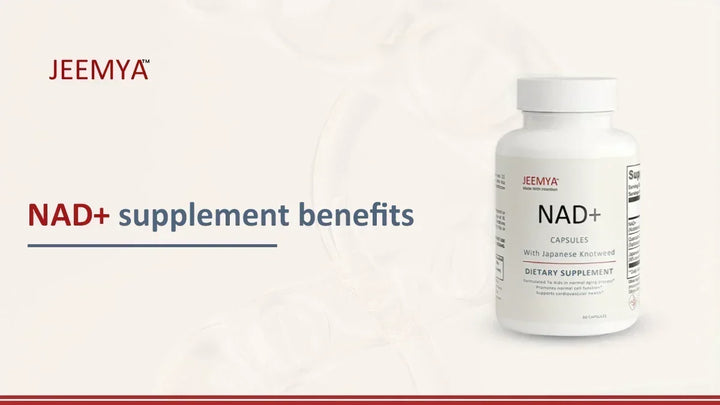
Jeemya's NAD+ formula was built with this science in mind.
Each serving delivers:
- NAD+ 500 mg direct coenzyme support
- Quercetin Dihydrate 250 mg a senolytic flavonoid studied for cellular health and healthy aging support
- Japanese Knotweed Resveratrol 98%, 150 mg the same sirtuin-activating compound Dr. Sinclair has discussed publicly for years, sourced at 98% standardization from Polygonum cuspidatum
This is the triple-action longevity stack approach NAD+ support, senolytic activity, and sirtuin activation formulated for health-literate adults aged 45–65 who take their wellness seriously.
60 capsules | 30 servings | Made in the USA
These statements have not been evaluated by the Food and Drug Administration. This product is not intended to diagnose, treat, cure, or prevent any disease.
Explore More:
- NMN vs NR: Which NAD+ Precursor Is Right for You?
- Best NMN Supplement 2026: What to Look For
- Best Supplements for DNA Repair
- When Is the Best Time to Take NAD+ Supplements?
- Are NAD+ Supplements Safe?
Frequently Asked Questions
What is David Sinclair's connection to NAD+?
Dr. David Sinclair is a Professor of Genetics at Harvard Medical School whose research has focused on the role of NAD+ in cellular aging. His work helped establish the link between declining NAD+ levels and the cellular mechanisms associated with aging, including reduced DNA repair activity and impaired sirtuin function.
Why does David Sinclair study NMN?
Dr. Sinclair studies NMN because it is a direct biochemical precursor to NAD+ meaning the body can absorb and convert it into NAD+ efficiently at the cellular level. This makes NMN a practical research tool for studying whether raising NAD+ levels can support healthy cellular function in aging.
How does NMN increase NAD+ levels?
NMN enters cells and is converted into NAD+ through the salvage pathway, primarily via NMNAT enzymes. Human clinical trials, including a 2026 study published in Nature Metabolism, have shown that NMN supplementation can approximately double circulating NAD+ levels within two weeks of consistent use.
Does David Sinclair take NMN supplements?
Based on his public interviews and statements, Dr. Sinclair has reported taking 1,000 mg of NMN daily, typically in the morning with a fat source. He does not publicly endorse specific brands. This information is drawn from his public disclosures and does not constitute a medical recommendation.
What are the potential benefits of maintaining healthy NAD+ levels?
Research to date suggests that maintaining healthy NAD+ levels may support mitochondrial energy production, DNA repair processes, healthy metabolic function, and the activity of sirtuin proteins linked to cellular aging. These are structure-function observations not disease treatment claims.
Is NMN the same as NAD+?
No. NMN (Nicotinamide Mononucleotide) is a precursor to NAD+—a smaller molecule that the body converts into NAD+ after absorption. NAD+ itself is the active coenzyme. Because NAD+ is poorly absorbed orally, scientists and formulators often work with precursors like NMN and NR to support the body's own NAD+ production.
Scientific References
- NIH Office of Dietary Supplements — Niacin Fact Sheet (NAD+ Precursor Pathway) National Institutes of Health, Office of Dietary Supplements https://ods.od.nih.gov/factsheets/Niacin-HealthProfessional/
- Comparison of anti-aging effect of PQQ (Pyrroloquinoline quinone) and NMN/NR (Nicotinamide mononucleotide /Nicotinamide riboside) - possible combination use. Ulpathakumbura S, Lu SK, Gunarathne R, Yang JZ, Liu J, Jin X, Zhou Q, Lu J. Comparison of anti-aging effect of PQQ (Pyrroloquinoline quinone) and NMN/NR (Nicotinamide mononucleotide /Nicotinamide riboside) - possible combination use. Ageing Res Rev. 2026 Jan;114:102992. doi: 10.1016/j.arr.2025.102992. Epub 2025 Dec 11. PMID: 41390101. PubMed: https://pubmed.ncbi.nlm.nih.gov/41390101/
- NMN supplementation as a strategy to improve oocyte quality: a systematic review and transcriptomic analysis Noh H, Sen Gupta S, Seshadri S, Viñals Gonzalez X. NMN supplementation as a strategy to improve oocyte quality: a systematic review and transcriptomic analysis. J Assist Reprod Genet. 2026 Jan;43(1):51-65. doi: 10.1007/s10815-025-03720-1. Epub 2025 Oct 29. PMID: 41160202; PMCID: PMC12831783.PubMed: https://pubmed.ncbi.nlm.nih.gov/41160202/
- NCCIH — Using Dietary Supplements Wisely National Center for Complementary and Integrative Health https://www.nccih.nih.gov/health/using-dietary-supplements-wisely
- Sinclair, David & LaPlante, Matthew. (2019). Lifespan: Why We Age and Why We Don't Have To.
0 comments