
If you've been researching healthy aging lately, you've likely come across one term more than any other: NAD+. From longevity researchers to wellness clinics, Nicotinamide Adenine Dinucleotide NAD+ has become one of the most discussed molecules in modern health science. Understanding NAD+ supplement benefits can help you explore how this molecule may support cellular health, energy production, and the broader field of longevity research.
But what does the research actually say? And is an NAD+ supplement right for you?
This guide breaks it all down plainly, accurately, and with credible science behind every claim.
What Is NAD+ and Why It Matters?
Nicotinamide Adenine Dinucleotide (NAD+) is a coenzyme found in every living cell in your body. It acts as a molecular "carrier," shuttling electrons between reactions that power your cellular metabolism making it absolutely essential to life itself.
Think of NAD+ as the biological currency your cells use to:
- Generate energy (ATP) inside the mitochondria
- Activate sirtuins: longevity-linked proteins that regulate gene expression, DNA repair, and stress responses
- Power PARP enzymes: the cellular repair crew that fixes damaged DNA
- Regulate your circadian rhythm: your body's internal clock
Here's the critical issue: NAD+ levels decline significantly with age. Research indicates that by your 50s, you may have half the NAD+ you had in your 20s. This decline has been associated in the scientific literature with reduced cellular energy, slower DNA repair, increased oxidative stress, and a range of age-related functional changes.
This is precisely why NAD+ supplementation and its precursors, Nicotinamide Riboside (NR) and Nicotinamide Mononucleotide (NMN) has become a central focus of longevity research.
Disclaimer: These statements have not been evaluated by the Food and Drug Administration. This product is not intended to diagnose, treat, cure, or prevent any disease.
What Are the Top NAD+ Supplement Benefits?
Exploring NAD+ supplement benefits can help you understand how this important molecule may support cellular energy, cognitive health, and healthy aging. Below are the key areas where NAD+ supplementation is being researched:
- Enhanced Cognitive Function
NAD+ plays a central role in brain cell energy production and neuronal health. Its precursors have been studied in models of neurodegeneration, where supplementation was associated with reduced neuroinflammation, improved mitochondrial function, and support for hippocampal synaptic plasticity.
Sirtuins which depend entirely on NAD+ as a substrate help regulate inflammatory pathways in the brain. Maintaining healthy NAD+ levels may therefore support cognitive clarity and mental sharpness as you age.
Supporting evidence: Lautrup S et al., Cell Metabolism, 2019 — see references.
- Mental Health Support
The connection between NAD+, mental health, and neuroinflammation is an emerging area of research. NAD+ influences pathways tied to oxidative stress and brain cell resilience, both of which have been implicated in mood regulation research.
While this field is still developing, the foundational science particularly around NAD+'s role in mitochondrial health and sirtuin signaling supports its relevance to overall neurological wellness.
- Improved Sleep Quality
Your body's circadian rhythm the biological clock controlling sleep-wake cycles is tightly linked to NAD+ metabolism. Published research in aged animal models demonstrated that supplementing with NAD+ precursors helped restore robust circadian gene expression and improved sleep-wake cycle regularity.
This connection is particularly relevant for adults 40+, since both NAD+ levels and circadian rhythm quality tend to decline in parallel with aging.
- Reduced Inflammation
Chronic, low-grade inflammation sometimes called "inflammaging" is one of the primary drivers of age-related health challenges. NAD+-dependent sirtuins (particularly SIRT1 and SIRT3) help modulate inflammatory signaling pathways and support the body's response to oxidative stress.
Research has shown NAD+ supplementation may reduce neuroinflammation markers in preclinical models by supporting mitochondrial integrity and decreasing reactive oxygen species (ROS) production.
- Increased Energy Levels
NAD+ sits at the heart of cellular respiration the multi-step process by which your cells convert nutrients into ATP (adenosine triphosphate), the body's primary energy molecule. Without adequate NAD+, this process becomes less efficient.
This is directly why age-related NAD+ decline is associated with the kind of persistent fatigue that is not explained by sleep alone. Supporting NAD+ levels is one of the most mechanistically sound approaches to supporting cellular metabolism and sustainable, cellular-level energy.
For a deeper dive into how this connects to weight and metabolic health, see our guides on what supplements boost metabolism and how to boost metabolism after 40 .
- Enhanced Skin Health
NAD+ is required to fuel DNA repair enzymes (PARPs) that work continuously to correct cellular damage — including damage caused by UV exposure and oxidative stress. Healthy NAD+ levels support the skin's cellular repair machinery, which naturally slows with age.
While large-scale clinical trials specifically on skin appearance are still emerging, the mechanistic case linking NAD+ to DNA repair, collagen-supporting cellular pathways, and reduced oxidative stress is well-grounded in basic science.
- Protection Against Degenerative Diseases
This is an area where the science is moving fast. NAD+ depletion has been documented in aging tissue affected by neurodegeneration and metabolic dysfunction. Preclinical research has explored NAD+ restoration as a means of inducing cellular repair, supporting mitochondrial function, and enhancing stress resistance at the cellular level.
It is important to be clear: NAD+ supplements are not treatments for any disease. However, the science of maintaining NAD+ levels as a proactive wellness strategy continues to attract significant academic attention.
For context on neurodegeneration-related research: Lautrup S et al., Cell Metabolism, 2019 — see references.
- Cardiovascular Health
Research has identified a correlation between declining NAD+ levels and key cardiovascular risk factors including aging, obesity, and hypertension. Preclinical studies suggest that therapeutic NAD+ elevation may support:
- Reactivation of autophagy (cellular self-cleaning) in vascular cells
- Reduction of chronic low-grade vascular inflammation
- Enhanced oxidative metabolism in cardiac and vascular tissue
Human clinical trials in this area are ongoing, and findings are promising.
- Weight & Metabolic Health
NAD+ is directly involved in the metabolic pathways that regulate how efficiently your body processes nutrients and manages energy balance. NAD+-dependent sirtuins (particularly SIRT1) influence fat metabolism, mitochondrial biogenesis, and insulin sensitivity.
Interventions known to support NAD+ levels such as exercise and intermittent fasting also independently support metabolic health. Understanding how to boost metabolism after 50 and how to boost metabolism after 60 starts with understanding what powers metabolism at the cellular level.
Relevant human trial: Yoshino M et al., Science, 2021 — see references.
- Addiction Recovery
Intravenous NAD+ therapy has been explored in clinical settings as a supportive tool during recovery, based on its role in restoring mitochondrial function and supporting neurotransmitter-related pathways. Oral supplementation research in this area is still early-stage. This is an area where consultation with a healthcare provider is strongly recommended before any supplementation decision.
Can You Raise Your NAD+ Levels Naturally Without Supplements?
Yes, and a good lifestyle foundation amplifies whatever supplementation strategy you choose. Evidence-supported natural approaches include:
|
Strategy |
Mechanism |
|
Regular aerobic exercise |
Stimulates NAMPT enzyme — the rate-limiting step in NAD+ biosynthesis |
|
Intermittent fasting / caloric restriction |
Activates sirtuins and upregulates NAD+ biosynthesis pathways |
|
Consuming NAD+ precursor foods |
Foods containing Vitamin B3 (niacin), tryptophan, and polyphenols (blueberries, green tea, red grapes) support NAD+ production |
|
Quality sleep |
Circadian rhythm health is directly tied to NAD+ metabolism |
|
Stress reduction |
Chronic stress depletes NAD+ via PARP enzyme over-activation |
That said, lifestyle alone becomes insufficient as you age because the enzymatic machinery that synthesizes NAD+ also declines. This is the case for supplementation.
What Are the Most Common NAD+ Supplement Side Effects?
NAD+ supplements are generally well-tolerated, particularly at clinically studied doses. Reported side effects, primarily at higher doses, may include:
- Nausea or digestive discomfort
- Headaches or lightheadedness
- Diarrhea or stomach upset
- Mild skin flushing (more associated with niacin/nicotinic acid forms)
- Muscle discomfort
- Transient sleep disturbances (if taken late in the day)
Important: Very high-dose niacin supplementation has been associated with elevated liver enzymes. Individuals with liver conditions, active cancer, or those on prescription medications should consult their physician before use. NAD+ supplementation is not recommended during pregnancy or breastfeeding without medical supervision.
Who Might Benefit From NAD+ Supplements?
Populations Who May Benefit from NAD+
|
Population Group |
Potential Benefit |
Scientific Basis |
|
Adults 40–65 (Men & Women) |
Countering age-related NAD+ decline; supporting cellular energy, metabolism, and repair |
NAD+ levels measurably decline with age; NMN improved physical performance in middle-aged adults (Yoshino et al., 2021) |
|
Women 50+ / Post-Menopause |
Metabolic support, cognitive clarity, energy maintenance |
Hormonal shifts accelerate metabolic and mitochondrial changes; NAD+ supports the same pathways affected |
|
Cognitively Active Older Adults |
Supporting memory, mental sharpness, and neurological wellness |
Preclinical evidence links NAD+ restoration to reduced neuroinflammation and improved hippocampal function (Lautrup et al., 2019) |
|
Individuals with Metabolic Health Goals |
Insulin sensitivity support, energy balance |
NMN shown to increase muscle insulin sensitivity in human trial (Yoshino et al., Science, 2021) |
|
Those Experiencing Fatigue |
Supporting ATP production and mitochondrial efficiency |
NAD+ is a core substrate in cellular energy synthesis |
|
Cardiovascular Health-Conscious Adults |
Supporting vascular health and reducing oxidative stress |
Preclinical data on NAD+ and vascular cell autophagy, inflammation reduction |
|
Active Aging / Fitness-Focused Individuals |
Muscle recovery, endurance, mitochondrial health |
NAD+ supports mitochondrial biogenesis; NMN associated with improved aerobic capacity in older adults (Igarashi et al., 2022) |
|
Poor Sleepers / Circadian Disruption |
Supporting healthy sleep-wake rhythm regulation |
NAD+ metabolism is directly linked to circadian clock gene expression |
How Jeemya Maximizes NAD+ Benefits
Most NAD+ supplements on the market deliver a single ingredient. Jeemya's NAD+ formula is built differently.
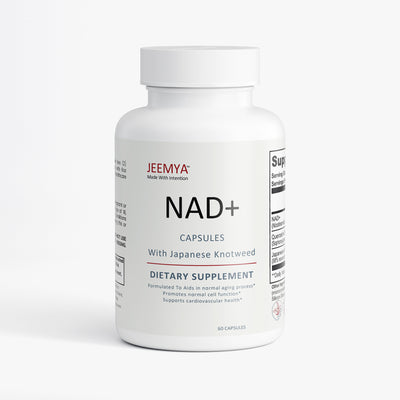
Jeemya NAD+ is a triple-action longevity stack formulated with three clinically aligned compounds working synergistically:
|
Ingredient |
Dose |
Role |
|
NAD+ (Nicotinamide Adenine Dinucleotide) |
500mg |
Direct NAD+ substrate delivery for cellular energy and sirtuin activation |
|
Quercetin Dihydrate |
250mg |
Senolytic flavonoid — targets and clears senescent ("zombie") cells that accelerate aging |
|
Trans-Resveratrol 98% (Japanese Knotweed) |
150mg |
Sirtuin activator — the same pathway researched by Harvard's Dr. David Sinclair |
Why this combination matters:
- NAD+ activates sirtuins. Resveratrol amplifies sirtuin activity. Together, they operate on the same longevity pathway from two directions simultaneously.
- Quercetin's senolytic activity complements this by reducing the cellular "noise" caused by aging, damaged cells allowing healthier cells to thrive.
- All three compounds are delivered at clinically informed dosages not token amounts included for label decoration.
Jeemya NAD+ is manufactured in the USA, contains no declared allergens, and is designed for health-literate adults who take their longevity seriously.
"Supports cellular energy metabolism and healthy aging." This statement has not been evaluated by the FDA. This product is not intended to diagnose, treat, cure, or prevent any disease.
FAQs
What does NAD+ do for your body?
NAD+ (Nicotinamide Adenine Dinucleotide) serves as a critical coenzyme in hundreds of metabolic reactions. Its primary roles include supporting ATP (energy) production in the mitochondria, participating in sirtuin activity involved in cellular regulation and DNA repair, and supporting cellular maintenance processes. NAD+ metabolism changes with age, which is why NAD+ supplementation and NAD+ precursors have attracted significant scientific attention.
Can NAD+ make you look younger?
NAD+ plays an important role in DNA repair and cellular maintenance pathways that contribute to normal cell function, including skin cells. NAD+-dependent enzymes such as PARPs and sirtuins are involved in cellular responses to DNA damage and oxidative stress. However, human clinical research specifically evaluating NAD+ supplementation for visible skin aging is still developing, so NAD+ should not be considered a proven anti-aging or cosmetic treatment.
What happens when you take NAD+ every day?
Research on NAD+ precursors such as nicotinamide riboside (NR) indicates that daily supplementation can increase NAD+ levels in blood and has generally been well tolerated in clinical studies involving healthy adults. The effects of supplementation can vary depending on the compound, dosage, duration, and individual factors. Researchers typically evaluate NAD+-related outcomes over several weeks rather than expecting immediate effects. Consult your healthcare provider before starting long-term supplementation, particularly if you have a medical condition or take prescription medications.
What should you not mix with NAD+?
Consult your healthcare provider before combining NAD+ supplements with medications or other supplements, particularly if you take:
- Blood thinners or anticoagulants — some NAD+ formulations contain additional ingredients, such as resveratrol or quercetin, that may affect platelet function.
- Diabetes medications — NAD+ precursors and accompanying ingredients may influence metabolic pathways, so medical guidance is appropriate.
- Chemotherapy agents — NAD+ is involved in cellular repair and survival pathways, making professional guidance particularly important during cancer treatment.
- High-dose niacin or other NAD+ precursors — combining multiple NAD+-support products can unnecessarily increase total intake.
- Blood pressure medications — some accompanying ingredients, including resveratrol, may potentially influence blood pressure.
Conclusion
NAD+ is not a trend. It is one of the most fundamentally important molecules in human biology and the science of supporting its levels as we age is among the most credible areas of longevity research today.
For adults 40 and over, maintaining NAD+ levels is not about chasing youth. It is about giving your cells the tools they were designed to use, for as long as possible.
Jeemya's NAD+ formula brings together the three most researched longevity compounds NAD+, Quercetin, and Resveratrol into one clinically informed, affordably priced capsule.
Scientific References
- Lautrup S, Sinclair DA, Mattson MP, Fang EF. "NAD+ in Brain Aging and Neurodegeneration." Cell Metabolism. 2019;30(4):630–655. https://pubmed.ncbi.nlm.nih.gov/31577933/
- Martens CR, Denman BA, Mazzo MR, et al. "Chronic nicotinamide riboside supplementation is well-tolerated and elevates NAD+ in healthy middle-aged and older adults." Nature Communications. 2018;9(1):1286. https://pubmed.ncbi.nlm.nih.gov/29599478/
- Yoshino M, Yoshino J, Kayser BD, et al. "Nicotinamide mononucleotide increases muscle insulin sensitivity in prediabetic women." Science. 2021;372(6547):1224–1229. https://pubmed.ncbi.nlm.nih.gov/33888596/
- Igarashi M, Nakagawa-Nagahama Y, Miura M, et al. "Chronic nicotinamide mononucleotide supplementation elevates blood nicotinamide adenine dinucleotide levels and alters muscle function in healthy older men." npj Aging. 2022;8(1):5. https://pubmed.ncbi.nlm.nih.gov/35927255/
- NIH Office of Dietary Supplements — Niacin Fact Sheet for Health Professionals (covers NAD+ biosynthesis from B3 precursors https://ods.od.nih.gov/factsheets/Niacin-HealthProfessional/
- National Center for Complementary and Integrative Health (NCCIH) — Antioxidants: In Depth (contextual reference for oxidative stress and polyphenol pathways)🔗 https://www.nccih.nih.gov/health/antioxidants-in-depth

0 comments