

Menopause doesn't just change your cycle — it restructures your metabolism from the ground up. For most women, the transition happens gradually. During menopause / perimenopause, which can begin as early as the late 30s and typically intensifies between ages 45–55, the progressive decline in estrogen and progesterone fundamentally alters how your body produces energy, stores fat, manages inflammation, and responds to the foods you eat.
The result? A metabolic system that operated one way for decades suddenly operates differently — and the strategies that worked before stop working. Understanding how to boost metabolism after menopause isn't about fighting your body. It's about recalibrating your approach to match a new hormonal reality.
Here's what makes this particularly frustrating: the metabolic shift isn't purely about calories. Women in menopause often gain weight (particularly visceral fat) even without eating more or exercising less. That's because estrogen was doing metabolic work behind the scenes — regulating insulin sensitivity, protecting mitochondrial function, maintaining muscle mass, and directing fat storage toward subcutaneous (less dangerous) depots rather than visceral (organ-surrounding) ones.
When estrogen declines, those protective mechanisms weaken. But they can be supported through targeted interventions. This article provides 10 evidence-based strategies specifically calibrated for the post-menopausal metabolic landscape.
What Causes Menopause Weight Gain?
The primary driver is hormonal, not behavioral. Estrogen decline triggers a cascade of metabolic consequences:
- Reduced insulin sensitivity — Without estrogen's protective effect on insulin signaling, glucose management deteriorates. Higher circulating insulin promotes fat storage and blocks fat oxidation.
- Visceral fat redistribution — Estrogen directed fat storage toward hips and thighs (subcutaneous). Without it, fat preferentially accumulates around organs (visceral) — increasing cardiovascular disease / heart disease and diabetes risk.
- Muscle mass decline accelerates — Estrogen supports muscle protein synthesis. Its decline, combined with age-related sarcopenia, means less metabolically active tissue burning calories at rest.
- Mitochondrial function decreases — Estrogen protects mitochondria from oxidative damage and supports biogenesis (creation of new mitochondria). Post-menopause, cellular energy production becomes less efficient.
- Sleep disruption — Hot flashes, night sweats, and progesterone decline impair sleep quality, which independently reduces metabolic rate by 2–5% and increases cortisol-driven fat storage.
- Inflammation increases — Estrogen has anti-inflammatory properties. Its loss allows chronic low-grade inflammation to rise, impairing metabolic enzyme function.
When Does Menopause Weight Gain Start?
Most women notice metabolic changes during menopause / perimenopause — often 2–4 years before their final menstrual period. Research from the Study of Women's Health Across the Nation (SWAN) found that women gain an average of 1.5 pounds per year during the menopausal transition, with the most accelerated gain occurring in the 2 years surrounding the final period.
But the weight gain isn't just about the scale number. Body composition shifts dramatically: lean muscle mass decreases while visceral fat increases — even in women whose total weight doesn't change significantly. This redistribution matters because visceral fat is metabolically active in harmful ways, increasing risk for diabetes, cardiovascular disease / heart disease, and hypertension / high blood pressure.
The timeline varies individually, but most women experience:
- Early perimenopause (40–45): Subtle changes — slightly easier weight gain, slower recovery, mild energy dips. See our guide on how to boost metabolism after 40.
- Late perimenopause (45–51): Noticeable shifts — visceral fat accumulation begins, sleep disruption accelerates muscle loss, insulin sensitivity declines. Relevant strategies in how to boost metabolism after 50.
- Post-menopause (51+): New metabolic baseline — requires sustained strategy adjustment. For age-specific approaches, see how to boost metabolism after 60.
Can Hormone Therapy Prevent Weight Gain?
Research is nuanced. Hormone replacement therapy (HRT) may help prevent the visceral fat redistribution associated with estrogen decline and can improve insulin sensitivity in some women. The Women's Health Initiative and subsequent studies suggest that women who start HRT near menopause onset (within 10 years) may experience metabolic benefits including reduced visceral fat and lower diabetes risk.
However, HRT is not a universal solution — it carries individualized risks depending on personal and family history of cardiovascular disease / heart disease, breast cancer, and blood clots. It works best as part of a comprehensive metabolic strategy, not as a standalone intervention.
The bottom line: HRT is a conversation with your healthcare provider about your specific risk profile. The strategies below work regardless of whether you choose hormonal therapy — and they enhance its benefits if you do.
What Is the Best Diet for Menopausal Weight Gain?
No single "menopause diet" exists, but the most effective dietary patterns for post-menopausal metabolic health share common features: adequate protein, high fiber, anti-inflammatory focus, blood sugar stability, and nutrient density. The Mediterranean diet consistently shows the strongest evidence for reducing menopause-related metabolic risk, including lower rates of cardiovascular disease / heart disease, improved insulin sensitivity, and reduced visceral fat.
What Is the Best Exercise for Menopause?
Resistance training. While all movement helps, strength training specifically counteracts the two most metabolically damaging effects of menopause: muscle loss and insulin resistance. Research shows that post-menopausal women who strength train 2–3 times per week preserve significantly more lean mass, maintain higher resting metabolic rates, and show better glucose control than those who only do cardio.
That said, the best exercise is one you'll do consistently. Combining resistance training with daily movement and occasional cardio creates the most robust metabolic foundation.
How to Boost Metabolism After Menopause - 10 Ways to Boost Metabolism
1. Prioritize Protein at Every Meal
After menopause, your body's protein utilization efficiency drops. The anabolic resistance of aging — compounded by estrogen decline — means you need more protein per meal to stimulate the same muscle protein synthesis response you achieved with less in your 30s.
Research suggests post-menopausal women should aim for 1.2–1.6g protein per kilogram of body weight daily, distributed across 3–4 meals (25–35g per meal). This:
- Preserves muscle mass — the primary determinant of resting metabolic rate
- Increases thermic effect of food (TEF) — protein burns 20–30% of its calories during digestion
- Improves satiety — reducing overall caloric intake without conscious restriction
- Supports bone density — critical post-menopause when estrogen-related bone protection diminishes
Best sources: Eggs, fatty fish (adds omega-3 anti-inflammatory benefit), poultry, Greek yogurt, legumes, and quality protein supplements when whole food intake falls short.
2. Strength Train Regularly
Muscle is your metabolic engine, and menopause actively degrades it. Without intervention, women lose approximately 1% of muscle mass per year after 50 — which translates to a roughly 2–3% decline in resting metabolic rate per decade.
Strength training is the single most effective countermeasure:
- Reverses muscle loss — even in women over 60, progressive resistance training builds measurable lean mass
- Improves insulin sensitivity — muscle is the primary glucose disposal site; more muscle = better blood sugar management = lower diabetes risk
- Increases EPOC — excess post-exercise oxygen consumption keeps metabolism elevated for 24–72 hours after resistance training
- Supports bone density — mechanical loading stimulates osteoblast activity, critical for preventing osteoporosis post-menopause
- Reduces visceral fat — research shows resistance training reduces abdominal fat even without weight loss on the scale
Protocol: 2–4 sessions per week targeting all major muscle groups. Progressive overload (gradually increasing weight/resistance) is essential — not just going through motions. Compound movements (squats, deadlifts, rows, presses) deliver the most metabolic impact.
3. Stay Physically Active Throughout the Day
Beyond structured exercise, your daily movement — NEAT (Non-Exercise Activity Thermogenesis) — accounts for a significant portion of total energy expenditure. For strategies on maximizing movement without formal exercise, see how to boost your metabolism without exercise.
Post-menopause, NEAT often declines unconsciously — partly due to lower energy, partly due to joint discomfort, partly due to lifestyle patterns. Reversing this:
- Walk 7,000–10,000 steps daily
- Stand during phone calls and meetings
- Take 10-minute walks after meals (particularly effective for glucose management)
- Use stairs instead of elevators
- Garden, clean, cook — all count toward metabolic movement
- Consider a walking pad for work-from-home days
Research shows that post-menopausal women who maintain high NEAT burn 300–500 more calories daily than sedentary counterparts — equivalent to the caloric expenditure of a full gym session.
4. Improve Sleep Quality
Progesterone decline during menopause directly impairs sleep architecture — reducing deep sleep stages where metabolic hormones (growth hormone, leptin) are released and metabolic restoration occurs.
Compounding this: hot flashes and night sweats disrupt sleep continuity, while anxiety and cortisol elevation make falling asleep harder.
The metabolic cost: Poor sleep reduces insulin sensitivity by up to 30%, increases ghrelin (hunger hormone), decreases leptin (satiety hormone), and elevates cortisol — creating a perfect storm for weight gain regardless of diet quality.
Sleep strategies for menopausal women:
- Keep bedroom temperature at 65–68°F (18–20°C) — critical for hot flash management
- Use moisture-wicking bedding and sleepwear
- Maintain consistent sleep-wake times (even on weekends)
- Consider magnesium glycinate before bed (supports both sleep quality and metabolic function)
- Limit caffeine after noon — sensitivity often increases post-menopause
- Address sleep apnea if present — significantly more common after menopause and devastates metabolic health
- Discuss progesterone supplementation with your provider if sleep disruption is severe
5. Manage Stress
Cortisol — already a metabolic adversary — becomes particularly damaging post-menopause because estrogen no longer buffers its effects. Without estrogen's moderating influence, cortisol's metabolic impact amplifies:
- Accelerates muscle breakdown (reducing metabolic rate)
- Promotes visceral fat storage specifically
- Worsens insulin resistance (increasing diabetes risk)
- Impairs thyroid function
- Disrupts sleep quality (compounding all above effects)
For women with thyroid conditions, which become more common post-menopause, stress management is doubly critical. See our guide on how to boost metabolism with hashimoto's for thyroid-specific strategies.
Evidence-based approaches:
- Yoga — particularly effective for menopausal women; combines stress reduction with flexibility and mild strength work
- Meditation — 10–15 minutes daily reduces cortisol measurably within 4–6 weeks
- Nature exposure — 20+ minutes outdoors lowers cortisol and improves mood markers
- Social connection — isolation elevates stress hormones; community buffers them
- Boundaries — chronic overcommitment is a metabolic stressor most women in midlife carry without recognizing it
6. Eat More Fiber-Rich Foods
Fiber becomes even more metabolically important post-menopause for three reasons:
- Blood sugar stability — With reduced insulin sensitivity, preventing glucose spikes is critical. Fiber slows carbohydrate absorption, reducing the insulin surges that promote visceral fat storage.
- Gut health — The gut microbiome shifts during menopause (estrogen influences bacterial diversity). Fiber feeds the beneficial bacteria that produce short-chain fatty acids supporting metabolic rate and reducing inflammation.
- Cholesterol management — Estrogen's departure means your body loses its primary cholesterol-regulating mechanism. Soluble fiber binds bile acids, reducing circulating LDL cholesterol and lowering cardiovascular disease / heart disease risk.
Target: 25–35g daily from varied sources — legumes, cruciferous vegetables, whole grains, berries, chia seeds, ground flaxseed (which also provides lignans — phytoestrogens that may offer mild estrogenic support).
7. Stay Hydrated
Hydration needs don't decrease with menopause — but thirst perception often does. Meanwhile, water remains essential for every metabolic reaction, fat oxidation, and thermoregulation (particularly relevant when dealing with hot flashes).
Research shows that drinking 500mL of water increases metabolic rate by approximately 30% for 30–60 minutes through water-induced thermogenesis. Chronic mild dehydration — common in menopausal women who rely on thirst signals — suppresses metabolic rate by 2–3%.
Targets: 2.5–3.5 liters daily. More during hot flashes, exercise, or warm weather. Electrolytes (particularly potassium and magnesium) become important because hypertension / high blood pressure risk increases post-menopause, and proper electrolyte balance supports both cardiovascular and metabolic function.
8. Support Gut Health
The estrobolome — the collection of gut bacteria that metabolize estrogen — changes significantly during menopause. This shift affects not just hormone levels but overall metabolic function:
- Reduced microbial diversity correlates with increased visceral fat and insulin resistance
- Dysbiosis (microbial imbalance) promotes chronic inflammation that impairs mitochondrial function
- Altered bile acid metabolism affects fat digestion and cholesterol balance
Gut-supporting strategies:
- 30+ different plant foods weekly for microbial diversity
- Daily fermented foods (yogurt, kefir, sauerkraut, kimchi)
- Prebiotic fiber sources (garlic, onions, leeks, asparagus, bananas)
- Minimize artificial sweeteners (disrupt microbial balance)
- Consider targeted probiotics with metabolically-studied strains
- Reduce unnecessary medications that disrupt gut ecology
9. Limit Ultra-Processed Foods
Post-menopause, the metabolic tolerance for ultra-processed foods narrows significantly. Without estrogen's insulin-sensitizing effect, highly processed carbohydrates and industrial seed oils create amplified metabolic damage:
- Rapid glucose spikes → exaggerated insulin response → accelerated visceral fat storage
- Inflammatory seed oils → impair mitochondrial membrane function → reduced energy production
- Artificial additives → disrupt gut microbiome → reduce metabolic-supporting SCFA production
- Low satiety → overconsumption → caloric surplus at precisely the time metabolic rate is declining
This doesn't mean perfection. It means recognizing that your post-menopausal metabolism has less capacity to compensate for poor-quality inputs. Prioritizing whole, minimally processed foods gives your metabolic machinery cleaner fuel to work with.
Practical shifts: Cook more meals at home. Read ingredient lists. Replace refined grains with whole versions. Swap seed oils for olive oil, avocado oil, or butter. Choose whole fruit over juice. These changes compound over time.
10. Focus on Long-Term Healthy Habits
The most damaging metabolic approach post-menopause? Crash dieting. Extreme caloric restriction — which many women resort to when weight begins shifting — triggers adaptive thermogenesis that compounds the existing metabolic slowdown. Your already-reduced metabolic rate drops further, muscle loss accelerates, and hormonal disruption worsens.
Instead, focus on sustainable habit architecture:
- Consistency over intensity — moderate daily movement beats sporadic intense exercise
- Adequacy over restriction — eating enough protein, nutrients, and calories to support metabolic function
- Sleep as non-negotiable — not a luxury, but a metabolic intervention
- Progress measurement beyond the scale — energy levels, strength gains, sleep quality, blood markers, waist circumference all matter more than weight
- Patience — metabolic adaptation takes 8–12 weeks to show results; most women quit before their physiology has time to respond
- Professional support — work with a healthcare provider who understands menopause-specific metabolic changes, not generic weight loss advice
The Connection Between Metabolism, Aging, and Cellular Energy
Everything discussed above converges at a single cellular truth: your mitochondria.
Every metabolic process — protein synthesis, fat oxidation, glucose management, hormone production — happens inside or is governed by mitochondrial function. And here's the compounding challenge: menopause accelerates mitochondrial decline that was already occurring with age.
Estrogen directly protected mitochondria by:
- Reducing oxidative damage to mitochondrial DNA
- Supporting mitochondrial biogenesis (creation of new mitochondria)
- Enhancing electron transport chain efficiency
- Maintaining mitochondrial membrane integrity
When estrogen declines, mitochondrial vulnerability increases. Combined with the age-related decline in NAD+ (the coenzyme required for mitochondrial energy production), post-menopausal women face a dual challenge: less mitochondrial protection AND less cellular fuel.
NAD+ levels decline approximately 50% between ages 40–60 — precisely the window when most women transition through menopause. This decline correlates directly with reduced metabolic efficiency, lower energy levels, impaired cellular repair, and increased fat storage.
Supporting mitochondrial health becomes not just a metabolic strategy but a longevity strategy — one that influences cardiovascular disease / heart disease risk, cognitive function, energy levels, and overall quality of life.
Find the Metabolism Support Your Wellness Routine Needs with Jeemya.
Menopause changes the rules. But it doesn't eliminate your body's capacity to produce energy efficiently — it raises the bar for what that body needs.
At Jeemya, we develop supplements that target the cellular foundations of metabolic health:
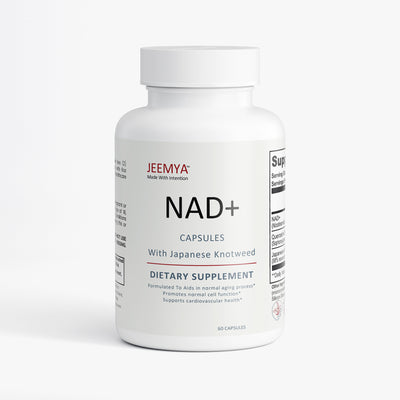
NAD+ Precursor Support — Replenishing the coenzyme that declining estrogen can no longer protect as effectively. NAD+ is required for over 500 metabolic reactions, including the mitochondrial energy production that determines your daily metabolic rate.
Metabolism-Supporting Nutrient Complexes — Bioavailable vitamins and minerals that serve as essential cofactors for the metabolic enzymes working harder in a post-menopausal body.
Cellular Protection Formulations — Antioxidants that fill the protective role estrogen once played for mitochondrial integrity.
Every product: USA-manufactured, GMP-certified, third-party tested, fully transparent formulations. No proprietary blends. No hidden doses. No misleading claims.
Your metabolism is a system. Menopause changed some of its parameters — not its potential.
[Explore Jeemya's Metabolism & Cellular Energy Collection →]
FAQs
How long does it take to improve metabolism after menopause?
Meaningful metabolic improvements can take several weeks to months, depending on factors such as diet, physical activity, sleep, body composition, and individual health status. Some women may notice changes in energy and daily well-being within a few weeks, while measurable changes in insulin sensitivity and body composition generally require longer-term consistency. Combining resistance training, adequate protein intake, regular movement, and a nutrient-dense diet can provide a strong foundation for supporting metabolic health after menopause.
What are the best supplements to support metabolism after menopause?
Several nutrients may support metabolic health after menopause when they address an inadequate dietary intake or deficiency. These include Vitamin D, which supports normal muscle and metabolic function; Magnesium, which is involved in hundreds of enzymatic reactions; Omega-3 fatty acids, which support cardiovascular and metabolic health; Calcium and Vitamin K2, which support bone health; and B-complex vitamins, which contribute to normal energy metabolism. NAD+ precursors such as NMN and NR are also being studied for their potential effects on mitochondrial and metabolic function. Testing for nutrient deficiencies and discussing supplementation with a healthcare professional can help determine what is appropriate for you.
Can NAD+ supplements replace diet and exercise?
No. NAD+ supplements are not a replacement for a balanced diet or regular physical activity. NAD+ plays an important role in cellular energy metabolism and mitochondrial function, but maintaining healthy body composition and metabolic health also requires adequate nutrition, physical activity, sleep, and other lifestyle factors. NAD+ supplementation may be considered as part of a broader wellness strategy, but it should complement rather than replace foundational healthy habits.
Can NAD+ supplements support metabolic health after menopause?
NAD+ plays an important role in mitochondrial energy production, cellular signaling, and DNA repair, and NAD+ metabolism changes with age. Research into NAD+ precursors such as NMN and NR is investigating their potential effects on mitochondrial function, insulin sensitivity, and metabolic health. However, human evidence is still developing, and more research is needed to determine how these supplements may specifically affect metabolic health after menopause. NAD+ supplements should therefore be viewed as a potential complement to, rather than a replacement for, a comprehensive post-menopause health strategy.




0 comments