

You made one of the hardest decisions of your life — and your body is thanking you for it in ways you can't see yet. Quitting smoking reduces your risk of heart disease, stroke, cancer, dementia, and depression. It improves blood pressure, strengthens bone health, sharpens balance and co-ordination, and adds years to your life. Every system in your body begins repairing itself the moment you stop inhaling tobacco smoke.
But here's the frustrating part: in the weeks and months following cessation, many people feel worse before they feel better. Energy dips. The scale creeps up. Cravings hit hard. And the metabolic engine that nicotine artificially revved for years suddenly feels like it's running on empty.
Understanding how to boost metabolism after quitting smoking isn't about replacing one substance with another. It's about rebuilding your body's natural energy systems — systems that smoking quietly damaged while simultaneously masking the damage.
This article provides a complete evidence-based roadmap for restoring metabolic function after smoking cessation, including the emerging role of NAD+ (nicotinamide adenine dinucleotide) in cellular energy recovery.
How to Boost Metabolism After Quitting Smoking?
The short answer: through a combination of strategic movement, nutritional recalibration, sleep optimization, and targeted cellular support.
How to boost metabolism after quitting smoking comes down to addressing the three metabolic disruptions that nicotine withdrawal creates simultaneously:
- Metabolic rate decline — Nicotine artificially increased your resting metabolic rate by 7–15%. Without it, your body burns fewer calories / kilojoules at rest until it recalibrates.
- Appetite dysregulation — Nicotine withdrawal triggers increased hunger through altered ghrelin and leptin signaling. Your brain confuses "need nicotine" with "need food."
- Behavioral void — Smoking occupied your hands, mouth, and attention. Without it, eating becomes the path of least resistance — particularly processed foods, soft drinks, chips / lollies / biscuits / cakes, and other high-calorie, low-effort choices.
The strategies below address all three simultaneously. They're ordered by impact — start with the first three, then layer in the rest as your smoke-free foundation stabilizes.
Does Your Metabolism Slow Down After Quitting Smoking?
Yes — and understanding why prevents you from blaming yourself for what's actually a predictable physiological response.
Nicotine is a stimulant. It increases heart rate, constricts blood vessels, and activates your sympathetic nervous system — the "fight or flight" response. This activation burns additional calories / kilojoules even while you're sitting still. Research shows nicotine increases resting metabolic rate by approximately 10% — meaning a person burning 1,800 calories at rest while smoking might burn only 1,620 after quitting.
That 180-calorie daily deficit doesn't sound dramatic. But over a month, it represents roughly 5,400 unburned calories — equivalent to about 0.7 kilograms of fat storage without eating a single extra bite.
The average weight gain after quitting is 4–5 kilograms over the first year, with most accumulation happening in the first three months. This weight tends to accumulate around the waist fat area rather than the hips fat distribution — a pattern associated with higher cardiovascular and metabolic risk.
Here's what most people miss: this metabolic slowdown is temporary. Your body's metabolic rate normalizes within 3–12 months of cessation. The goal isn't to panic — it's to support your metabolism through the transition period so the weight gain is minimal and the recovery is faster.
A sedentary lifestyle dramatically worsens this temporary metabolic dip. Former smokers who remain inactive experience the worst outcomes: more weight gain, longer recovery periods, and higher rates of relapse driven by frustration with body changes.
How Quitting Smoking Affects Your Energy Levels
Beyond the scale, most people notice a profound energy crash in the first 4–8 weeks after cessation. This happens for interconnected reasons:
Nicotine was masking fatigue. Nicotine stimulates dopamine and norepinephrine release — neurotransmitters that create alertness and focus. Without this artificial stimulation, your brain's natural energy signaling feels inadequate by comparison. This isn't actual energy loss — it's the removal of a chemical mask that hid existing depletion.
Sleep disruption intensifies. Nicotine withdrawal often disrupts sleep architecture — particularly in the first 2–4 weeks. Poor sleep independently reduces metabolic rate by 2–5%, increases cortisol, and amplifies anxiety and food cravings. Prioritizing sleep quality is one of the highest-leverage metabolic interventions during this period.
Cellular damage is being repaired. Years of tobacco smoke exposure damaged mitochondria — the cellular powerhouses responsible for converting nutrients into ATP (your body's energy currency). Your body is now redirecting resources toward repair, which temporarily reduces available energy for daily function.
Mood disruption reduces motivation. Many former smokers experience temporary increases in anxiety and depression during withdrawal — states that reduce physical activity, increase comfort eating, and create a feedback loop of declining energy and rising inactivity.
The good news: every one of these mechanisms is reversible. Energy typically returns to pre-smoking levels (or better) within 2–6 months — faster if you actively support the recovery process.
What Is NAD+ and Why Is It Important for Energy Production?
This is where the science gets interesting — and where most "how to boost metabolism after quitting smoking" guides fall short.
NAD+ (nicotinamide adenine dinucleotide) is a coenzyme present in every living cell. It's not a vitamin. It's not a mineral. It's the molecule that makes cellular energy production possible.
Here's why that matters for former smokers specifically:
NAD+ Is the Engine of Cellular Energy
Every calorie you eat must be converted into ATP — the molecule your cells actually use for energy. This conversion happens primarily in your mitochondria through a process called oxidative phosphorylation. NAD+ is the essential electron carrier that shuttles energy through this system. Without adequate NAD+, mitochondria cannot efficiently convert nutrients into usable ATP — regardless of how well you eat.
Think of it this way: food is fuel, mitochondria are the engine, and NAD+ is the spark plug. Without it, the fuel sits unused and the engine stalls.
Smoking Depletes NAD+
Chronic exposure to tobacco smoke accelerates NAD+ depletion through multiple mechanisms:
- Oxidative stress — Smoking generates massive free radical loads that activate PARP enzymes (DNA repair enzymes). PARPs consume NAD+ as their substrate. More DNA damage = more NAD+ consumed for repair = less NAD+ available for energy production.
- Inflammation — Chronic smoking creates systemic inflammation that upregulates CD38 — an enzyme that degrades NAD+. CD38 activity can reduce NAD+ pools by 50% or more.
- Accelerated aging — NAD+ levels naturally decline approximately 50% between ages 40–60. Smoking accelerates this decline, meaning a 45-year-old smoker may have NAD+ levels typical of someone 15–20 years older.
What This Means for Post-Smoking Recovery
When you quit smoking, you've removed the ongoing damage — but you haven't restored what was depleted. Your cells are trying to ramp up energy production with depleted NAD+ reserves. This partly explains why energy recovery takes months rather than days, and why some former smokers experience persistent fatigue long after other withdrawal symptoms resolve.
Supporting NAD+ levels during this recovery phase addresses the metabolic slowdown at its most fundamental level — the cellular level. Rather than trying to artificially stimulate metabolism (which is what nicotine did), NAD+ support helps restore your body's natural capacity to produce energy efficiently.
Research shows that NAD+ precursor supplementation can increase blood NAD+ levels within 10–14 days, with improvements in mitochondrial function markers appearing within 4–6 weeks — aligning precisely with the metabolic recovery timeline most former smokers experience.
For a deeper understanding of NAD+'s role in metabolism, see our guide on cellular metabolism. For broader supplement options, read what supplements boost metabolism.
Want to Give Your Metabolism a Boost? Jeemya Has You Covered.
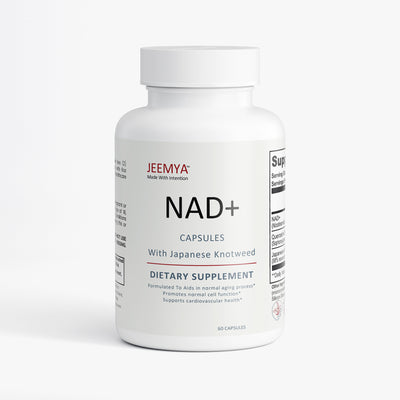
At Jeemya, we formulated our NAD+ supplement specifically for people navigating metabolic transitions — whether that's aging, lifestyle change, or recovery from habits that depleted cellular resources.
Our NAD+ formula delivers bioavailable precursors that your cells can actually convert into active NAD+ through the salvage pathway. This isn't about artificially stimulating your metabolism the way nicotine did. It's about giving your mitochondria the molecular tools they need to produce energy naturally and efficiently.
Why this matters for former smokers:
- Supports the cellular energy recovery that smoking disrupted
- Addresses NAD+ depletion caused by years of oxidative stress
- Provides metabolic support without stimulants, caffeine, or artificial thermogenics
- Works alongside the lifestyle changes (exercise, nutrition, sleep) outlined in this article
Combined with the strategies below — regular exercise, healthy eating, quality sleep, and reduced stress — NAD+ support creates a comprehensive approach to metabolic recovery that addresses both the systemic and cellular levels simultaneously.
Evidence-Based Strategies to Boost Metabolism After Quitting Smoking
1. Build Regular Exercise Into Your Routine
Regular exercise is the single most effective intervention for combating the metabolic slowdown after smoking cessation. It directly counteracts the reduction in resting metabolic rate, improves mood, reduces cravings, and prevents the unfavorable distribution of fat toward the waist.
What the guidelines recommend:
- 150–300 minutes of moderate physical activity per week (or 75–150 minutes of vigorous physical activity)
- Muscle-strengthening activities on at least two days per week
Moderate physical activity examples: brisk walking, gardening, swimming, cycling. These can be broken into 10-minute blocks throughout the day — you don't need a single 30-minute session.
Muscle-strengthening activities examples: push-ups, squats, lunges, resistance training at a gym / weights facility, or bodyweight exercises at home.
Why resistance training matters specifically for former smokers:
- Builds muscle tissue — which burns more calories at rest than fat tissue
- Prevents the metabolic-rate-lowering loss of lean mass that often accompanies quitting
- Improves insulin sensitivity and glucose disposal
- Creates lasting elevation in post-exercise metabolic rate (EPOC effect)
- Improves bone health — which smoking may have compromised
Start where you are. If you've been sedentary, begin with 10-minute walks after meals and two bodyweight sessions per week. Progress gradually. Consistency beats intensity.
For more movement strategies that don't require structured workouts, see how to boost your metabolism without exercise.
2. Increase Non-Exercise Activity (NEAT)
Non-exercise activity thermogenesis (NEAT) — the energy you burn through daily movement that isn't structured exercise — accounts for a larger portion of total daily calorie expenditure than most people realize. Former smokers who maintained a sedentary lifestyle while smoking often have depressed NEAT levels that persist after quitting.
Simple NEAT strategies:
- Stand during phone calls
- Take stairs instead of elevators
- Walk to the store instead of driving short distances
- Do housework with intentional energy (vigorous cleaning, rearranging)
- Pace while thinking or talking
- Park farther from entrances
- Use a standing desk for part of your workday
Research shows that high-NEAT individuals can burn 300–500 more calories / kilojoules daily than sedentary counterparts — enough to completely offset the metabolic slowdown from nicotine withdrawal.
3. Restructure Your Eating Habits
Healthy eating after smoking cessation isn't about restriction — it's about recalibration. Your appetite signaling system is disrupted, your taste buds are recovering (food tastes better after quitting, which can increase consumption), and your behavioral patterns around food need conscious redesign.
Key principles:
- Prioritize wholegrain foods — They provide sustained energy, stabilize blood sugar, and reduce the insulin spikes that promote waist fat storage.
- Eliminate or minimize processed foods — Soft drinks, chips / lollies / biscuits / cakes, and ultra-processed snacks provide empty calories that your recalibrating metabolism stores readily as fat.
- Eat protein at every meal — Protein has the highest thermic effect of food (20–30% of calories burned during digestion), promotes satiety, and preserves muscle tissue during the weight-fluctuation period after quitting.
- Don't skip meals — Increased hunger is a withdrawal symptom. Trying to fight it by skipping meals backfires — it intensifies cravings and leads to overconsumption later.
- Plan meals ahead — Structure prevents impulsive eating. Consider following a balanced meal plan (like the Livelighter Meal Plan or similar evidence-based framework) to remove decision fatigue during the early cessation period.
- Avoid crash dieting — Crash dieting while quitting smoking is counterproductive. It further slows metabolism, burns muscle tissue instead of fat, increases irritability, and dramatically raises relapse risk. Trying to quit nicotine and severely restrict calories simultaneously is a recipe for failing at both.
For specific foods that support metabolic rate, read what are metabolism boosting foods.
4. Manage Oral Cravings Without Extra Calories
The oral fixation of smoking doesn't disappear overnight. Your mouth and hands need something to do. The key is choosing options that don't add calories:
- Sugarless gum — keeps your mouth busy, satisfies the chewing reflex
- Nicotine inhalator — provides oral simulation plus low-dose nicotine to ease transition
- Raw vegetables (carrots, celery, cucumber)
- Ice chips or cold water with lemon
- Toothpicks or cinnamon sticks
- Deep breathing exercises when the craving is psychological rather than physical
If using nicotine replacement therapy (NRT), discuss options with your dietitian or healthcare provider — NRT can help moderate both cravings and weight gain during the transition period.
5. Prioritize Sleep Quality
Sleep disruption during nicotine withdrawal is common — and its metabolic cost is significant. Poor sleep reduces insulin sensitivity by up to 30%, increases hunger hormones, elevates cortisol, and impairs decision-making around food choices.
Strategies for better sleep after quitting:
- Maintain consistent sleep-wake times (even on weekends)
- Avoid caffeine after noon — sensitivity often increases post-cessation
- Create a cool, dark sleeping environment
- Avoid screens for 30 minutes before bed
- Consider magnesium supplementation (supports both sleep and metabolic function)
- If sleep disruption is severe and persists beyond 4 weeks, consult your healthcare provider
Every hour of quality sleep your body gains back translates to measurable improvements in metabolic rate, appetite regulation, and mood enhancement.
6. Stay Hydrated
Water is involved in every metabolic reaction. Research shows that drinking 500mL of water temporarily increases metabolic rate by approximately 30% for 30–60 minutes after consumption. Beyond this acute effect, adequate hydration:
- Helps distinguish thirst from hunger (many cravings are actually dehydration)
- Supports the elimination of residual toxins from years of smoking
- Maintains blood pressure stability during the cardiovascular adjustment period
- Supports kidney function during metabolic recovery
Aim for 6–8 glasses daily minimum. More if you're exercising or in warm environments. For the full breakdown, see does water boost metabolism.
7. Morning Metabolic Activation
The first 90 minutes after waking set your metabolic tone for the day. Former smokers often used their first cigarette as a metabolic "activation signal" — a habit that leaves a void after quitting.
Replace it with genuine metabolic activators:
- Protein-rich breakfast within 60 minutes of waking
- 10-minute walk or light movement
- Cold water (signals your body to generate heat = burns calories)
- Bright light exposure (regulates circadian rhythm, which governs metabolic hormones)
- NAD+ supplementation (NAD+ synthesis follows circadian rhythms, peaking in morning hours)
For a complete morning protocol, read how to boost metabolism in the morning.
8. Seek Professional Support
A dietitian who understands smoking cessation can create a personalized eating plan that accounts for your specific metabolic changes, food preferences, and behavioral patterns. This isn't a luxury — it's one of the highest-ROI investments during the transition period.
When to seek professional help:
- You're gaining more than 1 kilogram per month
- Cravings are overwhelming and food is becoming a substitute addiction
- You have existing conditions (heart disease, diabetes, blood pressure issues) that require careful nutritional management
- You're experiencing persistent anxiety or depression that affects eating patterns
- You've relapsed previously due to frustration with weight gain
Frequently Asked Questions
How long does it take for metabolism to normalize after quitting smoking?
For most people, resting metabolic rate returns to its natural baseline within 3–12 months of cessation. The most significant metabolic dip occurs in the first 1–3 months. Factors that accelerate normalization: regular exercise (particularly resistance training), adequate protein intake, quality sleep, and cellular support through NAD+ optimization. Factors that delay it: sedentary lifestyle, crash dieting, poor sleep, high stress, and alcohol consumption.
Why do people gain weight after quitting smoking?
Three simultaneous mechanisms: (1) Metabolic rate drops 7–15% without nicotine's stimulant effect, meaning you burn fewer calories / kilojoules at rest. (2) Nicotine withdrawal increases increased hunger through appetite hormone dysregulation — your brain signals "eat" when it really means "I want nicotine." (3) Behavioral substitution — the oral, hand, and attention habits of smoking get redirected toward eating, particularly processed foods and high-calorie snacks. Average weight gain is 4–5 kilograms over the first year, with most occurring in months 1–3. This is still dramatically healthier than continuing to smoke — you'd need to gain over 40 kilograms to equal the cardiovascular risk of continued smoking.
Does exercise help boost metabolism after smoking cessation?
Absolutely — it's the most effective single intervention. Regular exercise directly counteracts the metabolic slowdown by: increasing resting metabolic rate through preserved muscle tissue, improving insulin sensitivity, reducing waist fat accumulation, elevating mood (reducing emotional eating), and providing a behavioral substitute for smoking rituals. Both moderate physical activity (brisk walking, swimming, cycling, gardening) and muscle-strengthening activities (push-ups, squats, lunges, gym / weights) contribute. The combination produces the strongest metabolic response.
Can metabolism recover after years of smoking?
Yes. The human body has remarkable recovery capacity. Within 2–12 weeks of quitting, circulation improves and lung function increases. Within 3–9 months, respiratory symptoms diminish. Within 1 year, heart disease risk drops by 50%. Metabolically, your body recalibrates within the first year — and with targeted support (exercise, nutrition, NAD+ optimization), many former long-term smokers achieve metabolic function equal to or better than their smoking years, because nicotine's "metabolism boost" came at the cost of cardiovascular damage, inflammation, and accelerated cellular aging that reduced true metabolic health even while artificially burning extra calories.
What is NAD+ and how does it support cellular energy?
NAD+ (nicotinamide adenine dinucleotide) is an essential coenzyme in every living cell. It functions as the primary electron carrier in mitochondrial energy production — shuttling electrons through the electron transport chain where 90% of your cellular energy (ATP) is generated. Without adequate NAD+, your mitochondria cannot efficiently convert the food you eat into usable energy. NAD+ levels decline naturally with age (approximately 50% between ages 40–60) and are further depleted by smoking-related oxidative stress and inflammation. This depletion partly explains the persistent fatigue many former smokers experience even weeks after other withdrawal symptoms resolve.
Can NAD+ supplements support healthy metabolism?
Evidence supports that NAD+ precursor supplementation increases cellular NAD+ levels within 10–14 days, with measurable improvements in mitochondrial function markers within 4–6 weeks. For former smokers specifically, NAD+ support addresses a root cause of post-cessation metabolic sluggishness — cellular energy machinery operating with depleted resources. NAD+ supplementation works best as part of a comprehensive approach: combined with regular exercise, healthy eating, quality sleep, and stress management. It doesn't replace these foundations — it enhances the cellular environment in which they operate. For more on supplementation approaches, see what supplements boost metabolism.
The Bigger Picture: What You Gained By Quitting
A few extra kilograms are an infinitely smaller health risk than continuing to smoke. The metabolic frustration is real — but it's temporary. The damage prevention is permanent.
By quitting, you've reduced your risk of:
- Heart disease (risk halves within 1 year)
- Stroke (risk drops to non-smoker levels within 5–15 years)
- Cancer (lung cancer risk drops by 50% within 10 years)
- Dementia (smoking is a major modifiable risk factor)
- Depression (chronic smoking worsens long-term mental health)
You've improved your:
- Blood pressure (normalizes within weeks)
- Bone health (bone density stabilizes and improves)
- Balance and co-ordination (circulation improvements enhance proprioception)
- Sense of taste and smell (which, yes, makes food more appealing — manage accordingly)
The metabolic adjustment period is a small price for profound health returns. Support your body through it with movement, nourishment, rest, and cellular-level support — and within months, you'll have both the smoke-free benefits and a well-functioning metabolism to show for it.
This article is for educational purposes only and does not constitute medical advice. Consult your healthcare provider or dietitian before making significant changes to your diet, exercise, or supplementation routine — particularly if you have existing cardiovascular conditions or are using nicotine replacement therapy.


0 comments