

These three get lumped together a lot in weight-loss and longevity content, but they're not really competitors in the same category. One is an FDA-approved prescription drug with a specific mechanism and strong trial data. One is a cellular coenzyme precursor sold as a supplement with promising but still-developing human evidence. One is a plant compound with a long track record for blood sugar and modest metabolic effects, but weak evidence for meaningful weight loss on its own. Here's how they actually stack up.
The 60-Second Summary
|
Zepbound |
NAD+ (NMN/NR) |
Berberine |
|
|
What it is |
Prescription injectable (tirzepatide) |
Supplement (precursor to a cellular coenzyme) |
Plant alkaloid supplement |
|
Regulatory status |
FDA-approved |
Unregulated supplement |
Unregulated supplement |
|
Primary use case |
Chronic weight management, obesity, sleep apnea |
Cellular energy/aging support (unproven for weight loss) |
Blood sugar and lipid management |
|
Typical weight loss |
15–22.5% of body weight over ~72 weeks[^1] |
Not established |
Modest to negligible on its own[^11] |
|
Delivery |
Weekly self-injection |
Oral capsule |
Oral capsule |
|
Cost |
~$300–449 +/month |
~$30 – 60/month |
~$10 – 40/month |
|
Evidence strength |
Large phase 3 RCTs (thousands of patients) |
Small human trials (15–40 people typically) |
Meta-analyses of moderate-sized trials, mostly outside the US |
What Each One Actually Is
Zepbound (tirzepatide) is a once-weekly injectable medication, FDA-approved in 2023 for chronic weight management in adults with obesity, or overweight adults with a weight-related condition, and also approved for moderate-to-severe obstructive sleep apnea.[^2] It's a dual agonist — it activates both the GLP-1 and GIP hormone receptors at once, which is what distinguishes it mechanistically from single-target drugs like semaglutide (Wegovy/Ozempic).[^3]
NAD+ precursors (NMN and NR) are supplements, not drugs. NAD+ itself is a coenzyme every cell needs for energy production and DNA repair, and levels decline with age. NMN and NR are taken orally because NAD+ itself can't be absorbed intact, and the idea is that the precursor gets converted into NAD+ inside the body.
Berberine is a bitter-tasting yellow alkaloid extracted from plants like barberry and goldenseal, used for centuries in traditional Chinese and Ayurvedic medicine, originally mostly for gut infections.[^4] It's now marketed almost entirely for blood sugar and metabolic support — sometimes nicknamed "nature's Ozempic," a comparison that, as you'll see below, doesn't hold up well.
How They Work
Zepbound mimics two gut hormones — GLP-1 and GIP — that regulate appetite and digestion. Activating these receptors suppresses appetite, slows gastric emptying (so you feel full longer), and reduces "food noise," the constant mental preoccupation with eating.[^5] It also affects insulin release and glucose production, which is why its sibling drug Mounjaro is separately approved for type 2 diabetes.
NAD+ precursors feed into the body's NAD+ salvage pathway. NMN and NR are converted through a small number of enzymatic steps into NAD+, which is then used by mitochondria for energy production and by enzymes like sirtuins and PARPs for cellular repair and metabolic regulation. The mechanism is well established at the cellular level; what's less settled is how efficiently this translates from a pill into meaningfully higher NAD+ in muscle, brain, or liver tissue in a living person, versus just raising the level measured in blood.
Berberine activates AMPK — often called the body's "metabolic master switch" — the same pathway targeted by metformin.[^6] This increases glucose uptake into cells, suppresses the liver's glucose production, and shifts metabolism toward burning fat rather than storing it. Some research also suggests berberine works partly through altering gut bacteria and inhibiting digestive enzymes that break down carbohydrates.[^7]
The Evidence, Honestly
Zepbound has by far the strongest evidence of the three. It's backed by large, randomized, placebo-controlled phase 3 trials (the SURMOUNT program) involving thousands of participants. In the flagship SURMOUNT-1 trial, people on the highest dose lost an average of 20.9–22.5% of body weight over 72 weeks, compared to about 2.4% on placebo.[^8] This is the level of evidence the FDA requires for drug approval, and it's simply a different tier than anything available for either supplement.
NAD+ precursors have real but early-stage human data. Placebo-controlled trials confirm that NMN and NR reliably raise NAD+ levels in whole blood, and safety data over 8–12 weeks looks good.[^9] What's genuinely unresolved is whether that blood increase reflects a proportional rise inside muscle, brain, or liver tissue — some human studies have failed to find increased NAD+ in skeletal muscle even when blood levels rose.[^10] There is no solid human evidence that NAD+ precursors cause meaningful weight loss on their own; they're studied mainly for metabolic and energy-related biomarkers, not pounds lost.
Berberine has a moderate amount of human trial data, much of it from China, showing real effects on fasting glucose, HbA1c, and cholesterol — in some studies comparable to metformin.[^6] But the weight-loss evidence specifically is weak: reviewers looking specifically at berberine for weight loss have concluded that current research has not shown clinically meaningful, sustained weight-loss benefits, even though the proposed mechanisms (AMPK activation, improved insulin sensitivity, gut microbiome effects) are plausible.[^11] Its evidence base for blood sugar control is genuinely more mature than NAD+'s evidence base for anything.
Weight Loss: The Numbers That Matter
If significant weight loss is your primary goal, these three options are not in the same category:
- Zepbound: 15–22.5% of body weight over 72 weeks in clinical trials, depending on dose — roughly 35–52 lbs for someone starting around 230 lbs.[^1][^8]
- Berberine: Jeemya Berberine is positioned as a metabolic-health supplement, providing 500 mg of Berberine HCL per serving. Its product information focuses on supporting healthy glucose metabolism, insulin sensitivity, lipid metabolism, and weight management. Berberine may complement a healthy lifestyle, but it should not be considered equivalent to a prescription weight-loss medication such as Zepbound.
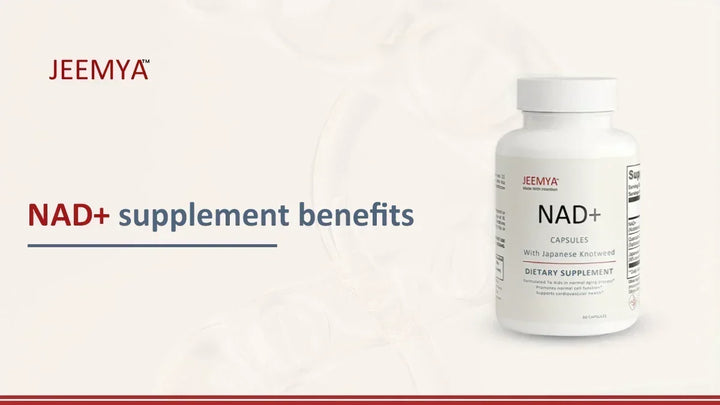
- NAD+: Jeemya NAD+ Cell Regenerator provides 500 mg of NAD+ per serving and is primarily formulated to support cellular energy production, mitochondrial function, DNA repair, oxidative-stress defense, and healthy aging. Weight loss is not its primary purpose, and it should not be viewed as a weight-loss treatment.
For medically indicated, significant weight loss, Zepbound is specifically designed and clinically studied for that purpose, while Berberine is better characterized as a metabolic-support supplement and NAD+ as a cellular-energy and healthy-aging supplement. If you're considering Zepbound or another prescription weight-loss medication, it's best to discuss your options with a qualified healthcare professional.
Side Effects and Safety
Zepbound most commonly causes gastrointestinal effects — nausea (up to ~25–29% at the highest dose), diarrhea, vomiting, and constipation — usually worst right after a dose increase and easing over time.[^12] More serious but less common risks include pancreatitis, gallbladder problems, kidney issues from dehydration, and a boxed warning about thyroid C-cell tumors seen in rodent studies (human relevance unclear, but it's contraindicated in people with a personal or family history of medullary thyroid carcinoma).[^13] It requires a prescription and medical supervision by design.
NAD+ precursors have looked well tolerated in the human trials done so far, generally over 8–12 week windows, with no significant adverse effects reported.[^9] Because they're unregulated supplements, the bigger practical risk isn't the molecule itself — it's product quality (mislabeled potency, contamination, counterfeit products), which is why third-party testing (NSF Certified for Sport, Alkemist Assured) matters more here than for a prescription drug with FDA oversight.
Berberine commonly causes GI side effects of its own — cramping, diarrhea, constipation — and, more importantly, it has real drug interaction potential. Because it lowers blood sugar through a metformin-like mechanism, combining it with diabetes medications increases hypoglycemia risk, and it can also interact with drugs metabolized by the liver's CYP450 enzymes. It's not appropriate during pregnancy.
Cost and Access
- Zepbound: or eligible self-pay patients, Lilly currently lists Zepbound KwikPen or vial pricing starting at $299 per month for the 2.5 mg dose, $399 for 5 mg, and $449 for 7.5 mg, 10 mg, 12.5 mg, and 15 mg. The 2.5 mg dose is a starting dose and is not an approved maintenance dose. Eligible patients with commercial insurance may also qualify for Lilly savings programs, with the actual out-of-pocket cost depending on insurance coverage and program eligibility. Zepbound requires a prescription.[^14]
- NAD+ precursors: Roughly $30–60/month for a decent-quality NMN or NR product; no prescription needed.
- Berberine: The cheapest of the three, often $10–39/month; no prescription needed.
Can You Combine Them?
This is the question most people actually want answered, and the honest picture is nuanced. Zepbound addresses appetite and food intake directly and is the only one of the three shown to produce large, reliable weight loss. Berberine's realistic role is as a blood-sugar and lipid-support supplement that some people use alongside lifestyle changes or alongside a GLP-1 medication — but it's not a substitute for one, and its interaction with blood-sugar-lowering effects means it shouldn't be added to a GLP-1/diabetes regimen without your prescriber knowing. NAD+ precursors are generally positioned as general cellular-energy and healthy-aging support rather than a weight-loss tool at all, so combining it with either of the others is really about separate goals (energy/aging vs. appetite/weight) rather than stacking effects toward the same outcome.
None of this should be decided without your doctor — especially because Zepbound already carries meaningful GI and organ-system risks on its own, and adding other agents that affect blood sugar (like berberine) changes that risk profile.
Bottom Line
- Want the most robust, well-studied path to significant weight loss? Zepbound has the evidence, but it's a prescription drug with real side effects and a real cost, and it requires medical supervision.
- Want blood sugar and cholesterol support with a long track record, on a budget? Berberine has decent evidence for that specific purpose — just don't expect it to replace a weight-loss drug.
- Interested in cellular energy and long-term healthy aging rather than weight loss specifically? NAD+ precursors are a reasonable, generally well-tolerated bet, but the human evidence is still early and it's not a weight-loss tool.
Notes: This article is for informational purposes and isn't medical advice. Zepbound is a prescription medication and should only be used under a doctor's supervision. If you have diabetes, thyroid disease, pancreatic or gallbladder conditions, kidney disease, or any other chronic condition — or if you're pregnant, nursing, or taking other medications — talk to your doctor before starting any of these, including the supplements, since even "natural" options can interact with medications or existing conditions.
Sources
[^1]: GoodRx, "Zepbound FAQs: Here's How Tirzepatide Works for Weight Loss" — https://www.goodrx.com/zepbound/how-it-works
[^2]: Drugs.com, "Tirzepatide (Zepbound, Mounjaro)" — https://www.drugs.com/tirzepatide.html
[^3]: GLP3 Planner, "How Does Zepbound (Tirzepatide) Work? Dual GIP+GLP-1 Explained" — https://glp3planner.com/resources/how-does-zepbound-work
[^4]: Superpower, "Berberine for Blood Sugar: What Works" — https://superpower.com/guides/blood-sugar-metabolic-supplements/berberine-blood-sugar
[^5]: GoodRx, "Tirzepatide's Mechanism of Action: 7 Ways It Works" — https://www.goodrx.com/classes/gip-receptor-glp-1-receptor-agonists/tirzepatide-mechanism-of-action
[^6]: Ubie Doctor's Note, "Stop! Read This Before Taking Berberine" — https://ubiehealth.com/doctors-note/berberine-benefits-science-insulin-metabolism-x-4241e1
[^7]: PMC, "Effects and Action Mechanisms of Berberine and Rhizoma coptidis on Gut Microbes and Obesity" — https://www.ncbi.nlm.nih.gov/pmc/articles/PMC3167861/
[^8]: Health Review Network, "Zepbound For Weight Loss: How This GLP-1 Injection Actually Works In 2026" (SURMOUNT-1 data) — https://healthreviewnetwork.com/weight-loss/zepbound-for-weight-loss-guide/
[^9]: npj Aging, "Chronic nicotinamide mononucleotide supplementation elevates blood NAD+ levels and alters muscle function in healthy older men" — https://www.nature.com/articles/s41514-022-00084-z
[^10]: NMN.com, "Clinical Study Indicates that NMN Efficaciously Increases Blood NAD+ in Humans" — https://www.nmn.com/news/nmn-increases-blood-nad-humans
[^11]: HealthCentral, "Berberine for Weight Loss: Benefits & Use" — https://www.healthcentral.com/condition/obesity/berberine-for-weight-loss
[^12]: GLP1 Clinics, "Zepbound Side Effects: Complete Guide to What to Expect (2026)" — https://www.glp1clinics.org/blog/zepbound-side-effects
[^13]: Ubie Doctor's Note, "Zepbound Side Effects: 5 Urgent Things Doctors Wish You Knew Now" — https://ubiehealth.com/doctors-note/zepbound-side-effects-5-things-doctors-know-tips-811e2
[^14]: Rx.com, "Zepbound Coupon 2026: Cheapest Ways to Pay & Prices" — https://rx.com/drug/zepbound

0 comments