
Water is the most undervalued metabolic tool in existence. Not because it's magic — but because every single energy-producing reaction in your body requires it, and most people are operating in a state of mild dehydration without realizing it. The question isn't really whether water boosts metabolism. The question is: how much metabolic potential are you losing every day by not drinking enough?
Does water boost metabolism? Yes. Directly and measurably. Research demonstrates that drinking water increases metabolic rate by up to 30% within 10 minutes of consumption — an effect that peaks at 30–40 minutes and lasts approximately 60–90 minutes. This isn't theoretical. It's thermogenesis: your body expends energy to heat water from room/cold temperature to core body temperature, and to process it through metabolic pathways.
But the story goes far deeper than a temporary calorie-burning spike. Water is the medium in which all metabolic chemistry occurs. Without adequate hydration, enzymes slow down, fat burning becomes less efficient, digestion suffers, nutrient absorption declines, and your cells progressively lose their capacity to produce energy. It is, quite literally, the foundation everything else depends on.
Does Water Boost Your Metabolism?
The direct answer: yes — through three distinct mechanisms.
Mechanism 1: Water-Induced Thermogenesis
When you drink water — particularly cold water — your body must expend energy to process it. This effect, called water-induced thermogenesis, has been measured in multiple clinical studies:
- A landmark study in The Journal of Clinical Endocrinology & Metabolism found that drinking 500mL of water increased metabolic rate by 30% in healthy adults. The effect began within 10 minutes, peaked at 30–40 minutes, and was sustained for over an hour.
- In men, the thermogenic response was primarily fueled by fat burning (lipid oxidation). In women, it was driven more by carbohydrate oxidation. Either way — calories burned increased measurably.
- Cold water (3–4°C) produced a slightly greater thermogenic response than room-temperature water, because additional energy was required to heat the fluid to body temperature.
Over a full day, drinking the recommended 2–3 liters of water could account for an additional 70–100 calories burned — purely from the thermogenic effect. That's modest in isolation, but cumulative over weeks and months, and it requires zero effort beyond drinking what your body already needs.
Mechanism 2: Metabolic Efficiency
Water isn't just a trigger for thermogenesis — it's the environment in which metabolism happens. Every enzymatic reaction, every electron transfer in your mitochondria, every molecule of metabolized fat broken down through beta-oxidation requires water as either a solvent, a reactant, or a transport medium.
When you're even mildly dehydrated (1–2% of body weight — often not enough to feel thirst):
- Enzymatic reactions slow by an estimated 5–15%
- Blood becomes more viscous, reducing nutrient delivery to cells
- Kidneys work harder to concentrate waste, diverting energy from other processes
- Liver function — which handles fat metabolism — becomes less efficient
- Cellular health deteriorates as waste products accumulate
Your metabolic rate doesn't just drop because you're burning fewer calories — it drops because the chemical machinery operating at the cellular level physically cannot function at full speed without adequate water.
Mechanism 3: Behavioral and Appetite Effects
Water also boosts effective metabolic outcomes through indirect pathways:
- Reduces overeating — Many hunger signals are actually misinterpreted thirst signals. Drinking water before meals creates satiety that prevents excess caloric intake.
- Displaces caloric beverages — Every glass of water that replaces sugary sodas / lemonade / sweet tea / smoothies eliminates empty calories and inflammatory calories that actively impair metabolic function.
- Supports exercise / workout performance — Adequate hydration prevents muscle fatigue, maintains electrolyte balance, and allows you to train harder and longer — amplifying the metabolic benefits of physical activity.
For more strategies that don't require structured workouts, see how to boost your metabolism without exercise.
Does Drinking Water Before Meals Boost Metabolism?
Yes — and the evidence for this specific timing strategy is particularly strong.
A study published in Obesity found that adults who drank 500mL of water 30 minutes before each meal lost 44% more weight over 12 weeks compared to those who didn't — without any other dietary changes. The mechanism is twofold:
- Thermogenic boost at a strategic time. Drinking water before eating elevates metabolic rate precisely when your body is about to process food. This amplifies the thermic effect of food (TEF) — the energy cost of digestion, absorption, and processing of nutrients.
- Satiety-driven portion control. Water creates stomach volume that triggers stretch receptors, signaling satiety to the brain before you've consumed excess calories. This isn't willpower — it's physics and physiology working together. People who drink water before meals consistently eat 75–90 fewer calories per sitting without feeling deprived.
Practical protocol:
- Drink 500mL (approximately 16oz) of plain water 20–30 minutes before each main meal
- Not during the meal — which can dilute digestive enzymes and impair nutrient absorption
- Room temperature or cold — both work; cold provides slightly more thermogenic effect
- Consistency matters more than perfection — even before 2 of 3 daily meals creates measurable impact
This strategy pairs well with metabolically intelligent food choices. For specifics on what to eat, see what are metabolism boosting foods.
How Much Water Should I Drink to Boost Metabolism?
The "8 glasses a day" rule is a starting point — not a prescription. Actual needs vary based on body weight, activity level, climate, and metabolic demand.
Evidence-based guidelines for metabolic optimization:
|
Factor |
Recommendation |
|
Baseline |
30–35mL per kg of body weight daily |
|
Active days (exercise / workout) |
Add 500–1000mL per hour of activity |
|
Hot climate / heavy sweating |
Add 500–750mL beyond baseline |
|
High-protein diet |
Add 250–500mL (protein metabolism requires more water) |
|
Weight loss goal active |
Ensure minimum 2.5L daily regardless of other factors |
Signs you're not drinking enough:
- Fatigue that persists despite adequate sleep — often the first sign of dehydration
- Dark-colored urine (aim for pale yellow)
- Constipation — the colon absorbs water from waste when the body is dehydrated
- Muscle fatigue during exercise / workout that seems disproportionate to effort
- Difficulty concentrating — brain tissue is approximately 75% water and is highly sensitive to even mild dehydration
- Persistent thirst — by the time you feel thirsty, you're already 1–2% dehydrated
What counts toward your water intake:
- Plain water (optimal)
- Water infused with lemon / lime / cucumber / mint (adds flavor without calories, supports morning wellness rituals)
- Herbal teas (unsweetened)
- Water-rich fruits and vegetables (contributes 20–30% of daily intake for most people) — see what fruits boost metabolism for metabolically beneficial options
What doesn't count (or works against you):
- Sugary sodas / lemonade / sweet tea / smoothies — these add empty calories and inflammatory calories that counteract any hydration benefit
- Alcohol — creates net dehydration through diuretic effects
- Excessive caffeine (>400mg daily) — mild diuretic effect at high doses
Why Hydration Is Important for Energy Production
This is where the conversation moves from surface-level ("drink water to burn calories") to the fundamental biology of how your body creates energy.
Every ATP molecule your body produces requires water.
At the cellular level, energy production happens in your mitochondria through a process called oxidative phosphorylation. This process:
- Takes electrons from the food you eat (carried by NAD+ and FADH2)
- Passes them through a chain of protein complexes in the mitochondrial membrane
- Uses the energy released to pump protons across that membrane
- Channels those protons back through ATP synthase to generate ATP
Water is essential at multiple steps in this chain. It's the solvent in which these reactions occur. It participates directly in hydrolysis reactions that release energy. And it carries away the metabolic byproducts (toxins) that would otherwise accumulate and inhibit further energy production.
When you're dehydrated, this entire system slows down:
- Blood volume decreases → less oxygen delivered to cells → mitochondria operate below capacity
- Cellular health deteriorates → metabolic waste accumulates → enzymatic efficiency drops
- Liver and kidneys — your primary detoxification organs — become overwhelmed, diverting energy from metabolism to toxin processing
- Fluid balance disruption → electrolyte balance shifts → nerve and muscle signaling becomes less efficient → muscle fatigue increases
The result is systemic fatigue that no amount of caffeine truly fixes — because the bottleneck isn't stimulation. It's hydration at the cellular level.
This is why drinking water first thing in the morning produces such a noticeable energy effect for most people — you've been losing water through respiration and perspiration for 7–8 hours overnight. Morning hydration is metabolic restoration. For a complete morning metabolic protocol, see how to boost metabolism in the morning.
Supporting Metabolism Beyond Drinking Water
Water is foundational — but it's one layer of a multi-system metabolic stack. The most effective approach combines adequate hydration with:
Nutrition quality: The foods you eat determine what raw materials are available for energy production. Whole foods provide the vitamins, minerals, and cofactors that enzymes need to catalyze metabolic reactions. Processed foods with empty calories deliver energy substrate without the cofactors needed to process it efficiently — creating metabolic congestion rather than clean energy production.
Movement and NEAT: Physical activity builds the metabolic machinery (muscle tissue, mitochondrial density) that water then helps operate efficiently. Water without movement is like fuel without an engine. Movement without water is an engine without coolant.
Sleep and recovery: During sleep, your body performs metabolic maintenance — clearing toxins from brain tissue, repairing mitochondria, rebalancing hormones that govern metabolic rate. Inadequate sleep reduces these processes regardless of hydration status.
Cellular-level support: This is where most people's metabolic strategy stops — at the macro level of food and water and movement. But the limiting factor for many isn't the availability of fuel or hydration. It's the capacity of their cellular machinery to use what's available efficiently.
For a comprehensive understanding of how your cells produce energy, read our guide on cellular metabolism.
The Role of NAD+ in Cellular Energy Production
If water is the medium in which metabolism happens, NAD+ (nicotinamide adenine dinucleotide) is the molecule that makes it happen.
NAD+ is the essential coenzyme that shuttles electrons through your mitochondrial energy production chain. Without it, the water you drink, the food you eat, and the oxygen you breathe cannot be converted into usable ATP — regardless of how perfectly hydrated or well-nourished you are.
Here's the connection to hydration and metabolism:
Water provides the environment. NAD+ provides the mechanism. Both are required. Neither alone is sufficient.
Think of it this way:
- Water = the factory floor (clean, functional, properly maintained)
- NAD+ = the assembly line workers (doing the actual conversion of raw materials to finished product)
If the factory floor is dry and dirty (dehydrated), even the best workers can't function. But if the factory floor is pristine and there aren't enough workers (NAD+ depleted), production still stalls.
Why NAD+ levels matter for metabolic rate:
- NAD+ accepts electrons during glycolysis and the citric acid cycle — the first steps of extracting energy from food
- It delivers those electrons to the electron transport chain in mitochondria — where 90% of ATP is generated
- NAD+ levels decline approximately 50% between ages 40–60
- This decline directly correlates with reduced metabolic rate, increased fatigue, impaired fat burning, and the progressive metabolic slowdown most people attribute to "just getting older"
- When NAD+ is adequate: mitochondria run efficiently, metabolized fat is converted cleanly to energy, metabolic waste is processed effectively
- When NAD+ is depleted: cells shift to less efficient energy production, fat oxidation slows, cellular health deteriorates, systemic fatigue accumulates
Research shows that NAD+ precursor supplementation can increase cellular NAD+ levels within 10–14 days, supporting the mitochondrial function that water-based metabolic reactions depend on.
Looking for Trusted Metabolism Support? Explore Jeemya.
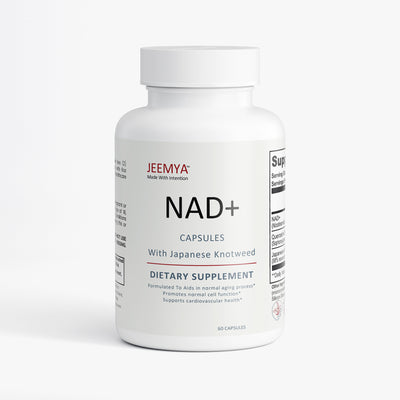
Jeemya's NAD+ supplement is formulated to address metabolic function at its most fundamental level — the cellular machinery that converts everything you eat and drink into usable energy.
How it complements your hydration strategy:
Water provides the optimal biochemical environment. NAD+ ensures your mitochondria can actually use that environment to produce ATP efficiently. Together, they represent the two non-negotiable foundations of metabolic function — the medium and the mechanism.
Our formula delivers bioavailable NAD+ precursors that your cells convert through the salvage pathway — supporting energy production, fat burning, and cellular health without stimulants, without caffeine, and without the crash that comes from artificially stimulating a depleted system.
For the full breakdown of evidence-based supplementation options, see what supplements boost metabolism.
Frequently Asked Questions
Can drinking more water increase metabolism?
Yes — and the evidence is direct. Drinking 500mL of water increases metabolic rate by approximately 30% for 60–90 minutes through water-induced thermogenesis. Over a full day of adequate hydration (2.5–3L), this translates to an additional 70–100 calories burned purely from processing water. Beyond thermogenesis, adequate water intake supports fat burning efficiency, digestion, nutrient absorption, liver and kidney function, and prevents the enzymatic slowdown caused by dehydration. The effect is cumulative — consistent adequate hydration maintains your metabolism at its natural capacity, while chronic under-hydration progressively suppresses metabolic rate below its potential.
What helps metabolism more than water?
While water is foundational, several interventions produce larger metabolic effects: resistance training and muscle building (increases resting metabolic rate by 50–100 calories per day per kg of muscle gained), adequate protein intake (thermic effect of food burns 20–30% of protein calories during digestion), quality sleep (poor sleep reduces metabolic rate by 2–5% and disrupts appetite hormones), and NAD+ optimization (supports the cellular energy machinery that all other interventions depend on). The key insight: these aren't alternatives to water — they're multipliers. Without adequate hydration, the benefits of exercise, nutrition, and cellular support are all diminished. Water is the baseline that makes everything else work better.
What is NAD+ and how does it relate to metabolism?
NAD+ (nicotinamide adenine dinucleotide) is an essential coenzyme present in every cell that enables energy production. It functions as the primary electron carrier in mitochondrial oxidative phosphorylation — the process that generates 90% of your body's ATP (cellular energy). NAD+ accepts electrons from nutrients during the citric acid cycle, then delivers them to the electron transport chain where ATP is synthesized. Without adequate NAD+, this energy conversion slows dramatically — regardless of how well you eat, hydrate, or exercise. NAD+ levels decline ~50% between ages 40–60, directly correlating with reduced metabolic rate, increased fatigue, and impaired fat burning. Supporting NAD+ levels through precursor supplementation helps maintain the cellular machinery that processes water, food, and oxygen into usable energy.
This article is for educational purposes only and does not constitute medical advice. Consult your healthcare provider before making significant changes to your hydration, diet, or supplementation routine — particularly if you have kidney conditions or are on medications that affect fluid balance.


0 comments