

The first 90 minutes after waking determine your metabolic trajectory for the entire day. This isn't motivational rhetoric — it's physiology. Your metabolism operates on a circadian rhythm. Cortisol peaks in the early morning (the cortisol awakening response), insulin sensitivity is highest before noon, and your digestive system is primed for nutrient processing after the overnight fast. Every metabolic system in your body is waiting for the right inputs at the right time.
Learn how to boost metabolism after quitting smoking right from the start of your day. Miss that window — or fill it with the wrong signals — and you spend the rest of the day playing catch-up with sluggish energy, unstable blood sugar, and cravings that compound into poor choices by evening.
7 Tips to Boost Metabolism in the Morning
How to boost metabolism in the morning isn't about one magic trick. It's about stacking 3–7 high-leverage habits in the first 60–90 minutes that prime your cellular machinery, stabilize your hormonal environment, and set the metabolic tone that carries through until you sleep.
Here's what the evidence supports — and what actually moves the needle.
1. Hydrate Before You Caffeinate
You lose approximately 500–700mL of water overnight through respiration and perspiration. By the time you wake, your cells are operating in a mildly dehydrated state — and even 1–2% dehydration measurably reduces metabolism efficiency.
What the research shows: Drinking 500mL of water increases metabolic rate by approximately 30% within 10 minutes, with the effect lasting 60–90 minutes. Cold water produces a slightly stronger thermogenic response because your body expends energy heating it to core temperature.
The morning protocol:
- Drink 500–750mL of water within 15 minutes of waking — before coffee, before food, before anything else
- Room temperature or cold — both work; cold offers marginal thermogenic advantage
- Add lemon or apple cider vinegar if desired (minimal metabolic impact but supports digestive pH)
- Wait 20–30 minutes before your first caffeinated beverage
This single habit can account for 30–50 additional calories burned before you've even eaten breakfast — and it rehydrates the cellular environment where all metabolic chemistry occurs.
For the complete breakdown on water and metabolic rate, read does water boost metabolism.
2. Eat a Protein-Rich Breakfast Within 60 Minutes
Breakfast isn't just about breaking the fast — it's about sending the right metabolic signals at the moment your body is most responsive to them.
Protein has the highest thermic effect of any macronutrient — your body burns 20–30% of protein calories simply through the process of digestion and absorption. Compare that to 5–10% for carbohydrates and 0–3% for fats. Eating 30–40g of protein at breakfast means your body immediately spends significant energy processing it — a direct metabolic boost that requires zero exercise.
Beyond thermogenesis, morning protein:
- Stabilizes blood sugar management throughout the day — preventing the insulin spikes that trigger fat storage and energy crashes
- Creates lasting satiety — reducing total calorie intake by 10–15% across the day without conscious restriction
- Preserves muscle mass — your metabolic engine; more muscle = higher resting metabolic rate
- Improves cognitive performance — through stable glucose delivery to the brain rather than the spike-crash cycle of high-carb breakfasts
High-metabolism breakfast options:
- Eggs (any style) + avocado + vegetables — the gold standard for morning protein + healthy fats
- Greek yogurt + berries + nuts — protein + fruit + fiber in one bowl
- Lean turkey or chicken sausage + whole grains toast — complete amino acid profile with sustained energy
- Protein smoothie with greens, fruit, nut butter, and quality protein powder — fast preparation without sacrificing nutrition
- Overnight oats with protein powder, chia seeds, and fruit — combines whole grains, dietary fiber, and protein
What to avoid at breakfast:
- Processed foods with refined sugars — cereals, pastries, flavored yogurts with added sugar, white bread with jam
- Juice-only breakfasts — liquid sugar without fiber = insulin spike → crash → metabolic suppression
- Skipping breakfast entirely when you're hungry — this doesn't "save calories"; it suppresses metabolic rate and leads to overconsumption later
The goal isn't to eat as much as possible — it's to eat the right food groups in the right proportions at the right time. Quality > quantity.
For specific foods that amplify this effect, see what are metabolism boosting foods and what are the 5 superfoods that boost metabolism.
3. Get 10–15 Minutes of Morning Light Exposure
Your circadian system — which governs metabolic hormone timing — is calibrated by light exposure. Morning sunlight (or bright artificial light within 30 minutes of waking) signals your suprachiasmatic nucleus to:
- Suppress melatonin production (ending the sleep metabolic phase)
- Optimize cortisol timing (cortisol should peak in the morning for metabolic activation)
- Set the clock for evening melatonin release (ensuring quality sleep tonight, which protects tomorrow's metabolism)
- Regulate insulin sensitivity patterns throughout the day
The protocol: 10–15 minutes of natural outdoor light within 45 minutes of waking. Overcast days still provide sufficient lux. If natural light isn't available (winter, early schedules), a 10,000-lux light therapy box for 20–30 minutes achieves similar circadian effects.
This costs nothing, takes minimal time, and creates downstream metabolic benefits that compound through the entire day-night cycle.
4. Move Your Body — Even Briefly
You don't need a full workout at 6am to boost morning metabolism. But some form of movement in the first hour creates measurable metabolic activation:
- 5–10 minute walk — increases circulation, delivers oxygen to cells, activates fat oxidation
- Bodyweight exercises (10 squats, 10 push-ups, 30-second plank) — activates muscle tissue, signals your body that metabolic resources are needed
- Stretching or yoga — improves blood flow, activates the parasympathetic system (reducing cortisol-driven fat storage)
- Cold exposure (cold shower, 30–60 seconds) — activates brown fat thermogenesis, spikes norepinephrine, measurably increases metabolic rate for 1–2 hours
The key insight: morning movement doesn't need to be intense to be metabolically effective. Even 5 minutes creates a signaling cascade that tells your body "we're active today — upregulate energy systems."
For more strategies that don't require structured exercise programs, see how to boost your metabolism without exercise.
5. Include Fiber-Rich Foods in Your First Meal
Dietary fiber is the unsung metabolic hero of morning nutrition. While protein gets the thermogenic spotlight, fiber performs critical supporting functions:
- Slows glucose absorption — preventing the blood sugar spikes that trigger excess insulin and promote fat storage. This is essential for blood sugar management and long-term diabetes prevention.
- Feeds beneficial gut bacteria — which produce short-chain fatty acids (SCFAs) that directly influence metabolic rate and fat oxidation.
- Creates sustained satiety — fiber expands in the stomach and slows gastric emptying, keeping you full longer and reducing mid-morning cravings that lead to processed foods and refined sugars snacking.
- Supports digestive system function — regular fiber intake maintains healthy bowel motility and optimal nutrient extraction.
Best morning fiber sources:
- Whole grains — oats, quinoa, whole wheat (not refined/stripped varieties)
- Fruit — berries, apples with skin, pears (combine fiber with metabolically active polyphenols) — see what fruits boost metabolism for the best options
- Chia seeds and ground flaxseed — concentrated fiber + omega-3s
- Vegetables in eggs or smoothies — spinach, kale, peppers add fiber without significant calories
Target: 8–12g of dietary fiber at breakfast (contributing to 25–35g daily total).
6. Time Your Coffee Strategically
Caffeine is a legitimate metabolic stimulant — it increases metabolic rate by 3–11% and enhances fat oxidation. But timing matters more than most people realize.
The optimal window: 90–120 minutes after waking.
Why not immediately? Cortisol is naturally high upon waking (cortisol awakening response). Caffeine consumed during this natural cortisol peak provides diminished benefit because your body is already hormonally activated. Worse, it can create afternoon cortisol dysregulation that impairs evening sleep — which then suppresses tomorrow's metabolism.
When you do drink coffee:
- Black or with minimal additions — avoid turning a metabolic enhancer into a calorie bomb with added sugar, flavored syrups, or heavy cream
- Pair with food (or after food) — caffeine on an empty stomach can spike cortisol excessively and impair blood sugar management
- Limit to 2–3 cups before noon — afternoon caffeine disrupts sleep architecture, and poor sleep is one of the most powerful metabolic suppressors
Important nuance: If you've been drinking coffee immediately upon waking for years, the transition to delayed timing may temporarily feel like lower energy. This normalizes within 5–7 days as your cortisol rhythm recalibrates.
7. Avoid Metabolic Sabotage
What you don't do in the morning matters as much as what you do. Common morning habits that actively suppress metabolism:
Skipping breakfast then overeating at lunch — Extended fasting (beyond 14–16 hours) in metabolically non-adapted individuals signals caloric scarcity, downregulating metabolic rate and increasing fat storage efficiency when you do eat. This isn't about intermittent fasting debates — it's about understanding that your approach should match your metabolic context.
High-sugar breakfast choices — Pastries, sugary cereals, flavored oatmeal packets, fruit juice without fiber, and processed foods loaded with refined sugars and added sugar create rapid glucose spikes followed by insulin-driven crashes. The crash suppresses metabolic rate and triggers hunger within 2–3 hours — restarting the cycle.
Sedentary morning routines — Transitioning directly from bed to desk to car without any physical activation means your metabolic rate stays at its overnight low for hours longer than necessary.
Inadequate sleep the night before — By the time morning arrives, the damage is done. Poor sleep reduces next-day metabolic rate by 2–5%, increases hunger hormones, impairs insulin sensitivity, and reduces motivation for all the positive morning habits above. This is why evening routines are actually morning metabolism strategies in disguise.
Excessive morning stress — Rushing, anxiety, and cortisol-spiking news consumption first thing create hormonal environments that favor fat storage over fat oxidation. Consider your morning information diet as carefully as your food diet.
What Is NAD+ and How Does It Support Energy Metabolism?
Every strategy above — hydration, protein, movement, fiber, timing — works by providing your cells with the conditions for optimal energy production. But there's a molecular player operating beneath all of these interventions that determines whether your cellular machinery can actually use what you've provided: NAD+.
NAD+ (nicotinamide adenine dinucleotide) is the coenzyme that enables your mitochondria to convert breakfast into ATP — the energy molecule every cell runs on. Without adequate NAD+, the food you eat, the water you drink, and the movement you perform cannot be efficiently translated into cellular energy.
How NAD+ connects to morning metabolism:
- NAD+ synthesis follows circadian rhythms — it naturally peaks in morning hours when cellular energy demand is highest
- Every molecule of glucose from your whole grains and fruit at breakfast requires NAD+ to enter the energy production pathway
- Fat oxidation (burning stored fat for fuel) depends on NAD+-mediated reactions in the mitochondria
- Cognitive performance and mental clarity require adequate brain ATP — which requires adequate brain NAD+
Why NAD+ levels may be limiting your morning energy:
NAD+ declines approximately 50% between ages 40–60. This means that even if you execute every morning strategy perfectly — hydrate, eat protein, get light, move — your cells may lack the molecular infrastructure to fully capitalize on those inputs.
Signs of NAD+ insufficiency often manifest most clearly in the morning:
- Persistent grogginess despite adequate sleep
- Slow "warm-up" time before feeling mentally sharp
- Need for excessive caffeine to feel baseline functional
- Calorie intake matching needs but energy still lacking
- Exercise producing less energy benefit than expected
Supporting NAD+ levels through precursor supplementation addresses metabolism at its most fundamental level — ensuring the cellular assembly line has enough workers to process the raw materials your morning routine provides.
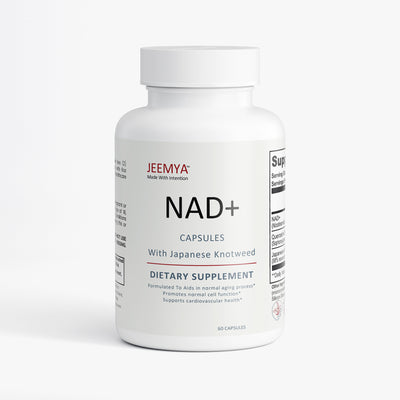
Choosing a Metabolism Support Supplement? Jeemya Can Help You Find the Right Fit.
Jeemya's NAD+ formula is designed specifically for people who want to support their metabolic function at the cellular level — not through stimulants or thermogenic gimmicks, but through restoring the molecular foundation that makes natural energy production possible.
Why NAD+ fits into a morning metabolism protocol:
- NAD+ peaks naturally in the morning — supplementation aligns with your body's circadian demand
- Supports the mitochondrial function that converts your breakfast into usable energy
- Works synergistically with every other morning strategy (hydration, protein, movement)
- No stimulants, no crash, no dependency — just cellular support for what your body already knows how to do
Whether you're optimizing an already-solid morning routine or rebuilding metabolic function after years of suboptimal habits, NAD+ support addresses the layer most people never think about — the cellular machinery beneath the lifestyle.
For a comprehensive view of supplementation options, see what supplements boost metabolism.
Frequently Asked Questions
What is the fastest way to boost metabolism in the morning?
The fastest single-action metabolic boost is drinking 500mL of cold water immediately upon waking — it increases metabolism by ~30% within 10 minutes through water-induced thermogenesis. For maximum combined effect within the first 30 minutes: hydrate (500mL water) + move (5-minute walk or bodyweight exercises) + get light exposure (step outside). This three-part combination activates thermogenesis, fat oxidation, and circadian metabolic signaling simultaneously — producing a measurable metabolic uplift that lasts 2–3 hours with zero calorie intake required.
Does drinking water in the morning boost metabolism?
Yes — and morning is the highest-impact time to hydrate. After 7–8 hours of sleep-related water loss, your cells are mildly dehydrated and metabolic reactions are running below optimal speed. Research shows 500mL of water increases metabolic rate by approximately 30% for 60–90 minutes. In the morning specifically, this effect is amplified because it coincides with cortisol-driven metabolic activation and breaks the overnight dehydration that was suppressing enzymatic function. For the full science, see does water boost metabolism.
What should I eat in the morning to boost metabolism?
Prioritize protein (25–35g), dietary fiber (8–12g), and healthy fats — while minimizing refined sugars and processed foods. Best options: eggs with vegetables and avocado, Greek yogurt with berries and nuts, lean turkey with whole grains toast, or a protein-packed smoothie with greens and fruit. The combination of protein (high thermic effect = burns 20–30% of its calories during digestion) and fiber (stabilizes blood sugar management, extends satiety) creates sustained metabolic activation without the energy crash of sugar-heavy breakfasts. See what are metabolism boosting foods for a complete list.
Can coffee boost metabolism in the morning?
Yes — caffeine increases metabolism by 3–11% and enhances fat oxidation. However, timing matters: consuming coffee 90–120 minutes after waking (rather than immediately) produces better results because it avoids conflicting with your natural cortisol peak. Drink it black or with minimal additions — added sugar and cream turn a metabolic tool into a caloric liability. Limit intake to before noon, as afternoon caffeine disrupts sleep quality, which suppresses the following day's metabolic rate by 2–5%. Coffee is a legitimate metabolic enhancer when timed correctly and consumed without refined sugars.




0 comments