

After 60, the conversation about metabolism changes. It's no longer about vanity weight or fitting into old clothes. It's about maintaining independence, preserving cognitive function, keeping your cardiovascular system strong, and having enough energy to live fully — not just exist.
The research is clear: seniors / older adults who actively support their metabolic health after 60 experience fewer hospitalizations, maintain mobility longer, retain cognitive sharpness, and report significantly higher quality of life than those who accept decline as inevitable.
But here's what most advice gets wrong — the strategies that work at 60 aren't just "milder versions" of what works at 40. Your body at 60 faces specific biochemical challenges: accelerated sarcopenia / age-related muscle loss, measurable cellular energy decline, deteriorating mitophagy / mitochondrial function, and nutrient absorption gaps that compound year over year.
This guide addresses how to boost metabolism after 60 with interventions calibrated to your physiology — not recycled generic advice.
How to Boost Metabolism After 60?
At 60, the metabolic decline that was subtle in your 40s and noticeable in your 50s becomes measurable and consequential. Here's what the science shows:
The Numbers: A landmark 2021 study in Science found that total daily energy expenditure begins declining approximately 0.7% per year starting around age 60. By 90, adjusted energy expenditure is approximately 26% below midlife levels. This isn't trivial — it represents a fundamental shift in how much fuel your body requires and burns.
1. Accelerated Muscle Loss (Sarcopenia)
Sarcopenia / age-related muscle loss accelerates significantly after 60. Cross-sectional studies show that by age 60, adults have lost approximately 14% of their leg muscle compared to age 20. Longitudinal data confirms losses of approximately 1% of leg muscle mass per year in seniors, with strength declining even faster (2.5–4% per year) — meaning muscles aren't just smaller, they're less functional.
This matters because lean body mass is the primary driver of your resting metabolic rate. Every pound of muscle lost directly reduces daily calorie burn.
2. Cellular Energy Decline
Cellular energy decline intensifies after 60. Research shows older adults have approximately 20% fewer mitochondria, and those remaining are nearly 50% less efficient at converting oxygen into ATP. The process of mitophagy / mitochondrial function — your cells' quality control system that removes damaged mitochondria — becomes impaired, leaving dysfunctional organelles in place that produce more oxidative stress and less energy.
NAD+ — the coenzyme required for over 500 metabolic reactions — has typically declined 40–60% by this age, further crippling mitochondrial energy production.
3. Hormonal and Metabolic Shifts
By 60, hormonal changes are well-established: estrogen is significantly reduced in women, testosterone continues declining in men, growth hormone production is a fraction of youthful levels, and insulin sensitivity has deteriorated. These shifts promote fat accumulation / visceral fat, impair protein synthesis, and reduce the anabolic response to exercise and nutrition.
4. Metabolic Adaptation
Metabolic adaptation — your body's tendency to reduce energy expenditure in response to reduced intake — becomes more aggressive in seniors. With less muscle buffer and compromised hormonal signaling, the body "defends" its current weight more aggressively, making fat loss slower and muscle preservation harder.
How to Boost Metabolism After 60?
The answer isn't one thing — it's a coordinated system of six interventions, each targeting a specific mechanism of metabolic decline. Together, they create a compounding effect that preserves and even partially restores metabolic function.
1. Regular Aerobic Exercise
Walking / aerobic activity remains the foundation of metabolic health at any age — and after 60, it's both the most accessible and most protective form of movement.
Why it matters for metabolism after 60:
- Improves cardiovascular health — your heart's ability to deliver oxygen and nutrients to metabolic tissues
- Enhances insulin sensitivity — reducing fat accumulation / visceral fat
- Maintains lung capacity and oxygen delivery to mitochondria
- Supports bone density through weight-bearing activity
- Preserves joint health through movement and synovial fluid circulation
- Burns 150–400 calories per session depending on intensity and duration
Best aerobic activities for seniors:
- Brisk walking — 30–45 minutes daily. Lowest injury risk, highest sustainability. Target 7,000–10,000 steps daily.
- Swimming or water aerobics — Excellent for those with joint health concerns. Water provides resistance without impact.
- Cycling (stationary or outdoor) — Low-impact, scalable intensity, excellent for cardiovascular conditioning.
- Dancing — Combines aerobic conditioning with balance, coordination, and cognitive engagement.
Flexibility / balance exercises should complement aerobic work — yoga, tai chi, or dedicated stretching sessions 2–3 times per week reduce fall risk and maintain the range of motion needed for functional independence.
Target: 150–300 minutes of moderate aerobic activity per week. Start where you are — even 10-minute walks count.
2. Resistance Training
Strength training / weight resistance is the single most powerful intervention for metabolic health after 60. It directly counteracts the primary driver of metabolic decline: muscle loss.
What it does:
- Stimulates protein synthesis — the process of building new muscle tissue
- Directly combats sarcopenia / age-related muscle loss
- Increases resting metabolic rate (more lean body mass = more calories burned at rest)
- Improves bone density — critical for fracture prevention
- Enhances insulin sensitivity — reducing visceral fat storage
- Strengthens cardiovascular health markers (blood pressure, lipid profiles)
- Generates significant post-exercise metabolic elevation (EPOC)
How to implement safely after 60:
- Start with bodyweight exercises or light resistance bands before progressing to free weights or machines
- Focus on compound movements: squats (or chair squats), rows, chest presses, deadlifts (with appropriate modifications)
- 2–3 sessions per week with 48 hours recovery between sessions targeting the same muscle groups
- Progressive overload: gradually increase resistance, repetitions, or sets over weeks
- Consider working with a qualified trainer initially to establish proper form
Critical protein timing: Consume 25–40g of protein containing at least 2.5g of leucine (the primary anabolic trigger for protein synthesis) within 1–2 hours after resistance training. This leucine threshold is higher in seniors due to anabolic resistance — your muscles need a stronger signal to initiate growth.
The evidence: Studies confirm that even twice-weekly resistance training in adults over 60 produces measurable gains in lean mass and resting metabolic rate. It is never too late to start.
3. Eating a Balanced Diet
After 60, nutritional priorities shift. You need more of certain nutrients despite potentially eating less total food. Quality over quantity becomes non-negotiable.
Protein: The Priority
Seniors require 1.2–1.6g protein per kg bodyweight daily — significantly above the standard 0.8g/kg recommendation. This higher intake is necessary because:
- Anabolic resistance means more protein is needed to trigger the same protein synthesis response
- Essential amino acids — particularly leucine — must reach threshold levels (2.5–3g per meal) to stimulate muscle building
- The thermic effect of food (TEF) for protein is 20–30% — meaning your body burns significant calories just digesting it
Distribute across 3–4 meals: 30–40g per serving. Sources: eggs, fish, poultry, lean meat, Greek yogurt, whey protein, legumes.
The Whole Foods Foundation
A whole foods diet provides the micronutrients your metabolic enzymes require:
- Colorful vegetables and fruits — antioxidants that protect mitochondria from oxidative damage
- Whole grains — B-vitamins for energy metabolism cofactors
- Adequate fiber intake (25–30g/day) — supports gut health, blood sugar stability, and activates satiety hormones that prevent overeating
- Healthy fats (olive oil, fatty fish, avocados, nuts) — support cell membrane integrity and anti-inflammatory pathways
Address Critical Deficiencies
- Vitamin D deficiency — Affects an estimated 60–70% of seniors. Directly impairs calcium absorption, bone density, muscle function, and insulin sensitivity. Test levels; supplement if below 30 ng/mL.
- Calcium — Critical for bone density maintenance; work with adequate vitamin D for proper calcium absorption
- B12 — Absorption declines significantly after 60 due to reduced stomach acid. Deficiency causes fatigue, cognitive decline, and impaired metabolic function.
- Magnesium — Required for every ATP-dependent reaction. Deficiency impairs energy metabolism and sleep quality.
4. Metabolism-Boosting Foods
Specific foods support metabolic function through direct biochemical mechanisms:
High thermic effect foods:
- Lean proteins (chicken breast, fish, eggs) — 20–30% of calories burned during digestion
- Legumes and lentils — protein + fiber = extended satiety + thermic effect
Thermogenic foods:
- Green tea — catechins increase metabolic rate 3–4% for several hours
- Spicy foods (capsaicin) — modest temporary increase in thermogenesis
- Coffee (if tolerated) — caffeine increases resting energy expenditure
Metabolically supportive foods:
- Fatty fish (salmon, sardines, mackerel) — omega-3s reduce inflammation that impairs metabolic signaling
- Berries — polyphenols support mitochondrial function and reduce oxidative stress
- Fermented foods (yogurt, kefir, sauerkraut) — support gut microbiome diversity linked to better metabolic health
- Cruciferous vegetables — support detoxification pathways and hormone metabolism
Mindful eating and portion control matter — but not in the "eat less" sense. At 60, the goal is eating enough of the right things while avoiding excess. Eating slowly, recognizing satiety hormones signals, and using reasonable portions prevents both under-eating (which triggers metabolic adaptation) and over-eating (which promotes fat accumulation / visceral fat).
5. Stress Management
Chronic stress after 60 is metabolically destructive — and seniors face unique stressors: health concerns, loss of loved ones, retirement identity shifts, caregiving responsibilities, and financial uncertainty.
How stress damages metabolism:
Chronic stress elevates cortisol. Poor cortisol regulation directly:
- Promotes fat accumulation / visceral fat — specifically abdominal storage
- Accelerates muscle breakdown (catabolic effect)
- Impairs insulin sensitivity — worsening blood sugar regulation
- Disrupts satiety hormones — increasing appetite and cravings
- Reduces sleep quality — compounding all other metabolic harms
- Suppresses immune function — increasing systemic inflammation
Evidence-based stress management for seniors:
- Daily walking in nature — combines aerobic benefit with cortisol-lowering effects of natural environments
- Meditation or breathwork — even 10 minutes daily measurably reduces cortisol
- Social connection — isolation elevates cortisol; regular social engagement is metabolically protective
- Purposeful activity — volunteering, hobbies, learning new skills provide cognitive engagement that buffers stress
- Limiting news/media consumption — chronic information stress elevates cortisol without resolution
- Gentle yoga or tai chi — combines flexibility / balance exercises with stress reduction
6. Getting Sufficient Sleep
Sleep hygiene becomes increasingly important — and increasingly challenging — after 60. Sleep architecture naturally changes (less deep sleep, more awakenings), but the metabolic consequences of poor sleep remain severe.
How sleep deprivation impairs metabolism in seniors:
- Worsens insulin sensitivity — promoting fat storage and blood sugar dysregulation
- Elevates cortisol — see stress effects above
- Impairs growth hormone release — which occurs primarily during deep sleep and supports muscle repair
- Disrupts satiety hormones (ghrelin rises, leptin falls) — increasing hunger
- Reduces NAD+ biosynthesis — the circadian NAMPT/SIRT1 loop requires consistent sleep timing
- Decreases next-day activity levels and NEAT — reducing total calorie burn
- Impairs mitophagy / mitochondrial function — damaged mitochondria accumulate without adequate sleep
Sleep hygiene strategies for seniors:
- Consistent sleep/wake schedule (same time daily, including weekends)
- Cool, dark, quiet environment (blackout curtains, 65–68°F)
- Limit fluids 2 hours before bed (reduces nighttime waking)
- Address sleep apnea — extremely common in seniors, severely metabolically damaging
- Avoid alcohol (disrupts sleep architecture despite sedating feeling)
- Morning sunlight exposure (resets circadian rhythm, supports vitamin D)
- Magnesium glycinate before bed (supports sleep quality and muscle relaxation)
- Limit caffeine after noon (metabolized more slowly with age)
Target: 7–8 hours. Quality matters as much as quantity — uninterrupted sleep produces better metabolic outcomes than fragmented sleep of the same total duration.
How Jeemya Helps You Raise Metabolism Over 60
After 60, even perfect lifestyle habits face a biochemical ceiling: your cells' fundamental energy-producing machinery is depleted at the molecular level. This is where targeted supplementation addresses what lifestyle alone cannot fully restore.
The NAD+ Crisis After 60
NAD+ — the coenzyme powering 500+ metabolic reactions — has declined 40–60% by this age. This depletion directly impairs:
- Mitochondrial energy production (ATP synthesis collapses without NAD+)
- Sirtuin activity (the longevity enzymes governing fat metabolism, DNA repair, and inflammation)
- Mitophagy / mitochondrial function (damaged mitochondria can't be cleared efficiently)
- Circadian rhythm regulation (affecting sleep and cortisol patterns)
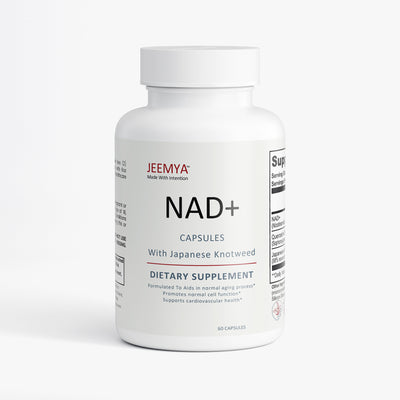
Jeemya NAD+ targets this upstream depletion — restoring the single molecule that hundreds of metabolic enzymes depend on for function.
AMPK Activation for Metabolic Flexibility
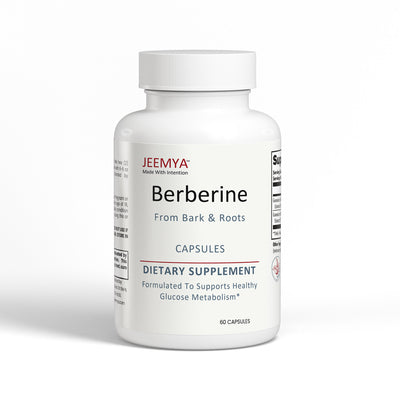
Insulin resistance and fat accumulation / visceral fat are driven by AMPK dysregulation — your cells' metabolic switch stuck in storage mode. Jeemya Berberine activates AMPK, supporting glucose metabolism and fat oxidation — particularly critical for seniors managing blood sugar and metabolic health markers.
Why Jeemya
Every product is third-party tested with a full Certificate of Analysis, manufactured in the USA, and formulated at clinically relevant doses. No proprietary blend opacity, no undisclosed ingredients, no inflated claims. Transparent biochemistry for the specific metabolic challenges of aging.
Frequently Asked Questions
Why does metabolism slow down after age 60?
Multiple mechanisms converge: accelerated sarcopenia / age-related muscle loss (1% muscle loss per year, 2.5–4% strength loss per year) directly reduces resting metabolic rate; cellular energy decline intensifies as mitochondria become fewer (20% reduction) and less efficient (50% less oxygen utilization); NAD+ levels are depleted 40–60%, crippling hundreds of enzymatic reactions; hormonal changes (estrogen, testosterone, growth hormone decline) reduce anabolic signaling; and physical activity naturally declines — with seniors burning approximately 29% fewer calories through non-exercise movement. The landmark 2021 Science study confirmed that adjusted energy expenditure declines 0.7% per year after 60.
Can you boost your metabolism after 60?
Yes — meaningfully and measurably. Research demonstrates that resistance training produces muscle gains even in adults over 70, directly increasing resting metabolic rate. Combining strength training / weight resistance (2–3x/week) with adequate protein (1.2–1.6g/kg/day, emphasizing leucine-rich sources), quality sleep, stress management, and targeted NAD+ supplementation can offset significant portions of age-related metabolic decline. The key is addressing multiple mechanisms simultaneously: muscle preservation, cellular energy support, and hormonal/nutrient optimization.
Does drinking more water help metabolism after 60?
Yes. Hydration / water intake directly influences metabolic rate through multiple mechanisms: drinking 500ml of water increases metabolic rate by 24–30% for approximately 60 minutes (your body expends energy heating water to body temperature); even mild dehydration (1–2%) impairs enzymatic efficiency and reduces energy expenditure; water is essential for nutrient transport and calcium absorption; and adequate hydration supports digestion, which is particularly important as seniors experience natural declines in digestive efficiency. Target 2–3 liters daily, adjusted for activity level, climate, and medications.
What is NAD+ and how is it related to metabolism?
NAD+ (nicotinamide adenine dinucleotide) is a coenzyme found in every living cell that participates in over 500 metabolic reactions — more than any other vitamin-derived molecule. It serves two critical roles: (1) as an electron carrier in energy metabolism — accepting electrons during glycolysis, the TCA cycle, and fatty acid oxidation to drive ATP production, and (2) as a substrate for sirtuins, PARPs, and CD38 — enzymes that govern DNA repair, mitochondrial biogenesis, inflammation, and metabolic adaptation. NAD+ levels decline 40–60% between ages 40–60, which is now recognized as a root mechanism of metabolic aging. This decline impairs cellular energy production, reduces sirtuin activity, compromises mitophagy / mitochondrial function, and disrupts metabolic signaling. Supplementation with NAD+ precursors has been shown to increase tissue NAD+ levels in human clinical trials.
Related Reading
- How to Boost Metabolism After 50 — Strategies for the decade preceding 60, when early intervention prevents accelerated decline.
- How to Boost Metabolism After 40 — Understanding the initial metabolic shifts and building foundation habits early.
- How to Boost Your Metabolism Without Exercise — Non-exercise strategies for seniors with mobility limitations or recovery periods.
- What Supplements Boost Metabolism? — Evidence-based supplement options ranked by mechanism and safety for older adults.
- How to Boost Metabolism with Hashimoto's — Thyroid-specific strategies relevant to the many seniors with subclinical hypothyroidism.
Note: This article is for educational purposes only and is not intended to diagnose, treat, cure, or prevent any disease. Consult your healthcare provider before starting any new exercise or supplement regimen, particularly if you have existing health conditions or take medications.


0 comments