
Something shifts in your 40s. Not dramatically — not overnight — but persistently. The weight that used to come off in two weeks now clings for months. Recovery takes longer. Energy dips earlier in the day. And the strategies that worked at 30 no longer produce the same results.
You're not imagining it. But you're probably misunderstanding why.
The popular narrative — that your metabolism "crashes" after 40 — is incomplete and, in some important ways, wrong. The reality is more nuanced, more fixable, and more within your control than most people believe.
This guide explains exactly what changes in your body's metabolic machinery after 40, separates myth from mechanism, and delivers actionable strategies to boost metabolism after 40 — based on what the science actually shows.
Metabolism After 40 – What Really Changes
Here's what most people get wrong: your resting metabolic rate doesn't cliff-dive at 40. A landmark 2021 study published in Science, analyzing over 6,400 individuals across 29 countries, found that total daily energy expenditure remains remarkably stable from ages 20 to 60. The measurable decline — approximately 0.7% per year — only begins around age 60.
So why do so many people gain weight in their 40s?
Because metabolism isn't just your resting metabolic rate. It's a system — and multiple components of that system degrade simultaneously:
1. Muscle Loss (Sarcopenia)
The average adult loses 3–8% of lean muscle mass per decade after age 30. By 60, you may have 14% less leg muscle than you had at 20. Since muscle is the primary driver of resting metabolic rate — burning significantly more calories at rest than fat tissue — every pound of muscle lost directly reduces your daily calorie burn.
A study of 959 individuals found that people aged 70 had 20 pounds less muscle and 11% slower resting metabolism than people aged 40. The connection is direct and proportional.
2. Declining Activity (Especially NEAT)
Research shows older adults burn approximately 29% fewer calories through non-exercise activity thermogenesis (NEAT) — the energy spent on all non-exercise movement: fidgeting, walking to the kitchen, taking stairs, standing while working.
NEAT accounts for 10–30% of your total daily energy expenditure. Its decline is often invisible — you don't notice that you sit more, move less between tasks, or choose convenience over physical effort. But your metabolism notices.
3. Hormonal Shifts
After 40, both sexes experience significant hormonal changes that influence metabolic function:
Women — Estrogen Decline and Menopause:
- Circulating estradiol drops from ~100–250 pg/mL (premenopausal) to ~10 pg/mL (postmenopausal)
- Estrogen decline promotes visceral fat accumulation and redistributes body fat from subcutaneous (hips/thighs) to abdominal storage
- Reduced estrogen decreases whole-body fat oxidation during exercise and suppresses AMPK activation
- Postmenopausal women experience accelerated loss of lean mass, further reducing metabolic rate
- A ~40% reduction in physical activity accompanies menopause, compounding metabolic effects
Men — Testosterone Drop and Andropause:
- Testosterone declines gradually (1–2% per year after age 30), accelerating into the 50s
- Testosterone drop is associated with increased visceral adiposity, insulin resistance, and reduced muscle protein synthesis
- Andropause (late-onset hypogonadism) affects an estimated 2–6% of men over 40, with subclinical decline affecting far more
- Lower testosterone reduces motivation for physical activity, creating a negative cycle
4. Mitochondrial Decline
Research shows that older adults have approximately 20% fewer mitochondria, and those remaining are nearly 50% less efficient at using oxygen to create energy. Your cellular engines are both fewer and weaker — meaning even if you eat the same and move the same, your cells extract less energy and burn fewer calories maintaining basic functions.
5. Insulin Sensitivity Deterioration
Insensitivity to insulin increases progressively after 40, driven by rising visceral fat, declining muscle mass, and chronic low-grade inflammation ("inflammaging"). When cells become insulin resistant, glucose metabolism is impaired, fat storage increases, and the metabolic flexibility that allows cells to switch between fuel sources deteriorates.
Fast Metabolism vs Slow Metabolism: What It Actually Means
People talk about "fast" and "slow" metabolism as if it's a fixed genetic trait — like eye color. It's not.
Fast metabolism vs slow metabolism is really a spectrum determined by modifiable factors:
|
Factor |
"Fast" Metabolism |
"Slow" Metabolism |
|
Lean muscle mass |
Higher |
Lower |
|
Physical activity + NEAT |
Higher |
Lower |
|
Mitochondrial efficiency |
Optimized |
Declining |
|
Hormonal status |
Balanced |
Disrupted |
|
Insulin sensitivity |
High |
Low (insulin resistant) |
|
NAD+ levels |
Adequate |
Depleted |
|
Inflammation |
Low |
Chronic, low-grade |
|
Sleep quality |
Restorative |
Disrupted |
The critical insight: most of what people call a "slow metabolism" is actually a combination of muscle loss, reduced movement, hormonal disruption, and cellular energy decline — all of which are addressable.
When people search for pills to accelerate metabolism or fast metabolism supplements, what they're really asking is: "Can I shift my position on this spectrum without overhauling my entire life?" The honest answer is: targeted supplements can move the needle on specific mechanisms (NAD+ depletion, B-vitamin deficiency, magnesium insufficiency) — but they work best alongside the lifestyle pillars below, not instead of them.
Why Is It So Hard to Lose Weight After 40?
Weight loss after 40 isn't just harder — it's fundamentally different. Here's why:
Metabolic Adaptation
Metabolic adaptation is your body's survival mechanism: when you reduce calories, your resting metabolic rate drops in response — often disproportionately to the weight lost. Your body "defends" its fat stores by reducing energy expenditure, increasing hunger signals, and becoming more efficient at extracting calories from food.
After 40, metabolic adaptation is more aggressive because:
- You have less muscle to begin with (less metabolic "buffer")
- Hormonal signals that regulate appetite (appetite hormones like ghrelin and leptin) become dysregulated with age
- Cortisol — the stress hormone — tends to be chronically elevated in midlife adults, promoting abdominal fat storage and muscle breakdown
- Years of dieting history may have already downregulated your metabolic rate
Hormonal Weight Gain
Hormonal weight gain after 40 isn't just about eating more. It's about your body changing where it stores fat and how easily it releases it:
- Declining estrogen shifts fat to visceral compartments (which are more metabolically "stubborn")
- Elevated cortisol promotes fat storage specifically in the abdominal region
- Disrupted appetite hormones mean you feel hungrier despite adequate caloric intake
- Insulin resistance means more circulating glucose gets shunted into fat cells rather than being burned for energy
The Compound Effect
Each factor alone might cause 2–3 pounds of gain per year. But they compound: less muscle → lower metabolic rate → less energy for activity → more fat gain → worse insulin sensitivity → more hormonal disruption → even more fat storage. The cascade accelerates unless interrupted deliberately.
How to Fix Your Metabolism After 40: Core Lifestyle Pillars
Pillar 1: Strength Training (Non-Negotiable)
Strength training is the single most effective intervention for metabolic health after 40. Not walking. Not yoga. Not cardio. Resistance training that challenges your muscles to grow.
Why it works:
- Directly combats sarcopenia by stimulating muscle protein synthesis
- Increases resting metabolic rate (more lean muscle mass = more calories burned at rest)
- Improves insulin sensitivity in muscle tissue
- Stimulates the GH/IGF-1 axis, partially counteracting hormonal decline
- Generates significant post-exercise oxygen consumption (EPOC) — elevated calorie burning for 24–72 hours after intense sessions
- In men, associated with healthier testosterone levels; in women, counteracts menopause-related muscle loss
Minimum effective dose: 2–3 sessions per week targeting all major muscle groups with progressive overload. Studies show even twice-weekly resistance training helps older adults add lean mass and measurably increase resting metabolic rate.
Pillar 2: Maximize NEAT
Since non-exercise activity thermogenesis accounts for 10–30% of daily energy expenditure — and declines 29% in older adults — deliberately increasing NEAT is one of the highest-return, lowest-effort strategies available:
- Stand while working (standing desks burn 50+ more calories/hour than sitting)
- Take walking meetings and phone calls
- Park farther away; take stairs instead of elevators
- Set a timer to move every 30–45 minutes
- Do household tasks manually rather than automating everything
NEAT interventions are sustainable precisely because they don't feel like "exercise."
Pillar 3: Prioritize Sleep
Sleep deprivation (even partial — 6 hours vs. 7.5) disrupts metabolic function through multiple pathways:
- Increases cortisol, promoting fat storage
- Impairs insulin sensitivity within just 4 nights of restriction
- Disrupts appetite hormones (ghrelin rises, leptin falls — making you hungrier)
- Reduces NAD+ biosynthesis through the circadian NAMPT/SIRT1 feedback loop
- Decreases next-day NEAT and exercise motivation
Target: 7–9 hours of quality sleep with consistent timing.
Pillar 4: Manage Cortisol
Chronically elevated cortisol is a metabolic saboteur after 40:
- Promotes visceral fat accumulation
- Accelerates muscle breakdown (catabolic)
- Impairs thyroid function
- Increases insulin resistance
- Drives emotional eating
Interventions: structured stress management (meditation, breathwork, nature exposure), boundaries on work hours, and adequate recovery between exercise sessions.
Diet After 40: How to Boost Your Metabolism After 40 With Food
Protein: The Priority Macronutrient
After 40, you need more protein than you did at 25 — not less. Anabolic resistance (reduced muscle protein synthesis response to the same protein stimulus) means your body requires higher protein doses to achieve the same muscle-building effect.
Target: 1.2–1.6 g protein per kg bodyweight daily (vs. the 0.8 g/kg general recommendation). Distribute across 3–4 meals with 25–40g per serving.
Foods That Support Metabolic Cofactors
Your metabolic machinery requires specific nutrients to function:
- B Vitamins (B12, B6) — Essential cofactors for energy metabolism. B12 is required for methylation and red blood cell production; B6 for amino acid metabolism and glycogen breakdown. Deficiency becomes increasingly common after 40 due to reduced stomach acid and absorption capacity. Sources: animal proteins, eggs, fortified nutritional yeast, leafy greens.
- Vitamin D — Influences insulin sensitivity, muscle function, and inflammatory regulation. Deficiency (extremely common — estimated 42% of US adults) is associated with metabolic syndrome, increased fat mass, and reduced muscle strength. Sources: sunlight, fatty fish, fortified foods, supplementation.
- Magnesium — Required for every ATP-dependent reaction in your body. Deficiency impairs glucose metabolism, reduces exercise performance, and disrupts sleep. Sources: dark leafy greens, nuts, seeds, dark chocolate, avocados.
Anti-Inflammatory Eating
Since chronic low-grade inflammation ("inflammaging") directly impairs metabolic efficiency after 40:
- Prioritize omega-3 rich foods (fatty fish, walnuts, flaxseeds)
- Emphasize polyphenol-rich produce (berries, leafy greens, cruciferous vegetables)
- Minimize ultra-processed foods, refined sugars, and seed oils
- Include fermented foods for gut microbiome diversity
Keto, Low-Carb, and "How to Change Metabolism" After 40
Low-carbohydrate and ketogenic diets have gained significant attention for metabolic health after 40. Here's what the evidence shows:
Potential benefits:
- Can improve insulin sensitivity and stabilize blood glucose
- May reduce visceral fat more effectively than calorie-matched higher-carb diets
- Can reverse markers of metabolic syndrome (triglycerides, HDL cholesterol)
- Ketogenic diets preserve lean mass better than standard low-calorie diets in some studies
- Intermittent fasting (a related strategy) enhances metabolic flexibility and activates AMPK/sirtuin pathways
Important caveats:
- Not universally superior for weight loss when calories and protein are matched
- Sustainability varies dramatically between individuals
- Thyroid function may be impacted by prolonged severe carb restriction
- Women, particularly those in perimenopause/menopause, may respond differently than men
- The "best diet" is the one you can maintain consistently for months and years
The real question isn't "keto vs. low-carb vs. Mediterranean" — it's whether your chosen approach delivers adequate protein, addresses your specific metabolic bottlenecks (insulin resistance, inflammation, nutrient deficiencies), and is sustainable long-term.
How Jeemya Helps You Raise Metabolism Over 40
Understanding how to boost metabolism after 40 reveals a clear pattern: the interventions that matter most target the root mechanisms of metabolic decline — not surface-level stimulation.
Jeemya's approach targets three foundational gaps that accelerate metabolic aging:
NAD+ Restoration
NAD+ levels decline 40–60% between ages 40 and 60. This directly impairs:
- Energy production in every cell (NAD+ is required for glycolysis, TCA cycle, and oxidative phosphorylation)
- Sirtuin activity (the longevity enzymes that regulate fat metabolism, insulin sensitivity, and mitochondrial health)
- DNA repair capacity
- Circadian rhythm regulation
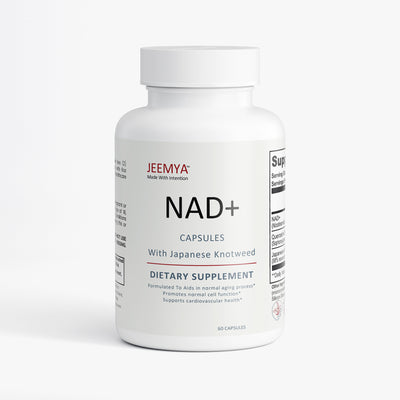
Jeemya NAD+ targets this upstream depletion — supporting the single coenzyme that 500+ metabolic reactions depend on.
AMPK Activation
Insulin resistance and fat accumulation after 40 are driven partly by AMPK dysregulation — your cells' metabolic "switch" getting stuck in storage mode.
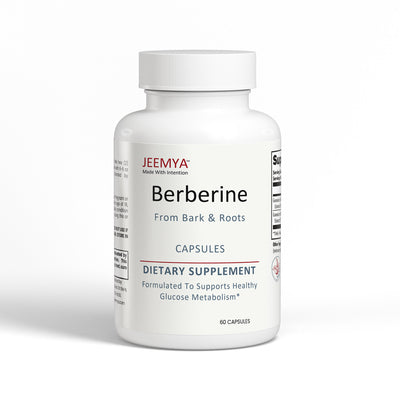
Jeemya Berberine activates AMPK, supporting healthy glucose metabolism, fat oxidation, and metabolic flexibility — particularly relevant for adults managing midlife insulin sensitivity challenges.
Foundational Nutrient Support
Addressing the specific cofactor gaps that limit metabolic enzyme function:
- B-vitamin support for energy pathway cofactors
- Magnesium for ATP utilization
- Vitamin D for insulin sensitivity and muscle function
Every Jeemya product is third-party tested, manufactured in the USA, and formulated with clinically relevant doses — not pixie-dusted proprietary blends. Because after 40, your metabolism doesn't need marketing promises. It needs biochemistry that works.
Frequently Asked Questions
1. How do you speed up your metabolism after 40?
The most effective evidence-based strategies, in order of impact:
- Build and maintain lean muscle mass through strength training (2–3x/week minimum) — this is the single strongest lever for raising resting metabolic rate
- Increase NEAT — stand more, walk more, fidget more; this accounts for 10–30% of daily calorie burn
- Optimize protein intake (1.2–1.6g/kg/day) to combat anabolic resistance
- Support cellular energy production — address NAD+ decline, B-vitamin gaps, and magnesium deficiency
- Prioritize 7–9 hours of quality sleep — sleep deprivation impairs insulin sensitivity, raises cortisol, and disrupts appetite hormones
- Manage chronic stress — elevated cortisol directly promotes visceral fat storage and muscle breakdown
No single pill or hack replaces these fundamentals. Targeted supplementation amplifies them.
2. Why is it so hard to lose weight after 40?
Multiple factors converge simultaneously: progressive muscle loss reduces your resting metabolic rate; hormonal shifts (estrogen decline in women, testosterone drop in men) change where fat is stored and how easily it's released; insulin sensitivity deteriorates, making fat cells "stickier"; metabolic adaptation becomes more aggressive with each diet attempt; appetite hormones become dysregulated; cortisol-driven stress eating increases; and NEAT naturally declines. These factors compound — each making the others worse. The solution requires addressing multiple mechanisms simultaneously rather than relying on caloric restriction alone.
3. What is metabolic adaptation?
Metabolic adaptation is your body's survival response to caloric restriction. When you reduce food intake, your body reduces energy expenditure to match — lowering resting metabolic rate, reducing NEAT, increasing hunger signals, and becoming more efficient at extracting energy from food. This "metabolic slowdown" can persist for months or years after dieting ends. After 40, metabolic adaptation is more pronounced because you have less muscle buffer, hormonal signaling is already disrupted, and the body's "set point" defense mechanisms are more aggressive. The countermeasure: resistance training to maintain muscle, adequate protein, strategic refeeds, and avoiding prolonged severe caloric deficits.
4. Does B12 boost your metabolism?
B12 doesn't directly "boost" metabolism like a stimulant. It's an essential cofactor for metabolic function — required for methylation reactions, red blood cell formation, and neurological function. When you're deficient in B12, your metabolism cannot operate at full capacity: you experience fatigue, weakness, cognitive impairment, and reduced exercise tolerance. Correcting a B12 deficiency restores metabolic function to its normal rate — which can feel like a "boost" if you've been operating in a depleted state. After 40, B12 deficiency becomes increasingly common due to reduced stomach acid (needed for B12 absorption), making supplementation or dietary attention more important. However, if your B12 levels are already adequate, additional supplementation won't further accelerate metabolism.
5. What does a metabolism booster do?
Legitimate metabolism boosters work through one or more of these mechanisms: (1) increasing thermogenesis (caffeine, green tea catechins), (2) supporting cellular energy production pathways (NAD+, B-vitamins, CoQ10), (3) activating metabolic signaling switches (berberine → AMPK activation), (4) preserving or building metabolically active tissue (protein, creatine), or (5) correcting nutrient deficiencies that limit metabolic enzyme function (magnesium, iron, vitamin D). What they do NOT do: override the laws of thermodynamics, replace exercise and proper nutrition, or produce dramatic weight loss without lifestyle change. The best fast metabolism supplements target root-cause mechanisms rather than providing temporary stimulation.
Related Reading
- How to Boost Metabolism After 50 — Age-specific strategies for the decade when metabolic decline measurably accelerates.
- How to Boost Metabolism After 60 — Targeted interventions for preserving metabolic function and independence in your 60s and beyond.
- How to Boost Metabolism After Menopause — Specific strategies addressing estrogen decline, visceral fat redistribution, and hormonal weight gain.
- How to Boost Your Metabolism Without Exercise — NEAT optimization, sleep, stress management, and supplementation strategies for those with exercise limitations.
- How to Boost Metabolism in the Morning — Morning routines that prime your metabolic machinery for the day ahead.
Note: This article is for educational purposes only and is not intended to diagnose, treat, cure, or prevent any disease. Consult your healthcare provider before starting any supplement or exercise regimen, especially if you have existing health conditions.


0 comments