
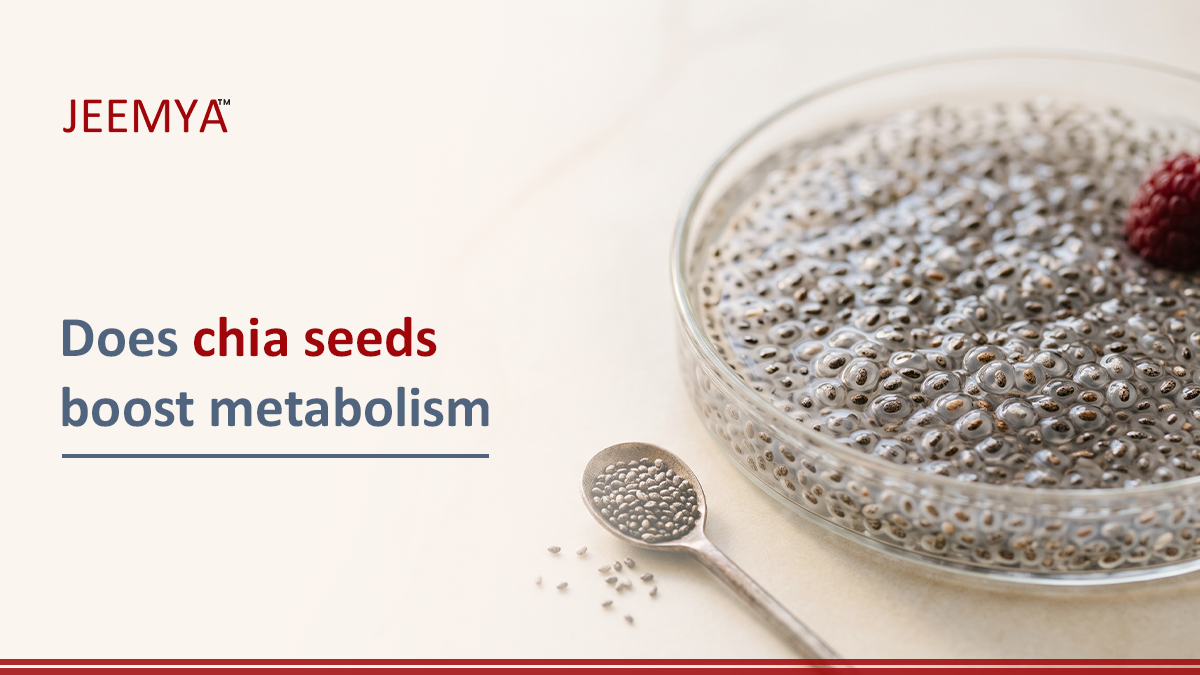
Does chia seeds boost metabolism? Not in the way most experts suggest. No human study has shown that chia seeds raise your metabolic rate or the number of calories you burn at rest. What chia seeds do well is different and still useful: their fiber forms a thick gel that keeps you full, slows the rise in blood sugar after a meal, and feeds your gut bacteria. In clinical trials, eating chia every day trimmed waist size by about 2.8 cm, lowered systolic blood pressure by about 3 mmHg, and reduced a marker of inflammation.
In other words, chia seeds support metabolic health rather than speeding up metabolism. This guide explains the difference, walks through what the human trials found (including the ones where chia did nothing), shows how much to eat and how to prepare it safely, and explains where chia fits in a plan to keep your metabolism working well.
Does Chia Seeds Boost Metabolism? The Short Answer
No, chia seeds do not meaningfully raise the number of calories your body burns. Here is what the evidence shows:
- Metabolic rate: A search of PubMed for chia and energy expenditure, thermogenesis, or resting metabolic rate turns up no human trial. There is no direct evidence that chia speeds up metabolism.
- Weight: Results are mixed. A 12-week trial of 50 g a day found no change in body weight. A 6-month trial in people with type 2 diabetes on a calorie-controlled diet found 1.9 kg of weight loss with chia versus 0.3 kg with a control food.
- Waist and blood pressure: A 2024 meta-analysis of 10 trials found chia reduced waist circumference by 2.82 cm and systolic blood pressure by 3.27 mmHg, with no change in BMI.
- Fullness and blood sugar: Small trials show that 7 to 25 g of chia lowers hunger and blunts the blood sugar rise after a meal.
When people ask what are metabolism boosting foods, chia seeds often appear on the list. A fairer label would be "metabolism-friendly". They help you eat less without feeling deprived and keep blood sugar steadier, which matters more for long-term weight and health than a few extra calories burned.
What "Boosting Metabolism" Means?
To judge any metabolism claim, it helps to know what metabolism is made of. Your total daily energy expenditure has three main parts:
- Resting energy expenditure (or basal metabolic rate): the calories your body burns to keep you alive at rest. This is the largest share, roughly 60 to 70% for most people, and it depends mostly on body size and muscle mass.
- Thermic effect of food (diet-induced thermogenesis): the energy used to digest, absorb, and store food. It accounts for about 10% of daily energy expenditure on a mixed diet.
- Physical activity: exercise plus all the daily movement you do outside the gym.
A food could "boost metabolism" in only two ways: by raising resting energy expenditure (as caffeine and capsaicin do slightly for a few hours) or by having a high thermic effect (as protein does). Chia seeds have not been shown to do the first, and they do the second only to a small degree.
That is why the phrase chia seeds and metabolism is best understood as metabolic health: blood sugar control, insulin response, waist size, blood pressure, and inflammation. On those measures, chia has real data behind it.
What Is in Chia Seeds? Nutrition Facts
Chia seeds come from Salvia hispanica L., a plant in the mint family native to Mexico and Guatemala. Salba-chia is a white-seeded variety used in several of the clinical trials below. Black and white chia have nearly identical nutrition.
According to USDA FoodData Central (FDC ID 170554), dried chia seeds provide the following:
|
Nutrient |
Per 100 g |
Per 1 oz (28 g, about 2 tablespoons) |
|---|---|---|
|
Calories |
486 kcal |
About 138 kcal |
|
Dietary fiber |
34.4 g |
About 9.8 g |
|
Protein |
16.5 g |
About 4.7 g |
|
Total fat |
30.7 g |
About 8.7 g |
|
Alpha-linolenic acid (ALA, omega-3) |
17.8 g |
About 5.0 g |
|
Calcium |
631 mg |
About 179 mg |
|
Magnesium |
335 mg |
About 95 mg |
|
Phosphorus |
860 mg |
About 244 mg |
Three features stand out. First, almost all of chia's carbohydrate is fiber, much of it soluble. Second, chia is one of the richest plant sources of ALA, an omega-3 fatty acid. Third, one ounce covers a good share of daily magnesium, a mineral involved in hundreds of enzyme reactions, including those that turn food into energy. Getting enough magnesium supports normal metabolism, but eating more than you need does not speed it up.
Chia's ALA is not the same as the EPA and DHA in fish. The body converts only a small portion of ALA into those longer omega-3s, so chia does not replace fish or fish oil for that purpose.
How Chia Seeds Affect Metabolism: Fiber, Gel, and Your Gut
Chia's effects on metabolic health come mostly from its fiber. When chia seeds meet liquid, the outer layer releases mucilage, a soluble fiber that forms a thick gel. That gel is the key to how chia works in the body.
1. Slower digestion and steadier blood sugar
The gel slows how fast the stomach empties and how quickly starch is broken down. That spreads the absorption of glucose over a longer period, so blood sugar and insulin rise less sharply after a meal. In a 2017 study, Vuksan and colleagues measured the viscosity of chia at 49.9 Pa·s compared with 2.5 Pa·s for flax, which helps explain why chia had the stronger effect on blood sugar.
2. Longer fullness
Thicker, slower-moving food in the stomach sends fullness signals for longer. People who feel full eat less at the next meal, which is how chia can help with a calorie deficit without changing metabolic rate.
3. Food for gut bacteria
Fiber that reaches the colon is fermented by gut bacteria into short-chain fatty acids such as butyrate, acetate, and propionate. A 2016 review in Cell by Koh and colleagues describes how these compounds act as an energy source for colon cells and as signals that affect appetite hormones, glucose control, and fat storage. This is a general effect of fermentable fiber, not one proven specifically for chia. If you want the bigger picture on this question, see our guide does fiber boost metabolism.
4. A small thermic effect
Protein has the highest thermic effect of any nutrient. According to a 2004 review by Westerterp in Nutrition & Metabolism, the body uses 20 to 30% of protein calories to process it, compared with 5 to 10% for carbohydrate and 0 to 3% for fat. One ounce of chia has about 4.7 g of protein, or about 19 calories of protein. At 20 to 30%, that works out to roughly 4 to 6 calories spent digesting it. That is real, but too small to notice.
Chia Seeds for Weight Loss: What the Clinical Trials Found
Most claims about chia seeds for weight loss lean on a single positive study or on testimonials. The full set of human trials is more mixed. The table below summarizes the main studies.
|
Study |
Design |
Main finding |
|---|---|---|
|
Nieman et al., Nutrition Research (2009) |
RCT, 76 overweight adults, 50 g chia a day for 12 weeks |
No change in body weight, body composition, inflammation, blood pressure, or blood lipids. Blood ALA rose 24.4%. |
|
Tavares Toscano et al., Nutrición Hospitalaria (2014) |
RCT, 26 adults, 35 g chia flour a day for 12 weeks |
The chia group lost 1.1 kg and 1.9 cm of waist, but the difference compared with placebo was not significant. |
|
Vuksan et al., Nutrition, Metabolism & Cardiovascular Diseases (2017) |
Double-blind RCT, 77 adults with overweight and type 2 diabetes, calorie-controlled diet, 6 months |
Chia: 1.9 kg weight loss and 3.5 cm off the waist. Oat-bran control: 0.3 kg and 1.1 cm. CRP fell 39% and adiponectin rose 6.5% with chia. |
|
Quaresma et al., Journal of the American Nutrition Association (2023) |
RCT in adults with obesity |
Chia flour did not affect weight loss or blood lipids but improved systolic blood pressure control. |
|
Karimi et al., Nutrition & Metabolism (2024) |
Meta-analysis, 10 RCTs, 424 people with overweight, 25 to 50 g a day for 10 to 24 weeks |
Waist -2.82 cm, systolic blood pressure -3.27 mmHg, CRP -1.18 mg/L. No significant change in BMI, cholesterol, triglycerides, fasting glucose, or HbA1c. |
A few patterns stand out:
- Chia works best as part of a plan. The strongest weight result came when chia was added to a calorie-controlled diet, not when it was simply added on top of a usual diet.
- Waist may change before the scale does. The meta-analysis found a drop in waist size without a change in BMI. A smaller waist often reflects less visceral fat, the type linked to insulin resistance and heart disease.
- People with type 2 diabetes may benefit most. Several positive trials were in this group, where better blood sugar control and lower inflammation matter a great deal.
- The studies are small. The meta-analysis included only 424 people, and its authors noted high variation between studies.
Do chia seeds burn fat?
No. Chia seeds do not burn fat or "melt" belly fat. Fat loss requires your body to use more energy than it takes in over time. Chia can make that easier by keeping you full and reducing cravings, but the seeds themselves do not trigger fat burning.
Chia Seeds, Fullness, and Blood Sugar
The most consistent effects of chia appear in short studies on appetite and blood sugar:
- Dose-dependent blood sugar control: In a 2010 study in the European Journal of Clinical Nutrition, Vuksan and colleagues baked 7, 15, or 24 g of Salba-chia into white bread for 11 healthy adults. The rise in blood sugar after eating fell in step with the dose, and all three doses lowered appetite 2 hours later.
- Chia vs. flax: In a 2017 crossover trial of 15 adults, 25 g of ground chia lowered the post-meal blood sugar response more than 31.5 g of flax and reduced the desire to eat.
- Chia in yogurt: In a 2017 trial in Nutrition Research and Practice, Ayaz and colleagues gave 24 adults yogurt with 0, 7, or 14 g of chia. Both chia doses reduced hunger and the desire for sugary foods, increased fullness, and lowered the calories people ate at a free-choice lunch.
Steadier blood sugar and lower insulin spikes after meals are central to metabolic health. Large blood sugar swings are linked to energy crashes and cravings, and over the long term, repeated high insulin demand is part of the path to insulin resistance.
Other Benefits of Chia Seeds for Metabolic Health
- Blood pressure: In a 2014 study in Plant Foods for Human Nutrition, 35 g of chia flour a day for 12 weeks lowered mean blood pressure in people with high blood pressure. In untreated participants, systolic pressure fell from 146.8 to 137.3 mmHg.
- Inflammation: Both the Vuksan 2017 trial and the 2024 meta-analysis found lower C-reactive protein (CRP), a marker of low-grade inflammation that tends to run high with excess body fat and type 2 diabetes.
- Fiber gap: The adequate intake for fiber is 14 g per 1,000 calories, about 25 g a day for women and 38 g for men aged 19 to 50. According to the Dietary Guidelines for Americans 2020 to 2025, more than 90% of women and 97% of men fall short. One ounce of chia closes a large part of that gap.
- Omega-3 status: In the Nieman trial, 50 g a day raised blood ALA by 24.4%, showing that chia's omega-3s are absorbed.
Chia Seed Water and Other Trends: Do They Work?
Chia seed water, often with lemon and sipped on an empty stomach, became a viral weight-loss trend. It is a simple way to eat chia, and the fiber and fluid can help you feel full before a meal. There is no evidence that drinking it in the morning boosts metabolism or "detoxes" the body, and no trial has tested chia water specifically.
Some popular claims do not hold up:
- "Chia expands 10 to 12 times in your stomach." No study supports this exact figure. Chia does absorb a lot of water, which is why soaking it first matters for safety (see below).
- "Chia has more omega-3 than fish oil." Misleading. Chia has ALA, while fish oil has EPA and DHA, which the body uses more directly.
- "Lose 5 pounds in a week with chia." Not supported. The best trial found about 1.6 kg more weight loss than control over 6 months.
How to Eat Chia Seeds for Metabolic Health
How much chia seeds per day?
Most people do well with 1 to 2 tablespoons (about 15 to 28 g) a day. Clinical trials used 25 to 50 g a day, but they were supervised. If you eat little fiber now, start with 1 teaspoon to 1 tablespoon and build up over 1 to 2 weeks so your gut can adjust, and drink more water as you increase fiber.
Practical ways to use chia
- Soak first. Stir 1 to 2 tablespoons into at least 1/2 cup (120 mL) of water, milk, or yogurt and let it sit for 10 to 15 minutes until it gels.
- Make chia pudding. Mix 3 tablespoons of chia with 3/4 cup of milk or unsweetened plant milk, chill overnight, and top with berries.
- Add to protein-rich foods. Stir into Greek yogurt or cottage cheese, or blend into a protein smoothie. Pairing fiber with protein supports fullness from two directions.
- Use it before or with your largest meal. The fullness and blood sugar studies gave chia with or just before a meal.
- Bake with it. The Vuksan study baked chia into bread and still saw lower blood sugar.
- Watch the toppings. Chia pudding sweetened with syrup or topped with granola can add more calories than the chia helps you save.
Chia works best alongside other nutrient-dense foods. Our guide on what are the 5 superfoods that boost metabolism covers fish, legumes, chili peppers, lean meats, and low-fat milk, which pair well with a daily spoonful of chia.
Chia Seeds vs. Other Metabolism-Friendly Foods
|
Food |
Key component |
Main metabolic effect |
Effect on calories burned |
|---|---|---|---|
|
Chia seeds |
Soluble fiber (mucilage), ALA |
Fullness, lower post-meal blood sugar, smaller waist in trials |
None shown |
|
Flaxseed (ground) |
Fiber, ALA, lignans |
Lower post-meal blood sugar, but less than chia head to head |
None shown |
|
Oats |
Beta-glucan fiber |
Fullness, lower LDL cholesterol, steadier blood sugar |
None shown |
|
Lean protein (fish, chicken, beans) |
Protein |
Highest thermic effect; helps keep muscle |
Small increase (20 to 30% of protein calories) |
|
Chili peppers |
Capsaicin |
Small rise in calorie burn and fat burning |
About 50 kcal a day in meta-analyses |
|
Coffee or green tea |
Caffeine, catechins |
Short-term rise in metabolic rate |
Small, fades with regular use |
Oats are chia's closest relative in this list, since both work through soluble fiber. We cover the evidence in detail in do oats boost metabolism. A bowl of oatmeal topped with a tablespoon of chia combines two different fibers in one breakfast.
Side Effects and Who Should Be Careful
Chia seeds are safe for most people in normal food amounts. A few precautions matter:
- Never eat a spoonful of dry seeds followed by water. In a case presented at the 2014 American College of Gastroenterology meeting, a man swallowed a tablespoon of dry chia and then drank water. The seeds swelled in his esophagus and had to be removed with an endoscope. Always soak chia or mix it into moist food. This matters even more for people with trouble swallowing (dysphagia) or a history of esophageal narrowing.
- Digestive discomfort. Adding a lot of fiber quickly can cause bloating, gas, cramping, or constipation. Increase slowly and drink enough fluid.
- Allergy. Chia allergy is rare, but case reports include serious reactions such as anaphylaxis, and a 2026 review in Nutrients raises the possibility of cross-reactivity with sesame. If you have a seed allergy, ask an allergist before trying chia.
- Medicines. Because chia can lower blood sugar and blood pressure, people taking diabetes or blood pressure medicines should talk to their doctor before eating large amounts every day. No confirmed drug interactions have been reported, but it is sensible to monitor your numbers. The same caution applies if you take blood thinners.
- Digestive conditions. People with inflammatory bowel disease, a recent bowel surgery, or a history of bowel obstruction should ask their care team before adding concentrated fiber.
In the United States, chia is sold as a regular food with no official daily limit. The European Union once advised no more than 15 g a day on labels when chia was a new food there, but later authorized it without a maximum intake.
Supporting Your Metabolism Beyond Food: Cellular Energy and Blood Sugar
Chia helps metabolic health from the outside in: it changes how quickly food is digested and how full you feel. Metabolism itself happens inside every cell, where mitochondria turn glucose and fat into usable energy. That process depends on a coenzyme called NAD+, and NAD+ levels tend to fall with age. Our guide to cellular metabolism explains this in more detail.
A sound plan for metabolic health works on several fronts at once: fiber-rich foods like chia, enough protein, strength training to keep muscle, daily movement, good sleep, and, if your doctor agrees, supplements that support cellular energy and healthy blood sugar.
Looking for Science-Backed Metabolism Support? Explore Jeemya.
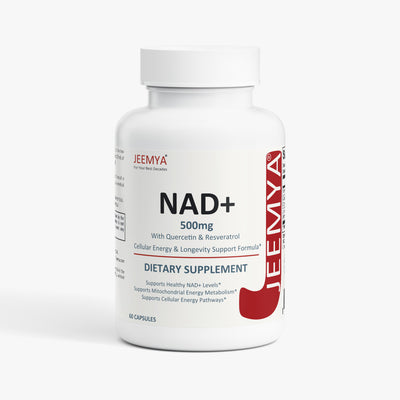
A daily spoonful of chia is an easy, low-cost habit for fullness and steadier blood sugar. If you want more support for energy and metabolic health, Jeemya offers daily formulas made with clean ingredients, GMP-minded production, and transparent labels. Our NAD+ 500 mg supports cellular energy production, and our Berberine HCl 800 mg supports healthy glucose metabolism. Every order comes with a 30-day money-back guarantee. Supplements support a healthy lifestyle and do not replace diet, exercise, or medical care, so talk to your healthcare provider before starting anything new, especially if you take diabetes or blood pressure medicine.
Frequently Asked Questions
Do chia seeds speed up your metabolism?
No human study has shown that chia seeds raise your metabolic rate. Their benefits come from fiber, which increases fullness, slows the rise in blood sugar after meals, and supports gut health.
Are chia seeds good for weight loss?
They can help as part of a calorie-controlled diet. In a 6-month trial, people with type 2 diabetes who ate chia lost 1.9 kg compared with 0.3 kg on a control food. A 12-week trial in which chia was simply added to the usual diet found no weight change.
How much chia seeds per day should I eat?
One to 2 tablespoons (about 15 to 28 g) a day is a reasonable amount for most adults. Start lower if you eat little fiber, and drink more water as you increase intake.
Is chia seed water better than eating chia seeds?
Not in terms of metabolism. Chia water is one way to get soaked chia and extra fluid, but no study shows it works better than chia in yogurt, oatmeal, or pudding.
When is the best time to eat chia seeds?
The appetite and blood sugar studies gave chia with or shortly before a meal. Breakfast or before your largest meal are practical choices. Timing matters less than eating it consistently.
Should chia seeds be ground or whole?
Both work. Whole chia seeds soften when soaked and are digested reasonably well, unlike whole flaxseed. Some trials used ground chia or chia flour, and grinding may make the omega-3s easier to absorb.
Can chia seeds lower blood sugar too much?
For most people, no. If you take insulin or other diabetes medicines, chia added to meals may lower your post-meal readings, so check your blood sugar and talk to your doctor before eating large amounts daily.
References
- U.S. Department of Agriculture. FoodData Central: Seeds, chia seeds, dried (FDC ID 170554). https://fdc.nal.usda.gov/food-details/170554/nutrients
- Nieman DC, Cayea EJ, Austin MD, Henson DA, McAnulty SR, Jin F. Chia seed does not promote weight loss or alter disease risk factors in overweight adults. Nutrition Research. 2009;29(6):414-418. https://pubmed.ncbi.nlm.nih.gov/19628108/
- Vuksan V, Jenkins AL, Brissette C, et al. Salba-chia (Salvia hispanica L.) in the treatment of overweight and obese patients with type 2 diabetes: a double-blind randomized controlled trial. Nutrition, Metabolism and Cardiovascular Diseases. 2017;27(2):138-146. https://pubmed.ncbi.nlm.nih.gov/28089080/
- Tavares Toscano L, Tavares Toscano L, Leite Tavares R, da Oliveira Silva CS, Silva AS. Chia induces clinically discrete weight loss and improves lipid profile only in altered previous values. Nutrición Hospitalaria. 2014;31(3):1176-1182. https://pubmed.ncbi.nlm.nih.gov/25726210/
- Quaresma LS, et al. Chia flour intake does not affect weight loss and lipid profile but improve systolic blood pressure control in obesity. Journal of the American Nutrition Association. 2023;42(4):403-410. https://pubmed.ncbi.nlm.nih.gov/35604811/
- Karimi M, Pirzad S, Shirsalimi N, et al. Effects of chia seed supplementation on cardiometabolic health in overweight subjects: a systematic review and meta-analysis of RCTs. Nutrition & Metabolism. 2024;21:74. https://pmc.ncbi.nlm.nih.gov/articles/PMC11406937/
- Vuksan V, Jenkins AL, Dias AG, et al. Reduction in postprandial glucose excursion and prolongation of satiety: possible explanation of the long-term effects of whole grain Salba (Salvia Hispanica L.). European Journal of Clinical Nutrition. 2010;64(4):436-438. https://pubmed.ncbi.nlm.nih.gov/20087375/
- Vuksan V, Choleva L, Jovanovski E, et al. Comparison of flax and Salba-chia seeds on postprandial glycemia and satiety in healthy individuals: a randomized, controlled, crossover study. European Journal of Clinical Nutrition. 2017;71(2):234-238. https://pubmed.ncbi.nlm.nih.gov/28000689/
- Ayaz A, Akyol A, Inan-Eroglu E, et al. Chia seed (Salvia hispanica L.) added yogurt reduces short-term food intake and increases satiety: randomised controlled trial. Nutrition Research and Practice. 2017;11(5):412-418. https://pubmed.ncbi.nlm.nih.gov/28989578/
- Toscano LT, da Silva CS, Toscano LT, et al. Chia flour supplementation reduces blood pressure in hypertensive subjects. Plant Foods for Human Nutrition. 2014;69(4):392-398. https://pubmed.ncbi.nlm.nih.gov/25403867/
- Westerterp KR. Diet induced thermogenesis. Nutrition & Metabolism. 2004;1:5. https://pmc.ncbi.nlm.nih.gov/articles/PMC524030/
- Koh A, De Vadder F, Kovatcheva-Datchary P, Bäckhed F. From dietary fiber to host physiology: short-chain fatty acids as key bacterial metabolites. Cell. 2016;165(6):1332-1345. https://pubmed.ncbi.nlm.nih.gov/27259147/
- U.S. Department of Agriculture and U.S. Department of Health and Human Services. Dietary Guidelines for Americans, 2020-2025. https://www.dietaryguidelines.gov/
- Rawl R, et al. Watch it grow: esophageal impaction with chia seeds. American College of Gastroenterology Annual Scientific Meeting, 2014. https://gi.org/2014/10/14/watch-it-grow-esophageal-impaction-with-chia-seeds/
- Porr C, et al. Chia seed allergy: emerging clinical evidence, molecular allergens, and the unresolved question of cross-reactivity. Nutrients. 2026;18(18):3027. https://pubmed.ncbi.nlm.nih.gov/42797010/
- Harvard T.H. Chan School of Public Health. Chia seeds. The Nutrition Source. https://nutritionsource.hsph.harvard.edu/food-features/chia-seeds/
- Khalid W, et al. Chia seeds (Salvia hispanica L.): a therapeutic weapon in metabolic disorders. Food Science & Nutrition. https://pmc.ncbi.nlm.nih.gov/articles/PMC9834868/
Medical disclaimer: This article is for general information only and is not medical advice. It does not replace a consultation with a qualified healthcare provider. Talk to your doctor before making major changes to your diet or starting a new supplement, especially if you have a health condition, have trouble swallowing, or take medication.

0 comments