

There's a quiet revolution happening in metabolic science — and it starts in the produce aisle.
For decades, fruits were either celebrated as nature's candy or vilified for their sugar content. Neither framing is accurate. The reality is more nuanced and more powerful: certain fruits contain specific bioactive compounds — polyphenols, flavonoids, fiber matrices, and micronutrients — that directly influence how your cells produce energy, oxidize fat, and regulate the hormonal signals governing metabolic rate.
So what fruits boost metabolism? Not through magic or marketing, but through documented biochemical mechanisms that alter thermogenesis, improve insulin sensitivity, protect mitochondrial function, and reduce the chronic inflammation that slows metabolic output.
This article identifies 8 fruits with genuine metabolic evidence behind them. We'll explain exactly how each one works at the cellular level, which compounds are responsible, and how to incorporate them strategically — not as a "metabolism hack," but as part of a metabolically intelligent diet.
Because when you understand what are metabolism boosting foods at the biochemical level, fruit stops being "just healthy" and becomes a targeted metabolic intervention.
What Fruits Boost Metabolism? 8 Fruits That Help with Metabolism
Before diving into specific fruits, it's worth understanding why certain fruits influence metabolism more than others. Three mechanisms matter most:
- Polyphenol-driven fat oxidation — Certain plant compounds activate AMPK (AMP-activated protein kinase), the master metabolic switch that increases fat burning and glucose uptake
- Fiber-mediated blood sugar control — Soluble fiber (particularly pectin) slows glucose absorption, reducing insulin spikes that signal fat storage
- Micronutrient cofactor supply — Vitamins and minerals that serve as essential cofactors for metabolic enzymes
With that framework, here are 8 fruits that earn their place in a metabolism-supporting diet.
1. Grapefruit
Of all citrus fruits (grapefruit, oranges), grapefruit has accumulated the most metabolic research — and for good reason.
A landmark study at Scripps Clinic found that participants who ate half a grapefruit before meals lost significantly more weight over 12 weeks than those who didn't — with no other dietary changes. The mechanism isn't simple calorie displacement. Grapefruit contains naringenin, a flavonoid that activates AMPK and enhances fatty acid oxidation in the liver / visceral fat / belly fat compartment specifically.
How grapefruit supports metabolism:
- Naringenin activates hepatic fat oxidation — Research shows this compound mimics the metabolic effects of fasting by activating PPARα, a nuclear receptor that turns on fat-burning genes in liver cells. This directly reduces liver / visceral fat / belly fat accumulation.
- Improves insulin sensitivity — Grapefruit consumption has been shown to reduce fasting insulin levels by up to 20% in insulin-resistant individuals, shifting metabolism from storage mode to oxidation mode.
- High in Vitamin C — A single grapefruit provides over 70% of daily Vitamin C needs. This matters metabolically because Vitamin C is required for carnitine synthesis — the molecule that transports fatty acids into mitochondria for energy production. Without adequate Vitamin C, your body literally cannot burn fat efficiently.
- Low glycemic impact despite sweetness — The fiber matrix and naringenin slow glucose absorption, preventing the insulin spikes that shut down fat oxidation.
Practical note: Grapefruit interacts with certain medications (statins, some blood pressure drugs, immunosuppressants) by inhibiting CYP3A4 enzymes. If you take prescription medication, consult your healthcare provider before adding grapefruit regularly.
2. Blueberries
Berries (blueberries, blackberries, raspberries, strawberries) are metabolic powerhouses, but blueberries deserve individual attention for their concentration of anthocyanins — the pigments responsible for their deep blue-purple color — which have demonstrated remarkable effects on metabolic function.
A study published in the Journal of Nutrition found that daily blueberry consumption for 6 weeks improved insulin sensitivity by 22% and reduced markers of metabolic inflammation — even without weight loss. The anthocyanins in blueberries appear to directly influence adipocyte (fat cell) gene expression, effectively reprogramming fat cells to release stored energy rather than accumulate more.
How blueberries support metabolism:
- Anthocyanins activate AMPK — This master metabolic switch increases glucose uptake into muscle cells and enhances mitochondrial fat oxidation simultaneously
- Reduce visceral fat accumulation — Animal studies show blueberry polyphenols specifically reduce liver / visceral fat / belly fat deposition by inhibiting adipogenesis (the creation of new fat cells)
- Rich in Vitamin K — Blueberries provide meaningful amounts of Vitamin K, which research links to improved insulin sensitivity and glucose metabolism. Vitamin K activates osteocalcin, a bone-derived hormone that enhances insulin secretion and fat cell metabolism.
- Fiber content supports gut-metabolism axis — The prebiotic fiber in blueberries feeds beneficial gut bacteria that produce short-chain fatty acids, which improve metabolic rate and reduce systemic inflammation
- Low caloric cost, high nutrient density — At roughly 85 calories per cup with 4g of fiber, blueberries deliver maximum metabolic benefit with minimal caloric load
Best practice: Fresh or frozen — both retain their anthocyanin content. Frozen blueberries may actually be slightly superior because freezing disrupts cell walls, making polyphenols more bioavailable.
3. Apples
Apples are among the most studied fruits for metabolic health, largely because of one compound: pectin — a soluble fiber that forms a gel-like matrix in your digestive tract and profoundly influences how your body processes energy.
Research from the University of Western Australia found that eating a whole apple 30 minutes before a meal reduced total caloric intake at that meal by 15% — not through willpower, but through the satiating and glucose-moderating effects of pectin and polyphenols working together.
How apples support metabolism:
- Pectin slows glucose absorption — By forming a viscous gel, pectin physically slows the rate at which sugar enters your bloodstream. This prevents the sharp insulin spikes that activate lipogenesis (fat storage) and suppresses fat oxidation. Stable blood sugar = your metabolism stays in burning mode.
- Ursolic acid in apple skin — This compound, concentrated in the peel, has been shown to increase brown adipose tissue activity and skeletal muscle mass in research. Brown fat burns calories to generate heat, effectively increasing your resting metabolic rate.
- Polyphenols improve glycogen management — Apple polyphenols influence how your body stores and utilizes glycogen (the carbohydrate stored in muscles and liver). Research suggests they improve glycogen utilization efficiency, meaning your body accesses stored energy more readily rather than defaulting to fat storage.
- Supports gut microbial diversity — The combination of pectin and polyphenols in apples feeds specific bacterial strains (particularly Bifidobacteria) that produce metabolically beneficial short-chain fatty acids.
- Vitamin B content — Apples contribute to your Vitamin B intake (particularly B6 and folate), both of which serve as coenzymes in amino acid metabolism and energy production pathways.
Key insight: Always eat apples whole — juice removes the fiber matrix and pectin, converting a metabolic tool into essentially sugar water.
4. Watermelon
Melon (watermelon, cantaloupe, honeydew) varieties are often dismissed as "mostly water" — which misses the point entirely. Yes, they're hydrating (and does water boost metabolism — it does). But watermelon in particular contains a unique amino acid that directly influences metabolic function: arginine.
A study published in the Journal of Nutrition found that arginine supplementation reduced fat mass by 64% in obese animals while increasing lean mass — effects attributed to arginine's influence on nitric oxide production and fat cell metabolism.
How watermelon supports metabolism:
- Citrulline converts to arginine — Watermelon is the richest food source of citrulline, which your body converts to arginine. This amino acid stimulates nitric oxide production, which improves blood flow, nutrient delivery to cells, and mitochondrial efficiency. Better cellular oxygenation = more efficient energy production.
- Arginine activates fat oxidation — Research shows arginine stimulates the expression of genes that promote fat oxidation while simultaneously suppressing genes involved in fat synthesis. It does this partly by increasing brown adipose tissue activity.
- High potassium content — Watermelon provides significant potassium per serving. Potassium is critical for maintaining cellular membrane potential, which directly affects how efficiently cells uptake glucose and produce ATP. Potassium deficiency impairs insulin sensitivity and slows metabolic rate.
- Hydration-thermogenesis effect — At 92% water content, watermelon consumption triggers water-induced thermogenesis — the same metabolic boost documented for drinking water, but delivered with additional bioactive compounds.
- Lycopene reduces metabolic inflammation — The red pigment in watermelon is a powerful antioxidant that reduces the chronic low-grade inflammation known to impair mitochondrial function and slow metabolism.
Timing tip: Consuming watermelon how to boost metabolism in the morning is particularly effective — you're rehydrating after overnight water loss while delivering arginine and potassium when insulin sensitivity is highest.
5. Oranges
Among citrus fruits (grapefruit, oranges), oranges offer a distinct metabolic profile centered on their exceptional Vitamin C content, hesperidin flavonoids, and fiber when consumed whole.
Research from Arizona State University demonstrated that individuals with adequate Vitamin C status oxidize 30% more fat during moderate activity compared to those with low Vitamin C levels. The mechanism is direct: Vitamin C is an essential cofactor for the biosynthesis of carnitine — without which fatty acids cannot enter mitochondria for oxidation.
How oranges support metabolism:
- Vitamin C enables fat burning — Your body requires Vitamin C to synthesize carnitine, the transport molecule that carries long-chain fatty acids across the mitochondrial membrane. Without adequate carnitine, fat stays trapped in the cytoplasm — unused and unstored. A single orange provides 100%+ of daily Vitamin C needs.
- Hesperidin improves lipid metabolism — This flavonoid, concentrated in the white pith, has been shown to reduce circulating triglycerides, improve HDL cholesterol, and activate AMPK in liver cells — promoting hepatic fat oxidation and reducing liver / visceral fat / belly fat.
- Fiber prevents metabolic sugar damage — A whole orange has ~3g fiber that slows fructose absorption. This is critical — slow-released fructose is used for glycogen replenishment, while rapid fructose absorption (from juice) overwhelms the liver and promotes fat synthesis.
- B-vitamin contribution — Oranges provide folate and thiamine (Vitamin B complex members), both essential for energy metabolism pathways including the citric acid cycle.
Critical distinction: Whole oranges = metabolic support. Orange juice = sugar delivery. The fiber matrix fundamentally changes how your body processes the same sugars. Always eat the fruit, not the juice.
6. Raspberries and Blackberries
Within the berries (blueberries, blackberries, raspberries, strawberries) category, raspberries and blackberries stand out for their extraordinary fiber density and a unique compound: raspberry ketones (found naturally in the fruit, not the concentrated supplement form).
One cup of raspberries delivers 8 grams of fiber at only 64 calories — one of the highest fiber-to-calorie ratios in any whole food. This fiber density alone makes them metabolically significant, but the polyphenol profile adds additional mechanisms.
How raspberries and blackberries support metabolism:
- Extreme fiber density feeds metabolic bacteria — 8g fiber per cup of raspberries means substantial prebiotic fuel for the gut bacteria that produce butyrate, propionate, and acetate — short-chain fatty acids that increase energy expenditure, improve insulin sensitivity, and reduce fat storage signaling.
- Ellagic acid reduces fat accumulation — Both raspberries and blackberries are rich in ellagic acid, which research shows inhibits lipase enzymes (reducing dietary fat absorption) and suppresses adipogenesis (the creation of new fat cells), particularly in the visceral compartment.
- Natural raspberry ketones support norepinephrine — In their whole-food context (not as isolated supplements), these aromatic compounds support norepinephrine-mediated lipolysis — the breakdown of stored fat for energy.
- Vitamin C and manganese supply — Both berries provide significant Vitamin C for carnitine synthesis and manganese for mitochondrial superoxide dismutase — an antioxidant enzyme that protects mitochondria from oxidative damage.
- Blood sugar stability — Despite their sweetness, raspberries and blackberries have minimal glycemic impact due to their fiber-to-sugar ratio, keeping insulin low and metabolism in oxidation mode.
- Vitamin K for metabolic hormone regulation — These berries contribute to Vitamin K intake, supporting the osteocalcin-insulin sensitivity pathway.
7. Strawberries
Berries (blueberries, blackberries, raspberries, strawberries) — strawberries complete the berry family's metabolic contribution with unique advantages: they're the highest Vitamin C source among common berries and contain fisetin, a flavonoid with emerging senolytic properties (clearing damaged cells that impair metabolic function).
A clinical trial published in Nutrients found that daily strawberry consumption for 8 weeks significantly reduced LDL oxidation, inflammatory markers, and insulin resistance — all factors that suppress metabolic rate when elevated.
How strawberries support metabolism:
- Highest Vitamin C density among berries — Cup for cup, strawberries deliver more Vitamin C than oranges (89mg vs. 70mg per cup). This directly supports carnitine-mediated fat transport into mitochondria.
- Fisetin supports cellular cleanup — This flavonoid promotes autophagy and senolysis — clearing damaged cells and dysfunctional mitochondria that drag down overall metabolic efficiency. Think of it as removing the "bad workers" from your metabolic factory so the healthy ones can operate at full capacity.
- Anthocyanins and pelargonidin — Strawberry's unique anthocyanin profile (pelargonidin-3-glucoside) has been shown to reduce post-meal glucose spikes by up to 25% when consumed with a carbohydrate-containing meal.
- Pectin content — Like apples, strawberries contain meaningful pectin that forms a gel matrix slowing sugar absorption and feeding beneficial gut bacteria.
- Folate (Vitamin B9) — Strawberries are one of the richest fruit sources of folate (Vitamin B family), essential for methylation reactions that regulate gene expression including metabolic genes.
- Potassium for cellular energy — With 233mg potassium per cup, strawberries support the cellular membrane potential required for efficient glucose uptake and ATP production.
8. Cantaloupe and Honeydew
Melon (watermelon, cantaloupe, honeydew) varieties beyond watermelon bring their own metabolic profile to the table — one centered on potassium density, Vitamin B supply, and hydration-based thermogenesis.
Cantaloupe in particular offers one of the highest potassium-to-calorie ratios among common fruits. Since potassium deficiency is directly linked to impaired glucose metabolism and insulin resistance, this makes cantaloupe a strategic metabolic choice — particularly for those not meeting the 4,700mg daily potassium recommendation (which is most adults).
How cantaloupe and honeydew support metabolism:
- Potassium density — One cup of cantaloupe provides 427mg potassium (honeydew: 388mg) at only 54 calories. Potassium maintains the electrochemical gradient across cell membranes that drives glucose transport, nerve signaling, and muscle contraction — all energy-demanding processes that contribute to metabolic rate.
- Beta-carotene (cantaloupe) and adenosine — The deep orange flesh of cantaloupe is rich in beta-carotene, which research links to reduced visceral fat accumulation. Additionally, melons contain adenosine — a compound that influences cellular energy signaling and blood flow.
- B-vitamin complex — Both melons provide Vitamin B complex members (B1, B3, B6, folate) that serve as direct coenzymes in the energy-producing reactions of glycolysis, the citric acid cycle, and oxidative phosphorylation. Without these B vitamins, these pathways bottleneck.
- Glycogen replenishment — The natural sugars in melon, delivered with water and potassium, efficiently replenish muscle and liver glycogen stores when consumed post-activity. Optimal glycogen management prevents the metabolic "emergency braking" that occurs when glycogen is depleted without adequate replacement.
- 92-90% water content — Like watermelon, consuming these melons triggers water-induced thermogenesis while simultaneously delivering bioactive nutrients, making them efficient metabolic supporters per calorie invested.
- Vitamin C (cantaloupe) — One cup provides 65mg Vitamin C, supporting carnitine synthesis for mitochondrial fat transport.
Eating Metabolism-Friendly Fruits? Pair Them with NAD+ for Comprehensive Cellular Energy Support
The fruits above work through real biochemical mechanisms — they supply cofactors, activate fat-oxidation enzymes, stabilize blood sugar, and feed the gut bacteria that influence metabolic output. But all of these mechanisms ultimately converge at one place: your mitochondria.
Every metabolic process discussed in this article — fat oxidation, glucose metabolism, thermogenesis, ATP production — happens inside or is regulated by mitochondrial function. And mitochondria have one non-negotiable requirement for every energy-producing reaction they run: NAD+ (nicotinamide adenine dinucleotide).
NAD+ is the coenzyme required for over 500 metabolic reactions. It's the electron carrier in the very pathways where your cells convert the nutrients from these fruits into usable energy. Without adequate NAD+, even a perfect diet delivers diminished returns — because the cellular machinery that processes those nutrients is running at reduced capacity.
Here's the challenge: NAD+ levels decline approximately 50% between ages 40 and 60. This decline correlates directly with reduced metabolic efficiency, lower energy production, increased fat storage, and the progressive "metabolic slowdown" most people experience with age.
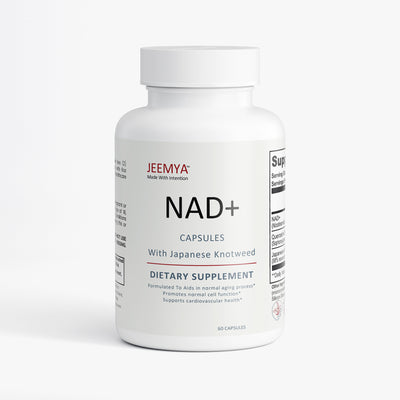
Jeemya's NAD+ supplement provides direct precursor support to help maintain the cellular NAD+ levels that your mitochondria need to efficiently process the vitamins, minerals, and bioactive compounds you consume through diet. Think of it as ensuring the engine is maintained while you supply premium fuel.
This isn't about replacing good nutrition — it's about ensuring your cells can actually use what you give them.
Looking for Natural Metabolism Support? Discover Jeemya.
At Jeemya, we believe metabolic health is built on foundations — not shortcuts. The fruits in this article represent one pillar: intelligent nutrition that supplies your cells with the raw materials for energy production.
But nutrition is only as effective as your cellular machinery allows. That's why our formulations focus on the biochemical infrastructure that makes everything else work:
- NAD+ Precursor Support — Maintaining the coenzyme your mitochondria need for every energy-producing reaction
- Metabolism-Supporting Nutrient Complexes — Bioavailable forms of the vitamins and minerals that serve as essential cofactors for metabolic enzymes
- Cellular Protection — Antioxidants that preserve mitochondrial integrity against the oxidative stress that accumulates with age
Every Jeemya product is manufactured in the USA under strict GMP standards, third-party tested for purity and potency, and formulated with full ingredient transparency — no proprietary blends, no hidden doses.
Your metabolism is a system. Support it systematically.
[Explore Jeemya's Metabolism Support Collection →]
FAQs
What fruits are best for boosting metabolism?
The most metabolically supportive fruits share common characteristics: high polyphenol content, significant fiber density, and meaningful micronutrient contributions. Based on current research, the strongest evidence supports berries (blueberries, blackberries, raspberries, strawberries) for their anthocyanin content, citrus fruits (grapefruit, oranges) for their vitamin C and flavonoid content, and apples for their pectin and polyphenol content. For a broader framework, see our guide on what are the 5 superfoods that boost metabolism.
Can fruit really increase metabolism?
Fruit can support healthy metabolic function through several nutritional mechanisms, including polyphenols, dietary fiber, vitamin C, potassium, and prebiotic compounds. Fiber can help support healthy blood sugar regulation and gut health, while micronutrients contribute to normal energy metabolism. Specific fruits also contain compounds such as arginine in watermelon and naringenin in grapefruit that have been studied for their potential metabolic effects. The effects are generally modest, and fruit consumption works best as part of an overall healthy diet that includes adequate sleep, physical activity, and appropriate calorie intake.
Do bananas boost metabolism?
Bananas can support normal metabolic function as part of a balanced diet. They're a good source of potassium, which contributes to normal muscle and cellular function, and they contain dietary fiber and resistant starch, particularly when slightly green. Riper bananas contain more available carbohydrates and generally have a higher glycemic impact than less-ripe bananas. Verdict: Bananas can contribute valuable nutrients to a metabolism-supportive diet, but they should not be considered a direct metabolism-boosting food. Pairing them with protein or healthy fats can also help create a more balanced meal or snack.
Are berries good for metabolism?
Berries (blueberries, blackberries, raspberries, strawberries) are excellent additions to a diet focused on healthy metabolic function. Their combination of anthocyanins and other polyphenols, dietary fiber, relatively low glycemic impact, and micronutrients makes them a nutrient-dense choice. Research has associated regular berry consumption with favorable markers of glucose regulation, cardiovascular health, and inflammation. Blueberries have been extensively studied for metabolic health, while raspberries and blackberries provide particularly useful amounts of dietary fiber. Berries support overall metabolic health but should not be viewed as a standalone way to increase metabolic rate.
Can NAD+ supplements support healthy metabolism?
NAD+ (nicotinamide adenine dinucleotide) plays an essential role in cellular energy metabolism and is involved in hundreds of enzymatic reactions, including pathways related to glycolysis, the citric acid cycle, and mitochondrial energy production. NAD+ levels also change with age. Research on NAD+ precursors such as NMN and NR is investigating their potential effects on mitochondrial function, insulin sensitivity, and other metabolic markers. While human research is still developing and results vary by study, maintaining adequate NAD+ availability is important for normal cellular energy production. Learn more about what are metabolism boosting foods and how cellular energy production connects to diet.



0 comments