
Do hot peppers boost metabolism? Yes, by a small amount. Capsaicin, the compound that makes chili peppers hot, raises the number of calories your body burns and the share of energy it takes from fat for a few hours after you eat it. When researchers pool the human trials, the extra burn comes to roughly 50 to 60 calories a day. Capsaicin eaten before a meal can also trim about 74 calories from that meal.
Those effects are real, but they are too small to cause weight loss by themselves. This guide explains how capsaicin works in the body, what human studies have measured, why one large study linked frequent chili eating to higher obesity rates, who should be careful with spicy food, and how to use hot peppers as one part of a diet that supports a healthy metabolism.
Do Hot Peppers Boost Metabolism? The Short Answer
Hot peppers produce a modest, short-lived rise in metabolism. Here is what the strongest evidence shows:
- Calories burned: A systematic review of 20 clinical trials with 563 participants found that capsaicinoids increased energy expenditure by about 50 kcal per day.
- Fat burning: A 2018 meta-analysis of 9 trials found an increase of 58.6 kcal per day and a drop in respiratory quotient, which means the body was burning more fat for fuel.
- Appetite: A 2014 meta-analysis found that at least 2 mg of capsaicinoids taken before a meal reduced the calories people ate at that meal by 74 kcal.
- Who benefits most: The metabolic effect was clearest in people with a BMI of 25 or higher, and the appetite effect was stronger in people who rarely eat spicy food.
When people ask what are metabolism boosting foods, hot peppers usually make the list. They belong there, but as a small helper rather than a main driver. Protein, physical activity, sleep, and muscle mass have a larger effect on how many calories you burn each day.
What Makes Hot Peppers Hot? Capsaicin, Capsinoids, and the Scoville Scale
Chili peppers belong to the Capsicum genus, which also includes bell peppers, jalapeños, cayenne, and habaneros. Their heat comes from a group of compounds called capsaicinoids. Capsaicin is the main one, and it is also the compound behind most of the research on hot peppers and metabolism.
Researchers also study capsinoids, such as capsiate and dihydrocapsiate. These are close relatives of capsaicin found in a mild pepper variety. Capsinoids act on the same receptor in the gut but do not burn the mouth, because they break down as they pass through the lining of the mouth. That makes them easier to take in research settings and in supplements.
The heat of a pepper is measured in Scoville Heat Units (SHU). More SHU means more capsaicin. Ranges vary with the plant, growing conditions, and ripeness, so treat the figures below as approximate.
|
Pepper |
Approximate heat (SHU) |
Common use |
|
Bell pepper |
0 |
Raw, roasted, stir-fries |
|
Poblano |
1,000 to 1,500 |
Stuffed, roasted |
|
Hatch green chile |
0 to 11,000+ (mild to extra hot) |
Roasted, stews, sauces |
|
Jalapeño |
2,500 to 8,000 |
Fresh, pickled, salsa |
|
Cayenne |
30,000 to 50,000 |
Dried and ground spice |
|
Thai bird's eye chili |
50,000 to 100,000 |
Curries, stir-fries |
|
Habanero |
100,000 to 350,000 |
Hot sauces, salsas |
Bell peppers contain almost no capsaicin, so they do not have the metabolic effects described in this article. They are still a nutritious vegetable.
How Capsaicin Affects Metabolism: TRPV1, Thermogenesis, and Brown Fat
Capsaicin works through a receptor called TRPV1 (transient receptor potential vanilloid 1). TRPV1 sits on nerve endings in the mouth and gut and normally responds to painful heat. That is why chili peppers feel hot even though they do not raise the temperature of your food.
When capsaicin activates TRPV1, it sets off a chain of events:
- Calcium flows into the nerve cells, which sends a signal to the brain.
- The sympathetic nervous system, the same system behind the "fight or flight" response, becomes more active.
- The body releases catecholamines such as adrenaline and noradrenaline.
- These hormones increase thermogenesis (heat production) and push the body to break down and burn more fat.
Brown adipose tissue (BAT), or brown fat, is a second piece of the picture. Unlike white fat, which stores energy, brown fat burns energy to make heat, using a protein called UCP1. In a placebo-controlled study of 18 healthy young men, a single 9 mg dose of capsinoids raised whole-body energy expenditure in men with active brown fat but had no effect in men without it. A follow-up study found that 6 weeks of daily capsinoids increased heat production in people who started with low brown fat activity.
This matters for adults over 40. The same research group reported that brown fat decreases with age, which helps explain why body fat tends to build up over time. Capsinoids are one of the few food compounds shown to stimulate brown fat in humans, although the effect is small.
A 2017 review in the International Journal of Food Sciences and Nutrition also points to better insulin control as one way chili may help with weight management. Human studies in that review ranged from a single meal to 12 weeks of daily intake.
How Many Calories Do Hot Peppers Burn? What the Research Says
The extra calories burned from hot peppers are measurable but small. The table below summarizes the main human studies.
|
Study |
Design |
Main finding |
|
Ludy, Moore and Mattes, Chemical Senses (2012) |
Critical review and meta-analyses of human studies |
Capsiate increased energy expenditure. Capsaicin increased it only at high doses. Both increased fat oxidation. The authors judged the effects small. |
|
Whiting, Derbyshire and Tiwari, Appetite (2012) |
Systematic review of 20 trials, 563 participants |
About 50 kcal per day more energy expenditure, plus higher fat oxidation. Effects on appetite were less clear. |
|
Whiting, Derbyshire and Tiwari, Appetite (2014) |
Meta-analysis of 8 trials, 191 participants |
At least 2 mg of capsaicinoids before a meal cut calories eaten at that meal by 74 kcal. Results varied a lot between studies. |
|
Zsiborás et al., Critical Reviews in Food Science and Nutrition (2018) |
Meta-analysis of 9 trials |
Energy expenditure rose by 58.6 kcal per day and fat burning increased. In people with a BMI of 25 or more, the rise was 69.8 kcal per day. Studies in people with a BMI under 25 found no effect. |
|
Ludy and Mattes, Physiology and Behavior (2011) |
Randomized crossover trial, 25 lean adults |
1 g of cayenne (about half a teaspoon) raised energy expenditure and core body temperature after a meal. It reduced later calorie intake only in people who did not eat spicy food regularly. |
|
Janssens et al., Appetite (2014) |
15 adults, four 36-hour sessions in a respiration chamber |
2.56 mg of capsaicin with each meal (1.03 g of red chili pepper) increased feelings of satiety and fullness. |
To put 50 to 60 calories in perspective, it is about half a medium banana. An adult burns around 2,000 calories or more each day, so the increase is a few percent at most. The authors of the 2012 review argued that a deficit of this size, kept up over one to two years, could add up to a meaningful change in weight. The trials themselves lasted 12 weeks at most, so that long-term effect has not been tested directly.
The research also has limits worth knowing:
- Most studies took place in controlled lab settings that may not match daily life.
- Doses varied widely, from about 0.2 mg to 33 mg of capsaicin in meals and up to 150 mg in capsules.
- Many studies were small and lasted from a single meal to a few weeks.
- People who eat spicy food often may become less sensitive to its effects over time.
Hot Peppers and Appetite: Eating Less May Matter More Than Burning More
For weight management, the effect of hot peppers on appetite may count for more than the extra calories burned. According to the Ludy review, capsaicin has been shown in human studies to:
- Lower hunger and the desire to eat fatty, sweet, and salty foods.
- Lower ghrelin, a hormone that signals hunger.
- Raise GLP-1, a hormone that signals fullness.
- Increase feelings of satiety and fullness.
- Reduce how much energy, fat, carbohydrate, and protein people eat at the next meal.
Not every study agrees. Some found no effect on appetite, and a few found an increased desire for sweet foods. The 2014 meta-analysis linked part of the drop in calories to a shift toward carbohydrate-rich foods and away from higher-fat ones.
The Janssens study adds a useful detail for anyone trying to lose weight. When participants ate only 75% of their energy needs, adding capsaicin kept their desire to eat after dinner at the same level as when they ate their full needs. In other words, capsaicin may make a calorie deficit a little easier to stick with.
There is a catch. Genesis HealthCare System notes that spicy meals can trigger cravings for richer, calorie-dense foods, which can cancel out any benefit. Pay attention to what you reach for after a spicy meal.
Does Cayenne Pepper Boost Your Metabolism?
Cayenne is one of the best-studied hot peppers, because it is easy to measure as a dried, ground spice. If you are wondering does cayenne pepper boost your metabolism, the Purdue University study above offers the most practical answer. Researchers gave 25 lean adults 1 g of ordinary ground cayenne in tomato soup, about half a teaspoon, which matches the average amount Americans prefer in a meal.
The results:
- Energy expenditure and core body temperature were higher after the meal with cayenne than without it.
- People who rarely ate spicy food ate fewer calories at their next meal. Regular spicy food eaters did not.
- Tasting the pepper mattered. Fat burning was higher when cayenne was eaten in food than when the same dose was swallowed in a capsule.
Lead researcher Richard Mattes, a professor of nutrition science at Purdue, said the effect fades once people get used to the spice. This suggests that the burn in your mouth is part of how hot peppers work, and that the effect may shrink if you eat very spicy food every day.
Can Chili Peppers Cause Weight Gain? Understanding the Obesity Study
A 2024 study in Frontiers in Nutrition seemed to point the other way. Researchers looked at data from 6,138 American adults in the National Health and Nutrition Examination Survey (NHANES) from 2003 to 2006. People who ate chili peppers at least once a week had a 55% higher risk of obesity than people who never ate them.
This finding does not mean chili peppers cause weight gain. It was an observational study, so it can show a link but not a cause. Experts interviewed by Medical News Today, including physician Thomas M. Holland of Rush University, pointed out that:
- Chili is often eaten in high-fat, high-calorie dishes such as chili con carne, nachos, wings, and fried foods.
- The study used a single question about chili intake and did not record the type of pepper, heat level, or serving size.
- Overall diet quality was not taken into account.
For chili pepper weight loss to have any chance of working, pay attention to the food around the pepper. A jalapeño on a vegetable omelet and a jalapeño on a plate of cheese fries have very different effects on your daily calories.
Other Health Benefits of Hot Peppers
Beyond metabolism, hot peppers offer several other benefits:
- Nutrients: According to USDA FoodData Central, 100 g of raw hot green chili has 40 calories and 242.5 mg of vitamin C, more than twice the daily value. It also provides vitamin A, folate, and potassium.
- Longer life (observational): In a study of 487,375 Chinese adults published in the BMJ in 2015, people who ate spicy food 6 or 7 days a week had a 14% lower risk of death than those who ate it less than once a week. A US study of 16,179 adults in PLoS ONE (2017) linked eating hot red chili peppers with a 13% lower risk of death over a median of 18.9 years.
- Inflammation: Capsaicin may reduce low-grade inflammation, which is linked to obesity and type 2 diabetes, according to Mayo Clinic Community Health.
- Mood: The burn from spicy food triggers the release of endorphins, which can give a sense of well-being.
- Congestion: Spicy food can act as a natural decongestant during a cold or allergies.
The longevity studies were observational, so they cannot prove that chili peppers caused the lower risk. People who eat chili often may differ in other ways, such as what else they eat.
Side Effects and Who Should Be Careful
Hot peppers are safe for most people in normal food amounts. Large amounts can cause stomach pain, diarrhea, and vomiting, although Healthline notes this does not cause lasting damage to the intestines. The burning sensation and stomach discomfort are also the most common reasons people in capsaicin studies cut back or stopped.
Contrary to an old belief, spicy food does not cause stomach ulcers. Most ulcers are caused by the bacterium Helicobacter pylori or by certain pain medicines, and capsaicin may even help protect against H. pylori.
Talk to your doctor before adding a lot of hot peppers or taking capsaicin supplements if you:
- Have heartburn or gastroesophageal reflux disease (GERD), which spicy food can make worse.
- Have irritable bowel syndrome (IBS) or inflammatory bowel disease.
- Have an active stomach ulcer.
- Take prescription medicines, especially blood thinners or blood pressure medicines.
- Are pregnant or breastfeeding and thinking about supplements rather than food.
How to Add Hot Peppers to Your Diet
The studies suggest that small, regular amounts in food work better than occasional large doses or capsules. Here are practical ways to start:
- Start mild. Begin with poblanos or mild Hatch chiles, or a pinch of cayenne, and increase slowly as your tolerance builds.
- Eat peppers in food, not only in pills. The Purdue study found that tasting the pepper increased its effect.
- Aim for about half a teaspoon of cayenne or red pepper flakes with a meal. This is the 1 g amount used in the cayenne study.
- Pair peppers with lean, filling foods. Add chili to eggs, bean dishes, grilled fish, chicken, lentil soups, salads, and stir-fried vegetables.
- Watch the extras. Skip creamy, cheesy, or fried dishes that add more calories than the pepper could ever offset.
- Keep milk or yogurt on hand. Dairy eases the burn better than water.
Hot Peppers vs. Other Metabolism-Boosting Foods
Hot peppers work best alongside other foods that support metabolism. Our guide on what are the 5 superfoods that boost metabolism covers fish, legumes, chili peppers, lean meats, and low-fat milk in more detail. Here is how chili peppers compare with a few common options:
|
Food or drink |
Active part |
How it helps |
|
Hot peppers |
Capsaicin |
Small rise in calorie burn and fat oxidation; may reduce appetite |
|
Lean protein (chicken, fish, beans) |
Protein |
Highest thermic effect of food of all nutrients; helps maintain muscle |
|
Green tea |
Catechins and caffeine |
Small rise in energy expenditure |
|
Coffee |
Caffeine |
Short-term rise in metabolic rate |
|
High-fiber foods (oats, legumes, berries) |
Dietary fiber |
Increases fullness and steadies blood sugar |
No single food will change your metabolism much on its own. The largest gains come from strength training, staying active through the day, eating enough protein, and sleeping well.
Supporting Your Metabolism Beyond Food: Cellular Energy
Capsaicin acts on nerves and hormones, but metabolism happens inside every cell. Mitochondria turn the food you eat into usable energy, and they depend on a coenzyme called NAD+ to do it. NAD+ levels tend to fall with age, which is one reason energy and metabolic health can decline after 40.
Hot peppers can be part of a plan that supports metabolism from several angles: a diet rich in whole foods and protein, regular exercise, enough sleep, and, if your doctor agrees, supplements that support cellular energy and healthy blood sugar.
Looking for Science-Backed Metabolism Support? Explore Jeemya.
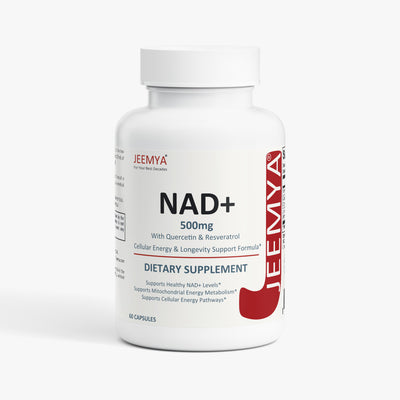
Adding chili to your meals is an easy, low-cost habit. If you want more support for your energy and metabolic health, Jeemya offers daily formulas made with clean ingredients and transparent labels. Our NAD+ 500 mg supports cellular energy production, and our Berberine HCl 800 mg supports healthy glucose metabolism. Every order comes with a 30-day money-back guarantee. Talk to your healthcare provider before starting any new supplement.
Frequently Asked Questions
Do hot peppers boost metabolism enough to lose weight?
Not by themselves. Hot peppers raise calorie burn by roughly 50 to 60 kcal a day and may reduce how much you eat at a meal. That can support weight loss as part of a balanced diet and regular exercise, but it will not replace them.
Do chili peppers boost metabolism more than other spices?
Chili peppers are the most studied spice for metabolism because of capsaicin. Cinnamon, cumin, turmeric, and ginger have also been studied, but there are far more human trials on chili peppers, including several meta-analyses.
Does sweating from spicy food mean I am burning fat?
No. Sweating is your body's way of cooling down after capsaicin makes it feel hot. It shows that the TRPV1 receptor has been activated, but the sweat itself does not burn a meaningful number of calories.
How long does the metabolism boost from hot peppers last?
The effect is short. In the Purdue cayenne study, researchers measured higher energy expenditure in the hours after a single meal. That is why small, regular amounts in meals make more sense than one large dose.
Do peppers help you burn fat if you eat spicy food every day?
They may help a little less. Studies suggest that regular spicy food eaters respond less to capsaicin than people who rarely eat it, likely because the body becomes less sensitive to it over time.
Are capsaicin supplements better than eating hot peppers?
Not necessarily. The Purdue study found that tasting the pepper in food increased its effect compared with swallowing the same dose in a capsule. Supplements can also cause stomach upset, so check with your doctor before trying them.
Are hot peppers safe for everyone?
Most people can eat hot peppers in normal amounts. People with heartburn, GERD, IBS, active ulcers, or those taking certain medicines should talk to a doctor first.
References
- Ludy MJ, Moore GE, Mattes RD. The effects of capsaicin and capsiate on energy balance: critical review and meta-analyses of studies in humans. Chemical Senses. 2012;37(2):103-121. https://pmc.ncbi.nlm.nih.gov/articles/PMC3257466/
- Chili pepper as a body weight-loss food. International Journal of Food Sciences and Nutrition. 2017;68(4):392-401. https://pubmed.ncbi.nlm.nih.gov/27899046/
- Whiting S, Derbyshire E, Tiwari BK. Capsaicinoids and capsinoids. A potential role for weight management? A systematic review of the evidence. Appetite. 2012;59(2):341-348.
- Whiting S, Derbyshire EJ, Tiwari B. Could capsaicinoids help to support weight management? A systematic review and meta-analysis of energy intake data. Appetite. 2014;73:183-188. https://pubmed.ncbi.nlm.nih.gov/24246368/
- Zsiborás C, Mátics R, Hegyi P, et al. Capsaicin and capsiate could be appropriate agents for treatment of obesity: a meta-analysis of human studies. Critical Reviews in Food Science and Nutrition. 2018;58(9):1419-1427. https://pubmed.ncbi.nlm.nih.gov/28001433/
- Ludy MJ, Mattes RD. The effects of hedonically acceptable red pepper doses on thermogenesis and appetite. Physiology and Behavior. 2011;102(3-4):251-258. https://pubmed.ncbi.nlm.nih.gov/21093467/
- Yoneshiro T, Aita S, Kawai Y, et al. Nonpungent capsaicin analogs (capsinoids) increase energy expenditure through the activation of brown adipose tissue in humans. American Journal of Clinical Nutrition. 2012;95(4):845-850. https://pubmed.ncbi.nlm.nih.gov/22378725/
- Yoneshiro T, Aita S, Matsushita M, et al. Recruited brown adipose tissue as an antiobesity agent in humans. Journal of Clinical Investigation. 2013;123(8):3404-3408. https://pmc.ncbi.nlm.nih.gov/articles/PMC3726164
- Janssens PLHR, Hursel R, Westerterp-Plantenga MS. Capsaicin increases sensation of fullness in energy balance, and decreases desire to eat after dinner in negative energy balance. Appetite. 2014;77:44-49.
- Lv J, Qi L, Yu C, et al. Consumption of spicy foods and total and cause specific mortality: population based cohort study. BMJ. 2015;351:h3942. https://pubmed.ncbi.nlm.nih.gov/26242395/
- Chopan M, Littenberg B. The association of hot red chili pepper consumption and mortality: a large population-based cohort study. PLoS ONE. 2017;12(1):e0169876. https://doi.org/10.1371/journal.pone.0169876
- Costa K. Can eating chili peppers actually increase obesity risk? Medical News Today. June 9, 2024. https://www.medicalnewstoday.com/articles/can-eating-chili-peppers-increase-obesity-risk
- Gudritz L. Some like it hot: 5 reasons spicy food is good for you. Healthline. Updated February 4, 2020. https://www.healthline.com/health/five-reasons-to-eat-spicy-foods
- McKinney A. The many benefits of spicy foods. Mayo Clinic Community Health. July 7, 2025. https://communityhealth.mayoclinic.org/featured-stories/benefits-of-spice
- Genesis HealthCare System. The spicy truth: do peppers help you burn fat? August 5, 2025. https://www.genesishcs.org/wellness/nutrition/the-spicy-truth-do-peppers-help-you-burn-fat
- U.S. Department of Agriculture. FoodData Central: Peppers, hot chili, green, raw (FDC ID 170497).
Medical disclaimer: This article is for general information only and is not medical advice. It does not replace a consultation with a qualified healthcare provider. Talk to your doctor before making major changes to your diet or starting a new supplement, especially if you have a health condition or take medication.

0 comments