

Your brain consumes 20% of your body's total energy, despite accounting for just 2% of your body weight. It runs on a precise balance of neurotransmitters, blood flow, oxygen delivery, and cellular energy production. When any of these systems falters, the result is familiar: brain fog, poor concentration, sluggish memory, and mental fatigue.
Nootropics are compounds formulated to support these systems. Not by forcing the brain into overdrive, but by providing the raw materials, cofactors, and signaling support it needs to function at its natural capacity.
This article explains what nootropics are, the key types available, how they work at the neurochemical level, which ingredients are backed by research, and the honest safety considerations you should understand before choosing a product.
What Are Nootropics?
The term "nootropic" was coined in 1972 by Romanian psychologist Corneliu Giurgea. He defined it as any substance that enhances learning and memory, supports the brain's resistance to physical or chemical disruption, and has a well-characterised safety profile.
Today, the term encompasses a broad category of compounds — from amino acids and B vitamins to botanical extracts and phospholipids — that support cognitive function through different neurochemical pathways.
Nootropics are not stimulants. Caffeine forces alertness by blocking adenosine receptors — it overrides the brain's own signaling rather than supporting it. Nootropics work differently: they support the brain's own production of neurotransmitters, provide neuroprotection against oxidative stress, and help maintain cerebral blood flow. The distinction matters, because the mechanism determines both the benefit and the risk profile.
What Are the Types of Nootropics?
Not all nootropics are the same, and understanding the three major categories is essential for making an informed decision.
1. Natural Nootropics
These are compounds derived from plants, herbs, fungi, and amino acids — many with centuries of traditional use and a growing body of peer-reviewed research supporting their role in cognitive function. Natural nootropics typically work gradually, with effects building over consistent daily use rather than producing acute stimulant-style responses.
Examples include: Bacopa Monnieri, Lion's Mane Mushroom, Ashwagandha (KSM-66), Rhodiola Rosea, L-Theanine, Phosphatidylserine, DMAE, Huperzine A, and functional mushroom complexes.
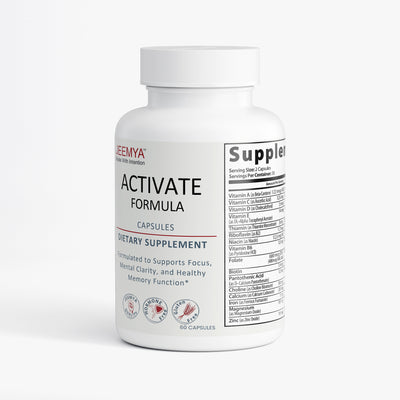
Jeemya's position: ACTIVATE FORMULA is formulated exclusively around natural nootropic compounds — botanical extracts, amino acids, phospholipids, and essential micronutrients. This is a deliberate formulation philosophy, not a marketing constraint.
2. Synthetic Nootropics
These are laboratory-created compounds designed to target specific cognitive pathways. Some, such as racetams (piracetam, aniracetam), are available over-the-counter in some markets. Others, like Noopept, occupy regulatory grey areas depending on jurisdiction.
What the research shows: Evidence on synthetic nootropics in healthy adults is still emerging and often limited. Some synthetic compounds carry risks of tolerance, dependency, and side effects that are less well-characterised than natural alternatives. Jeemya does not include synthetic nootropic compounds in any formulation.
3. Prescription Nootropics
These are pharmaceutical medications with stimulant or cognitive-modulating properties, prescribed by licensed healthcare providers to manage specific diagnosed conditions — including ADHD, narcolepsy, and Alzheimer's disease.
Examples include: Modafinil (Provigil), Adderall (amphetamines), methylphenidate (Ritalin), and memantine (Namenda).
These are FDA-regulated controlled substances — not dietary supplements — and require a valid prescription. They are not appropriate for general wellness use, carry significant risk profiles, and are entirely outside the scope of dietary supplement classification.
The practical distinction: If a product claims "prescription-strength" nootropic effects without requiring a prescription, that claim warrants close scrutiny.
How Nootropics Work: The Four Pathways
Every well-researched nootropic compound targets one or more of these four systems:
1. Neurotransmitter Support
Your brain communicates through chemical messengers. Acetylcholine governs learning and memory. Dopamine drives motivation and reward. Serotonin regulates mood. GABA produces calm focus and inhibitory balance. Nootropics can:
- Provide precursors for neurotransmitter synthesis (e.g., choline → acetylcholine)
- Inhibit enzymes that break down neurotransmitters (e.g., Huperzine A inhibits acetylcholinesterase)
- Directly modulate receptor activity (e.g., GABA on GABA-A receptors)
2. Cerebral Blood Flow
Your brain needs constant, uninterrupted oxygen and glucose delivery. Polyphenol compounds — found in grape seed extract and green tea — support vasodilation and healthy microcirculation in the brain's capillary network, supporting the delivery infrastructure that cognition depends on.
3. Neuroprotection
Oxidative stress damages neurons over time, a process accelerated by chronic stress, poor sleep, and aging. Antioxidant nootropics — Vitamins C and E, selenium, grape seed extract — are formulated to support the neutralisation of reactive oxygen species before they can damage neuronal cell membranes and DNA.
4. Cellular Energy Production
Neurons are among the most energy-demanding cells in the body. B vitamins serve as essential cofactors in the mitochondrial energy production chain. Without adequate B1, B2, B3, B5, B6, B12, and folate, neurons cannot produce sufficient ATP to fire efficiently — regardless of any other nootropic compound present.
Key Nootropic Ingredients: What the Research Shows
DMAE (Dimethylaminoethanol)
DMAE is a naturally occurring compound that serves as a precursor to acetylcholine — the neurotransmitter most directly involved in learning, memory formation, and sustained attention. By supporting acetylcholine synthesis, DMAE provides the raw material the brain needs for focused cognitive work.
Bacopa Monnieri Extract
Bacopa is one of the most clinically studied botanical nootropics available. A 2014 meta-analysis of 9 randomised, placebo-controlled studies (518 total participants) found that Bacopa significantly supports attention and decreases reaction time. Research also indicates Bacopa plays a role in supporting memory acquisition, delayed recall, and retention of new information. Effects typically build over 4–8 weeks of consistent use — a timeline that distinguishes genuine cognitive support from stimulant-style acute response.
Phosphatidylserine
A phospholipid that forms a critical structural component of every neuronal cell membrane. Studies suggest that phosphatidylserine supports memory in individuals experiencing age-related memory changes. It also plays a role in cognitive processing, mood regulation, and stress resilience — research indicates it may support cortisol modulation during periods of mental stress.
GABA (Gamma-Aminobutyric Acid)
The brain's primary inhibitory neurotransmitter. GABA counterbalances excitatory neurotransmitters like glutamate, supporting neural equilibrium. When GABA signaling is well-supported, the result is calm focus rather than anxious mental overactivation. Supplemental GABA is formulated to support relaxation without sedation — a meaningful distinction for sustained, productive concentration.
Huperzine A
Extracted from Chinese club moss (Huperzia serrata), Huperzine A is a selective inhibitor of acetylcholinesterase — the enzyme responsible for breaking down acetylcholine. By slowing this degradation process, Huperzine A supports elevated acetylcholine availability in the synaptic cleft, potentially extending the duration of memory encoding and focused attention.
Green Tea Extract
Contains both L-theanine and catechin polyphenols (especially EGCG). L-theanine is associated with alpha brain wave activity — the neural state linked to relaxed alertness. EGCG functions as a potent antioxidant, supporting neuronal protection from oxidative damage while playing a role in cerebral blood flow support.
DHA (Docosahexaenoic Acid)
An omega-3 fatty acid that constitutes approximately 40% of the polyunsaturated fatty acids in the brain. DHA is structurally essential for neuronal membranes and synaptic function. Adequate DHA supports signal transmission efficiency, membrane fluidity, and long-term neurological health.
Glutamic Acid & L-Glutamine
Glutamic acid is the most abundant excitatory neurotransmitter in the brain. L-Glutamine serves as its metabolic precursor. Together, they support the glutamate-GABA balance — the fundamental excitation/inhibition cycle that governs all cognitive processing.
The Vitamin & Mineral Foundation
Nootropic compounds can only perform their intended roles if the brain's basic nutritional infrastructure is in place. Deficiencies in key vitamins and minerals are one of the most common — and most overlooked — contributors to brain fog and cognitive underperformance.
|
Nutrient |
Role in Brain Function |
|
Vitamin B1 (Thiamine) |
Essential for glucose metabolism in neurons — the brain's primary fuel |
|
Vitamin B6 |
Required cofactor for serotonin, dopamine, and GABA synthesis |
|
Vitamin B12 |
Maintains myelin sheath integrity for fast neural signal transmission |
|
Folate |
DNA synthesis and repair; supports reduction of homocysteine in neural tissue |
|
Vitamin C |
Antioxidant protection; cofactor for norepinephrine synthesis |
|
Vitamin E |
Protects neuronal cell membranes from lipid peroxidation |
|
Vitamin D |
Receptors present in mood-regulating brain regions; supports immune function |
|
Magnesium |
Involved in 300+ enzymatic reactions; regulates NMDA receptor activity |
|
Zinc |
Modulates synaptic transmission; concentrated in the hippocampus (memory center) |
|
Selenium |
Antioxidant enzyme cofactor; plays a role in supporting cognitive health with aging |
|
Iron |
Oxygen transport to brain tissue via hemoglobin |
An estimated 42% of American adults are deficient in Vitamin D alone. B12 deficiency affects up to 15% of older adults. These deficiencies directly impair cognitive function — and no nootropic compound, however well-formulated, can fully compensate for foundational nutritional gaps.
Do Nootropic Dietary Supplements Contain Drugs?
This is a question that deserves a direct, honest answer — and it's one Jeemya addresses head-on.
By definition and by law, dietary supplements are not drugs. Prescription medications require FDA approval for safety and efficacy before they can be marketed. Dietary supplements operate under a separate regulatory framework (DSHEA) and cannot claim to diagnose, treat, cure, or prevent any medical condition.
However, not all products marketed as nootropic supplements are equally transparent. Some products on the market have been found to contain unapproved pharmaceutical compounds, undisclosed stimulants, or ingredients not listed on the label. The FDA does not pre-approve dietary supplements before sale — it monitors the market for products that violate labeling or safety requirements after they are already available to consumers.
This is precisely why third-party testing matters.
Jeemya's ACTIVATE FORMULA is third-party tested with a Certificate of Analysis (COA) available on every batch — covering ingredient identity, potency, heavy metals, and microbiological safety. You are not asked to trust a label. You are given the lab data to verify it yourself.
The question is not "are nootropics drugs?" The question is: "does this specific product contain exactly what it says, at the doses listed, with nothing undisclosed?" A COA answers that question. A marketing claim does not.
If a supplement brand cannot — or will not — show you their lab testing, that absence is itself meaningful information.
Potential Side Effects and the Danger of Brain Overstimulation
Well-researched natural nootropic compounds at established dosages have strong safety profiles. Amino acids, B vitamins, phospholipids, and botanical extracts like Bacopa and Huperzine A have been studied and used across multiple research populations with minimal adverse effect profiles.
That said, no responsible brand communicates about cognitive support without addressing risks honestly.
What Can Cause Adverse Effects?
The risk profile of nootropics is not uniform — it is largely determined by the type of compound, the dose, and the individual's health context. The highest risk scenarios involve:
- Stimulant-heavy formulas — Products that rely on high-dose caffeine, synephrine, or amphetamine-adjacent compounds to produce "cognitive effects" carry the highest risk of overstimulation. These are not nootropics in the scientific sense — they are stimulants.
- Megadosing — Exceeding established safe dosage ranges for compounds that affect neurotransmitter activity (particularly those influencing GABA or glutamate signaling).
- Combining multiple active compounds without understanding their interactions.
- Individual health context — People on psychiatric medications, blood thinners, or those with cardiovascular conditions face different risk profiles than healthy adults.
Common Reported Side Effects (Primarily with Stimulant-Based Products)
|
Side Effect |
Typical Association |
|
Headache |
Cholinergic compounds at high doses; dehydration |
|
Gastrointestinal upset or nausea |
Early use; improper timing relative to meals |
|
Sleep disruption or insomnia |
Late-day dosing; stimulant-containing formulas |
|
Agitation or restlessness |
Overstimulation; stimulant compounds |
|
Elevated heart rate |
Stimulant compounds; caffeine-stacked products |
|
Anxiety |
Excess glutamate signaling; stimulant exposure |
The Concept of Brain Overstimulation
The brain's excitatory and inhibitory systems exist in a carefully maintained balance. Overstimulation — driven by excessive excitatory neurotransmitter activity or stimulant exposure — disrupts this balance. In the short term, this manifests as anxiety, racing thoughts, impaired sleep, and paradoxically, reduced cognitive performance. In the longer term, chronic overstimulation is associated with burnout and impaired stress resilience.
This is why ACTIVATE FORMULA is formulated to include GABA — specifically to support the inhibitory counterbalance that prevents the excitatory overactivation associated with stimulant-forward cognitive products.
Who Should Consult a Healthcare Provider Before Use
- Pregnant or nursing women
- Children under 18
- Individuals on psychiatric medications or anticoagulants
- People with diagnosed seizure disorders
- Anyone with a history of cardiovascular conditions
ACTIVATE FORMULA is not formulated for, and should not be used by, individuals in the above categories without healthcare provider guidance.
Who Benefits Most from Nootropic Support?
- Knowledge workers and professionals who need sustained focus, mental clarity, and resistance to cognitive fatigue across long working days
- Students preparing for exams or managing heavy academic loads — Bacopa and phosphatidylserine specifically support memory acquisition and retention
- Adults 40+ experiencing age-related changes in memory, processing speed, or mental sharpness
- High-stress individuals whose cortisol levels are impairing focus and memory consolidation
- Anyone experiencing brain fog from nutrient deficiencies, poor sleep, or accumulated mental fatigue
Jeemya ACTIVATE FORMULA: A Complete Cognitive Architecture
ACTIVATE FORMULA is built on the principle that cognitive performance depends on multiple systems functioning simultaneously. Rather than isolating a single compound, it is formulated to address cognition from raw material supply through neurotransmitter production to synaptic protection.
Neurotransmitter Support Layer:
- DMAE Bitartrate — acetylcholine precursor
- Huperzine A — acetylcholinesterase inhibitor (supports prolonged acetylcholine availability)
- GABA — inhibitory neurotransmitter support for calm, sustainable focus
- Phosphatidylserine — cell membrane support and cortisol modulation
- Choline Bitartrate — additional acetylcholine substrate
Botanical Nootropic Layer:
- Bacopa Extract — supports memory, attention, and processing speed
- Green Tea Extract — L-theanine for alpha wave support + EGCG antioxidant protection
- Bilberry Fruit Extract — supports cerebral microcirculation
Neuroprotective Antioxidant Layer:
- Grape Seed Extract — potent polyphenol antioxidant
- Vitamin C (125 mg), Vitamin E (14 mg), Selenium (50 mcg)
Essential Brain Fuel Layer:
- Complete B-complex (B1, B2, B3, B5, B6, B12, Folate, Biotin)
- DHA (14%) — structural omega-3 for neuronal membranes
- Magnesium, Zinc, Iron, Potassium
Neurotransmitter Balance Support:
- Inositol — secondary messenger in neurotransmitter signaling
- L-Glutamine HCl and Glutamic Acid — excitatory neurotransmitter support
Every ingredient is present for a documented reason. Every batch is third-party tested. The COA is available before you buy — because you should know exactly what's in your product.
Clarity isn't accidental. It's architectural.
Explore More Health Guides:
2- best daily immune support supplement
Frequently Asked Questions
How long do nootropics take to work?
Some compounds — GABA, L-theanine — produce effects within 30–60 minutes of ingestion. Others, including Bacopa and phosphatidylserine, require 4–8 weeks of consistent daily use to produce measurable cognitive improvements. Results reflect cumulative biological support, not acute pharmacological override.
Are natural nootropics safe?
Well-studied natural nootropic compounds at established dosages have strong safety profiles. B vitamins, amino acids, and phospholipids are naturally occurring nutrients. Botanical extracts like Bacopa and Huperzine A have centuries of traditional use and are increasingly supported by clinical research. Risk increases significantly with stimulant-based formulas, megadosing, or use by individuals with contraindicated health conditions.
Can I take nootropics with coffee?
In most cases, yes. Green tea extract contains L-theanine, which is associated with smoothing caffeine's effects — supporting alertness while reducing jitteriness. Most of the natural nootropic ingredients in ACTIVATE FORMULA are compatible with moderate caffeine consumption. If you are sensitive to stimulants, start with lower caffeine intake when introducing any new cognitive support supplement.
What is the difference between nootropics and stimulants?
Stimulants (caffeine, amphetamines) produce alertness by overriding the brain's natural signaling mechanisms — blocking adenosine receptors, flooding dopamine pathways. The effect is acute and followed by a corresponding crash. Nootropics support the brain's own chemistry: providing building blocks, protecting neurons, and supporting neurotransmitter balance. No crash. No dependency cycle.
Do nootropic supplements contain prescription drugs?
Legitimate, responsibly manufactured dietary supplements do not contain prescription drugs. However, because the supplement market is not pre-approved by the FDA, some products have been found to contain undisclosed pharmaceutical compounds. This is precisely why third-party testing and a visible COA are not optional quality markers — they are the minimum standard of proof for a product you are putting into your body.
Who should not take nootropic supplements?
Pregnant or nursing women, children under 18, individuals on psychiatric medications or anticoagulants, and people with diagnosed cardiovascular or seizure disorders should consult a healthcare provider before using any nootropic supplement. ACTIVATE FORMULA is formulated for healthy adults — it is not intended for use as a substitute for medical treatment.
References
- Giurgea, C. (1972). The nootropic concept and its prospective implications. Drug Development Research.
- Kongkeaw, C., et al. (2014). Meta-analysis of randomised controlled trials on cognitive effects of Bacopa monnieri extract. Journal of Ethnopharmacology, 151(1), 528–535.
- Glade, M.J. & Smith, K. (2015). Phosphatidylserine and the human brain. Nutrition, 31(6), 781–786.
- NIH Office of Dietary Supplements — Vitamin B12, Vitamin D, Folate Fact Sheets (2026).
These statements have not been evaluated by the Food and Drug Administration. This product is not intended to diagnose, treat, cure, or prevent any disease. Always consult your healthcare provider before starting any new supplement regimen.
True wellness begins when we honour the connection between what we consume, how we move, and the way we rest.

0 comments