
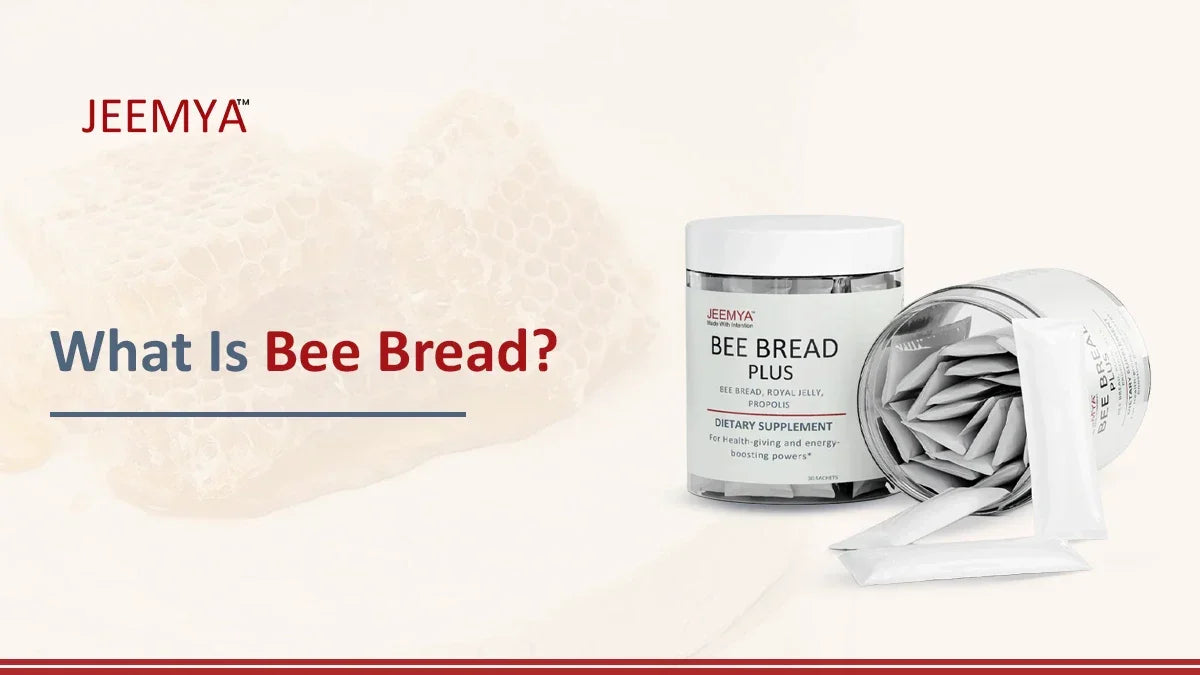
Most people have heard of bee pollen. Fewer have heard of bee bread — and the difference between the two is exactly why your digestive system may not be absorbing the nutrients you think it is.
Bee bread is what happens when honeybees take raw pollen, mix it with their own digestive enzymes and flower nectar, pack it into honeycomb cells, and allow it to ferment under a sealed layer of honey and beeswax. The result is a naturally fermented, nutrient-dense substance that contemporary nutritional science now recognizes as one of the most bioavailable whole-food matrices found in nature.
In this article, we explain exactly what bee bread is, what distinguishes it from raw bee pollen, the documented nutrient profile, and how its compounds function in the human body — based on the peer-reviewed research, not marketing language.
What Is Bee Bread?
Bee bread is a naturally fermented hive product created exclusively by honeybees. It is produced when worker bees collect raw pollen, enzymatically process it during transport, and pack it into honeycomb cells where it undergoes lactic acid fermentation under anaerobic conditions.
The term "bee bread" refers specifically to this post-fermentation product — a chemically distinct substance from the raw pollen it originated as. It is not a supplement category invented by the wellness industry. Bee bread has been consumed by humans across multiple cultures for centuries, and has been the subject of substantial scientific study since the early 2000s.
What makes bee bread nutritionally significant is not merely what it contains — but how accessible those compounds are to the human digestive system, a distinction explored in detail below.
How Bee Bread Is Made: Inside the Hive
Bee bread is not manufactured. It is produced entirely through a precise biological sequence initiated and completed by the colony:
Step 1 — Collection: Worker bees gather pollen from hundreds of plant species, mixing it with nectar and salivary enzymes during transport back to the hive.
Step 2 — Packing: The processed pollen is packed tightly into honeycomb cells, layered with honey between each deposit.
Step 3 — Sealing: A thin layer of beeswax is applied to each cell, creating an anaerobic — oxygen-free — environment.
Step 4 — Fermentation: Lactic acid bacteria naturally present in the hive initiate anaerobic fermentation, chemically transforming the pollen over approximately two weeks.
This fermentation process is the defining event. It is what distinguishes bee bread from the raw pollen that preceded it — and what makes the resulting nutrient profile fundamentally different in both composition and digestibility.
Bee Bread vs. Bee Pollen: Why Fermentation Matters
Raw bee pollen has a tough outer cell wall called the exine — a shell composed primarily of sporopollenin, one of the most chemically resistant organic polymers found in nature. This wall is biologically designed to protect pollen grains during wind and insect transport.
The challenge for human nutrition: the human digestive system cannot readily break through it.
This means that even though raw bee pollen contains proteins, vitamins, minerals, and bioactive compounds, a meaningful proportion of those nutrients may pass through the gastrointestinal tract without being absorbed — because the protective wall prevents the small intestine from accessing them.
Bee bread addresses this through fermentation. The lactic acid fermentation process degrades the exine wall, making the nutrient content — proteins, flavonoids, phenolic acids, vitamins, and minerals — significantly more accessible to the small intestinal epithelium.
A 2022 review published in Frontiers in Nutrition confirmed that the fermentation process "significantly increases the bioavailability of bioactive substances (polyphenols, vitamins, proteins) by breaking down the tough pollen shell (exine), making its nutrient profile more accessible than raw pollen" (Barta et al., 2022).
|
|
Raw Bee Pollen |
Bee Bread (Fermented) |
|
Outer wall |
Intact exine — resistant to digestion |
Broken down by lactic acid fermentation |
|
Nutrient absorption |
Limited by pollen shell integrity |
Substantially higher bioavailability |
|
Sugar profile |
Complex polysaccharides |
Simpler, more readily absorbed sugars |
|
Protein digestibility |
Lower amino acid availability |
Higher free amino acid content post-fermentation |
|
Shelf stability |
Degrades relatively quickly |
Naturally preserved by lactic acid environment |
What's Inside Bee Bread: The Documented Nutrient Profile
Bee bread is not a single-compound supplement. Research published across Antibiotics (2022), Antioxidants (2024), and Frontiers in Nutrition (2022) has identified more than 300 individual compounds across multiple chemical classes.
Proteins and Amino Acids
Bee bread contains all essential amino acids — including leucine, isoleucine, valine, phenylalanine, threonine, methionine, histidine, and lysine. The fermentation process increases free amino acid availability relative to raw pollen, supporting the compound's role as a whole-food protein source.
B-Complex Vitamins and Fat-Soluble Vitamins
Bee bread is a natural source of B-complex vitamins (B1, B2, B3), vitamin C, and fat-soluble vitamins A, D, E, and K. Vitamin E — a well-characterized antioxidant — has been documented in notable concentrations across bee bread samples from multiple geographic origins.
Minerals
Mineral analysis across multiple countries consistently identifies bee bread as a source of:
- Potassium — involved in normal blood pressure regulation and muscle function
- Calcium — essential for bone structure and neuromuscular signaling
- Magnesium — a cofactor in over 300 enzymatic reactions
- Iron — required for normal oxygen transport in red blood cells
- Zinc — involved in normal immune system function and cellular repair
- Manganese — a cofactor in the body's antioxidant enzyme systems
- Copper — involved in normal iron metabolism and connective tissue formation
Polyphenols and Flavonoids
This is where bee bread distinguishes itself most clearly from conventional supplements. It contains a diverse range of plant-derived bioactive compounds, including:
- Quercetin — a flavonoid with documented antioxidant activity
- Kaempferol — present in high concentrations; subject to ongoing cellular research
- Rutin — associated with vascular health support pathways
- Caffeic acid — a phenolic acid with characterized antioxidant capacity
- Resveratrol — the stilbenoid found naturally in grape skins and red wine, also present in bee bread
A 2024 study analyzing Romanian bee bread samples identified 24 individual phenolic compounds, with flavonoids present in significantly higher concentrations than phenolic acids (Mărgăoan et al., Antioxidants, 2024).
Unsaturated Fatty Acids
Bee bread contains unsaturated fatty acids including linoleic acid, alpha-linolenic acid (omega-3), and oleic acid — contributing to a lipid profile not commonly found in plant-based supplement matrices.
Coenzyme Q10
Bee bread has been documented to contain Coenzyme Q10 (CoQ10), a compound with a recognized role in mitochondrial energy production pathways at the cellular level.
How Bee Bread Functions in the Body
The breadth of compounds in bee bread means it does not work through a single pathway. It provides multi-system nutritional support across several well-characterized biological mechanisms.
Antioxidant Defense Support
The flavonoids and phenolic acids in bee bread function as direct free radical scavengers, neutralizing reactive oxygen species (ROS) before they can interact with cellular structures. Multiple in vitro studies have confirmed strong DPPH, ABTS, and FRAP antioxidant activity in bee bread extracts.
Gut Microbiome Support
The lactic acid bacterial metabolites naturally present in bee bread are consistent with compounds recognized for their role in supporting gut microbiome diversity. Bee bread's fermented sugars and partially pre-digested proteins are gentle on the digestive system while delivering a concentrated nutrient matrix — a profile aligned with prebiotic-supporting whole foods.
Cellular Energy Support
The combination of easily absorbed simple sugars, free amino acids, B-complex vitamins, and CoQ10 provides foundational support for cellular energy production pathways — without stimulants, without caffeine, and without post-consumption energy depression.
Immune and Antioxidant Cofactor Support
Zinc, copper, and iron in bee bread are recognized nutritional cofactors involved in the normal function of the immune system. Combined with the polyphenol density, bee bread provides a broad base of micronutrient support for the body's natural defense mechanisms.
What the Research Shows: In Vivo Evidence
Beyond laboratory analysis, animal model research has demonstrated bee bread's activity in biological systems:
- Metabolic support: In vivo studies have documented bee bread's role in supporting healthy blood glucose and lipid balance within normal physiological ranges
- Inflammation pathway support: Bee bread extracts have demonstrated measurable modulation of inflammatory markers in animal research
- Systemic antioxidant support: Reductions in systemic oxidative stress markers have been documented in animal model studies following bee bread supplementation
A comprehensive 2022 review in Antibiotics concluded: "In vivo studies have revealed the efficiency of bee bread in alleviating several pathological cases, such as hyperglycemia, hyperlipidemia, inflammation, and oxidative stress" (Bakour et al., 2022).
Note on framing: The in vivo findings referenced above represent animal model research. These studies do not constitute clinical proof of effect in humans. Jeemya presents this evidence because it represents the current body of scientific interest in bee bread — not as a claim that this product treats, cures, or prevents any health condition.
Who Is Bee Bread Formulated For?
Based on its documented nutrient profile and the existing research literature, bee bread is a relevant whole-food supplement for:
- Athletes and active individuals seeking natural recovery support through complete amino acid profiles and antioxidant-rich whole-food nutrition
- Professionals and high-performers looking for sustained, stimulant-free cellular energy from a whole-food matrix
- Adults over 40 interested in broad-spectrum micronutrient support, antioxidant coverage, and daily nutritional density
- Anyone complementing a varied diet who wants a whole-food-proximate nutrient source with a traceable, documented origin
How to Use Bee Bread Powder
Bee bread is available in raw form, capsules, and freeze-dried powder. Powder formats offer the highest versatility for daily use:
- Blend into a morning smoothie for a nutrient-dense start before other demands begin
- Stir into yogurt or oatmeal — bee bread's mild, slightly tangy flavor integrates easily
- Add to a post-activity shake to support recovery with amino acids and mineral co-factors
- Take directly with water as part of a daily supplement protocol
For consistency: morning consumption is recommended to align with the body's natural cortisol arc and support the day's energy baseline.
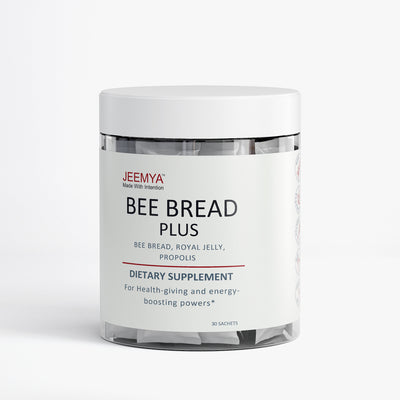
Jeemya Bee Bread Plus: Whole-Hive Nutrition
Jeemya Bee Bread Plus combines three complementary hive-derived compounds in a single formula, honoring the natural synergy between them:
- Freeze-Dried Bee Bread — 2,500 mg: the fermented whole-food matrix detailed throughout this article
- Lyophilized Royal Jelly (5% 10-HAD) — 500 mg: containing Major Royal Jelly Proteins (MRJPs), a class of proteins unique to royal jelly and the subject of ongoing nutritional research
- Propolis Extract Powder — 500 mg: the hive's structural compound, rich in polyphenols and caffeic acid phenethyl ester (CAPE)
- Vitamin C — 12 mg: supporting the natural antioxidant activity of the blend
"The complexity of the hive, clarified for your routine."
→ Explore Jeemya Bee Bread Plus
Frequently Asked Questions
Is bee bread the same as bee pollen?
No. Bee bread is bee pollen that has undergone natural lactic acid fermentation inside the hive. This process breaks down the tough outer exine wall of pollen grains, making the nutrient content significantly more bioavailable than raw pollen.
What does bee bread taste like?
Bee bread has a mildly sweet, slightly tangy flavor — comparable to dried fruit with a subtle fermented note. In powder form, it blends easily into smoothies, yogurt, or oatmeal without a strong taste profile.
Can I take bee bread if I have a bee or pollen allergy?
If you have a known allergy to bee stings, bee pollen, honey, or other bee-derived products, consult your healthcare provider before consuming bee bread. Bee product allergies can cause serious reactions in predisposed individuals.
How much bee bread is in each serving of Jeemya Bee Bread Plus?
Each sachet of Jeemya Bee Bread Plus provides 2,500 mg of freeze-dried bee bread extract, verified at this level in our third-party Certificate of Analysis.
Is bee bread safe during pregnancy or nursing?
Pregnant or nursing individuals should consult their healthcare provider before beginning any new supplement, including bee bread.
Where does Jeemya source its bee bread?
Jeemya Bee Bread Plus is sourced from European hives in Latvia, where established beekeeping traditions and clean natural environments support consistent, high-quality bee product production. Origin and purity are documented in every COA.
Why freeze-dried rather than raw or heat-dried?
Freeze-drying (lyophilization) preserves the full nutrient and enzyme profile of bee bread without the degradation caused by heat processing. It is the most integrity-preserving drying method available for sensitive biological matrices.
References
- Barta, D.G., et al. (2022). Biotechnological Processes Simulating the Natural Fermentation Process of Bee Bread and Therapeutic Properties — An Overview. Frontiers in Nutrition.
- Mărgăoan, R., et al. (2024). Bee Bread: A Promising Source of Bioactive Compounds with Antioxidant and Antimicrobial Properties. Antioxidants, 13(3), 353.
- Bakour, M., et al. (2022). Bee Bread as a Promising Source of Bioactive Molecules and Functional Properties: An Up-To-Date Review. Antibiotics, 11(2), 203.
- Khalifa, S.A.M., et al. (2023). Bee Pollen and Bread as a Super-Food: A Comparative Review. International Journal of Molecular Sciences.
These statements have not been evaluated by the Food and Drug Administration. This product is not intended to diagnose, treat, cure, or prevent any disease. Consult your healthcare provider before starting any new supplement regimen.
0 comments