
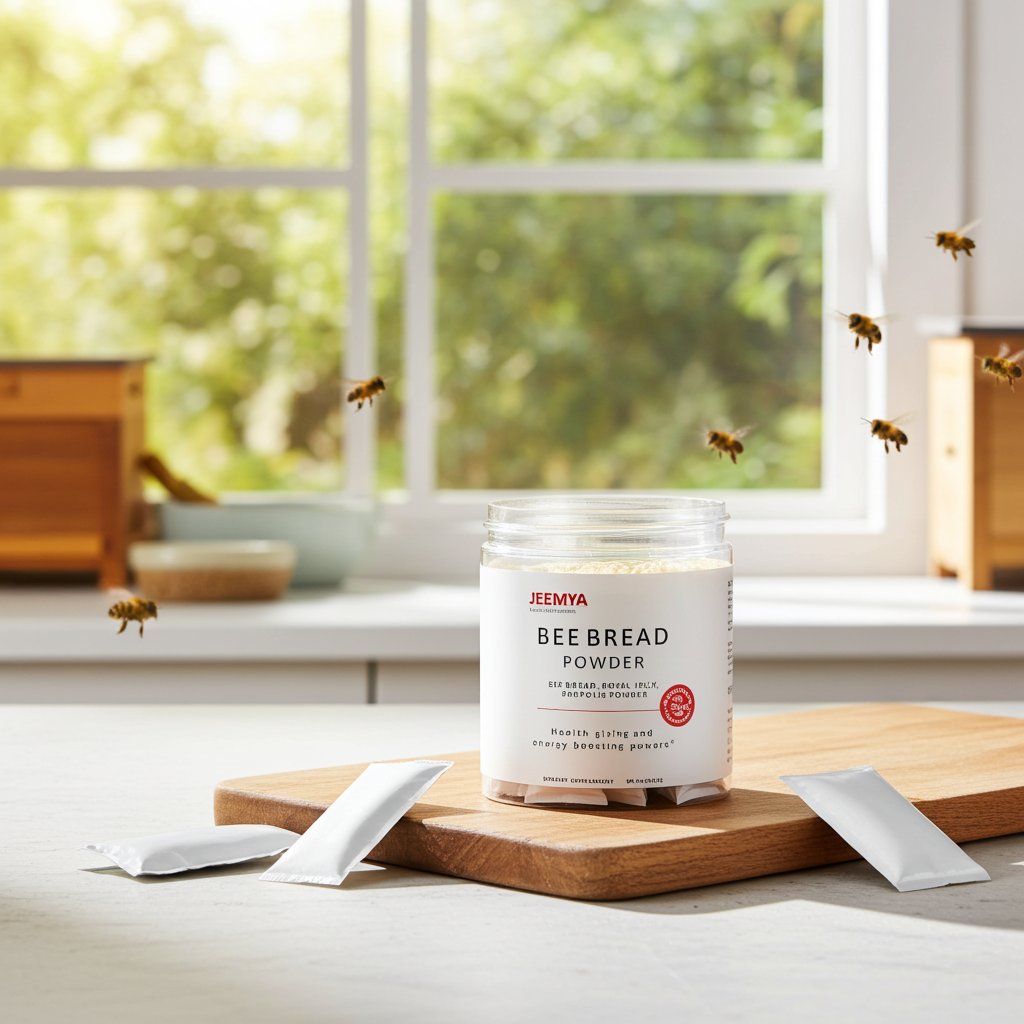
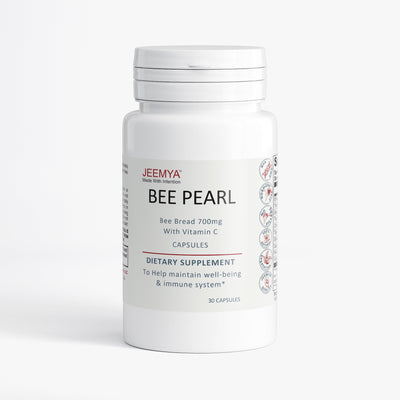
Bee bread, royal jelly, and propolis are distinct outputs of the honeybee hive, differing significantly in their origin, composition, and biological roles. While products like Bee Pearl Powder combine them to offer a "whole hive" nutritional profile, they serve very different functions for both the bees and human health.
Bee Bread
- Origin and Process: Bee bread is a naturally fermented mixture of pollen, nectar, and bee enzymes. Bees store this mixture in the hive, where it undergoes a fermentation process that breaks down the tough outer shell of the pollen grain.
- Unique Composition: It is a nutrient-dense base containing amino acids, B-vitamins, trace minerals, and enzymatic compounds.
- Key Difference: Unlike raw pollen, the fermentation in bee bread is understood to enhance the bioavailability of its nutrients, making them easier for the body to absorb. It is often used for its potential to provide a natural energy boost.
Royal Jelly
- Origin and Purpose: Known as a "superfood," royal jelly is a milky, viscous secretion from the hypopharyngeal and mandibular glands of worker bees. It is the exclusive food for the queen bee throughout her life and is fed to all larvae for their first few days.
- Unique Composition: It contains Major Royal Jelly Proteins (MRJPs), a specific class of glycoproteins exclusive to this substance. It also contains Royalactin, the compound responsible for triggering the morphological change of a larva into a queen bee.
- Key Difference: Royal jelly is structurally distinct from plant or animal proteins typically found in the human diet. It is primarily sought for its anti-aging properties, support for reproductive health, and its ability to promote collagen production.
Propolis
- Origin and Purpose: Often called "bee glue," propolis is a resinous substance bees collect from tree buds, sap, and other botanical sources. Bees use it as a protective sealant to patch holes in the hive and maintain an aseptic (sterile) environment.
- Unique Composition: It is composed mainly of resin (50%) and wax (30%), and it is exceptionally rich in flavonoids and phenolic acids derived from plants.
- Key Difference: While the other substances are primarily nutritional, propolis is the hive's defensive barrier. In human use, it is prized for its potent antimicrobial, antifungal, and anti-inflammatory properties, making it a common choice for boosting immune function and supporting oral health.
Summary of Differences
|
Feature |
Bee Bread |
Royal Jelly |
Propolis |
|
Primary Source |
Fermented pollen and nectar |
Worker bee gland secretions |
Tree resins and botanical saps |
|
Hive Function |
Main food source for the hive |
Nourishment for the queen/larvae |
Hive sealant and disinfectant |
|
Unique Compound |
Fermented enzymatic compounds |
Major Royal Jelly Proteins (MRJPs) |
Diverse plant polyphenols/flavonoids |
|
Primary Benefit |
Bioavailable nutrients and energy |
Anti-aging and hormone balance |
Immune support and antimicrobial |
Clinical research and traditional use highlight that bee bread, royal jelly, and propolis act as potent apitherapeutic agents, offering a range of physiological and psychological health benefits due to their high concentration of bioactive compounds like flavonoids and phenolic acids.
Clinical Health Benefits of Bee Bread
- Enhanced Bioavailability: Bee bread is pollen that has undergone natural fermentation in the hive, which breaks down the tough pollen shell. This process potentially increases the accessibility and absorption of its amino acids, B-vitamins, and trace minerals compared to raw pollen.
- Energy and Endurance: It is historically recognized in natural health for providing a significant energy boost and enhancing physical endurance.
- Nutritional Insurance: It serves as a dense source of micronutrients and unsaturated fatty acids, helping to cover nutritional gaps in modern diets where variety may be limited.
Clinical Health Benefits of Royal Jelly
- Reproductive and Hormonal Health: Royal jelly is effective in reducing premenstrual syndrome (PMS) symptoms and improving the quality of life and urinary function in postmenopausal women. In animal models, it has been shown to protect against oxidative injury in reproductive organs and rebalance hormonal concentrations by increasing estrogen and decreasing follicle-stimulating hormones (FSH).
- Anti-Aging and Skin Care: Clinical research indicates it promotes collagen production, which helps reduce skin aging, fine lines, and wrinkles. It also protects human skin fibroblasts against ultraviolet B-induced photoaging.
- Neuroprotection: It is noted for stimulating physical and mental functions in the elderly and showing promise in animal models for improving cognitive performance in Alzheimer’s disease.
- Unique Proteins: It contains Major Royal Jelly Proteins (MRJPs), exclusive glycoproteins that are structurally distinct from other plant or animal proteins and are the subject of ongoing biological research.
Clinical Health Benefits of Propolis
- Antimicrobial and Immune Support: Known as the hive's defense, propolis exhibits strong antibacterial, antiviral, and antifungal properties. It is used to boost the immune system and fight various pathogens.
- Oral Health: Propolis is highly effective in treating oral conditions, including reducing bacterial plaque, gingivitis, and periodontitis. It is also used to treat halitosis (bad breath) and as a disinfectant for surgical wounds in the mouth.
- Dermatological and Wound Healing: It promotes collagen synthesis and tissue repair, making it effective for treating acne vulgaris and healing complex wounds like diabetic foot ulcers.
- Gastrointestinal Health: It has been shown to inhibit the growth of parasites like Giardia duodenalis and possesses anti-H. pylori activity, which is beneficial for treating gastric ulcers.
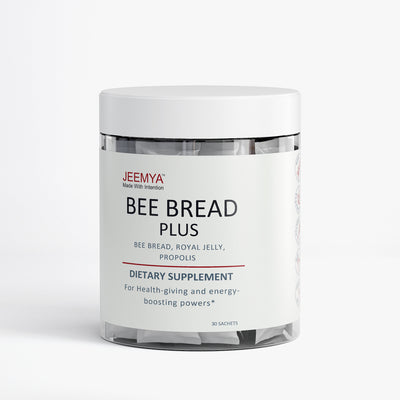
By combining these three elements, products like Jeemya Bee Bread Powder aim to provide a "whole hive" synergistic effect, delivering a broad spectrum of bee-derived nutrition in a single sachet.

0 comments