
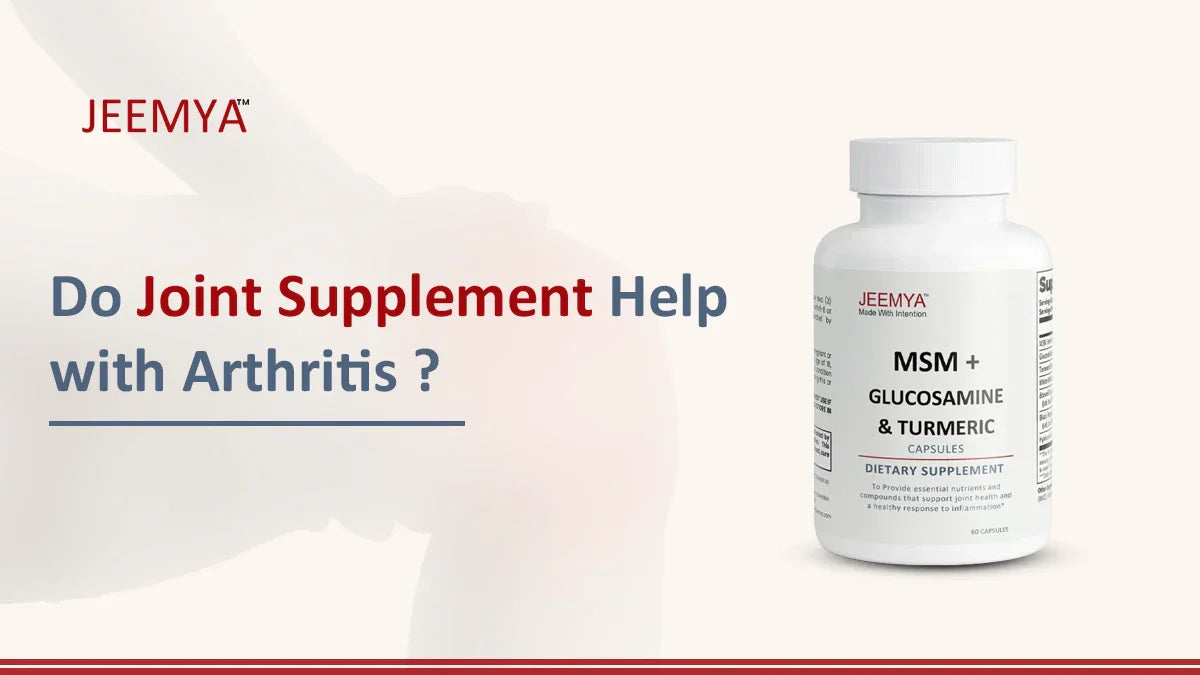
Your joints absorb between 3 and 6 times your body weight with every step you take. Over a lifetime, that's millions of impact cycles on the cartilage, synovial fluid, and connective tissue that keep you moving without pain. When these structures degrade — through wear, inflammation, or nutritional deficiency — the result is stiffness, discomfort, and reduced mobility.
Do joint supplements help with arthritis? The evidence says yes — but with critical caveats. Not all supplements work equally, not all mechanisms are relevant to every type of joint pain, and single-ingredient approaches consistently underperform multi-pathway formulas in clinical trials. Understanding which compounds target which mechanisms is the difference between wasting money and genuinely supporting joint recovery.
This article explains how joints actually work, what causes them to deteriorate, which arthritis natural supplement options have real evidence behind them, and how each ingredient in a multi-pathway joint formula addresses a different layer of the problem.
What Are the Supplements for Joints & Arthritis?
The supplement landscape for arthritis and joint pain divides into four functional categories — each targeting a different mechanism of joint deterioration:
- Structural Repair Agents — rebuild cartilage matrix
- Glucosamine (HCl and sulfate forms)
- Chondroitin sulfate
- Type II collagen
- MSM (methylsulfonylmethane — sulfur donor for collagen cross-linking)
- Anti-Inflammatory Compounds — interrupt the inflammation-destruction cycle
- Turmeric/curcumin (COX-2, LOX, NF-κB inhibition)
- Boswellia serrata (5-LOX inhibition, direct MMP suppression)
- Omega 3 for joint pain (EPA/DHA — resolvin production, systemic inflammation reduction)
- White willow bark (natural COX inhibition)
- Anti inflammatory supplements arthritis patients commonly use include all of the above
- Lubrication Support — restore synovial fluid quality
- Hyaluronic acid (viscosity restoration)
- Omega-3 fatty acids (synovial membrane health)
- Vitamins & Cofactors — support enzymatic processes and immune modulation
- Vitamin D (bone-cartilage interface, immune regulation)
- Vitamin C (collagen synthesis cofactor)
- Vitamin E (antioxidant protection)
- B-complex (vitamins good for arthritis include B5, B6, B12 for inflammation modulation)
The most effective approach combines compounds from multiple categories — addressing structural repair, inflammation control, and lubrication simultaneously rather than targeting a single pathway.
Do Joint Supplements Work?
Yes — but the answer requires nuance.
What the research shows:
- A 2025 systematic review of 146 studies found over 90% of glucosamine efficacy studies reported positive outcomes for osteoarthritis and joint pain
- A 2021 BMJ review of 10 RCTs found turmeric/curcumin equivalent to NSAIDs for knee osteoarthritis pain — without GI side effects
- A 2025 meta-analysis ranked Boswellia serrata as the most effective supplement for reducing joint pain among all supplements studied
- Multiple trials show omega 3 for joint pain reduces morning stiffness and NSAID dependency in rheumatoid arthritis patients
What determines whether they work for YOU:
- Choosing the right mechanism — If your primary issue is inflammation, structural supplements alone won't help fast enough. If your issue is cartilage degradation, anti-inflammatories alone won't rebuild tissue.
- Adequate dosing — Many supplements fail because products contain sub-therapeutic doses. Clinical benefits require established doses maintained consistently.
- Duration of use — Anti-inflammatory effects appear in 2–4 weeks. Structural repair (cartilage rebuilding) requires 8–12 weeks minimum. Most people quit too early.
- Multi-pathway vs. single-ingredient — Combination formulas consistently outperform single compounds in head-to-head research. Joint deterioration involves multiple simultaneous mechanisms; effective support must match that complexity.
- Bioavailability — Some compounds (particularly curcumin) have notoriously poor absorption without enhancement. Formulas without bioavailability solutions deliver minimal active compound to joint tissue.
What Is the Most Effective Joint Supplement?
Based on the cumulative clinical evidence, no single ingredient is "the most effective" — because joint health depends on multiple systems failing simultaneously. However, if forced to rank by strength of evidence:
For inflammation reduction: Boswellia serrata (65% boswellic acids) — ranked #1 for pain reduction in the 2025 meta-analysis, with specific MMP inhibition providing cartilage protection beyond inflammation control.
For cartilage structural support: Glucosamine HCl — the most extensively studied joint supplement with over 146 trials, particularly effective when combined with MSM for sulfur-dependent collagen cross-linking.
For systemic inflammation: Omega 3 for joint pain — EPA and DHA produce resolvins and protectins that actively resolve inflammation rather than merely suppressing it. Particularly relevant for anti inflammatory supplements arthritis patients with systemic inflammatory conditions.
For combined outcomes: Multi-ingredient formulas combining glucosamine + MSM + turmeric + boswellia consistently outperform any single ingredient. This is why the arthritis natural supplement approach works best as a system, not a single compound.
The most effective joint supplement is one that addresses YOUR specific combination of mechanisms — structural degradation, inflammation, lubrication deficit — with clinically validated doses of complementary compounds.
How Long Does It Take for Joint Supplements to Work?
This is where most people give up too early — and where understanding the biology prevents wasted effort.
Timeline by mechanism:
|
Supplement Type |
Expected Onset |
Full Effect |
Why |
|
Anti-inflammatory (turmeric, boswellia, willow bark) |
1–2 weeks |
4–6 weeks |
Enzyme inhibition begins quickly; cumulative inflammation reduction takes weeks |
|
MSM (anti-inflammatory + structural) |
2–4 weeks |
8–12 weeks |
NF-κB suppression is fast; collagen cross-linking is slow |
|
Glucosamine (structural) |
4–6 weeks |
8–16 weeks |
Cartilage turnover is inherently slow; GAG synthesis requires consistent substrate |
|
Hyaluronic acid (lubrication) |
2–4 weeks |
6–8 weeks |
Synovial fluid HA concentration builds gradually |
|
Omega-3 (systemic) |
2–4 weeks |
8–12 weeks |
Membrane phospholipid incorporation and resolvin production require time |
|
Vitamins good for arthritis (D, C, E) |
4–8 weeks |
12+ weeks |
Cofactor effects are indirect and build over time |
The practical rule: Give any joint supplement protocol a minimum of 12 weeks of consistent daily use before evaluating effectiveness. Structural ingredients simply cannot work faster — cartilage has no blood supply and rebuilds slowly through synovial fluid nutrient diffusion.
How Your Joints Actually Work
The Four Structural Systems
- Articular Cartilage — A smooth, resilient tissue that covers bone ends where they meet. Cartilage absorbs shock, distributes load, and provides a near-frictionless surface for movement. It's composed primarily of collagen (type II), proteoglycans (including glucosamine and chondroitin), and water. Cartilage has no blood supply — it receives nutrients through synovial fluid.
- Synovial Fluid — A viscous liquid that fills the joint capsule. It serves two functions: lubrication (reducing friction between cartilage surfaces) and nutrition (delivering oxygen and nutrients to cartilage). Hyaluronic acid is the primary component that gives synovial fluid its viscosity.
- Connective Tissue (Ligaments & Tendons) — Ligaments connect bone to bone. Tendons connect muscle to bone. Both are collagen-rich structures that depend on sulfur compounds like MSM for cross-linking and structural integrity.
- Inflammatory Regulation — Controlled inflammation is how the body repairs tissue. Chronic inflammation, however, actively destroys cartilage by upregulating matrix metalloproteinases (MMPs) — enzymes that break down collagen and proteoglycans faster than the body can rebuild them.
What Goes Wrong
Joint deterioration follows a predictable cascade: chronic low-grade inflammation → elevated MMPs → cartilage matrix breakdown → reduced synovial fluid quality → bone-on-bone contact → pain and stiffness. By the time you feel it, the process has been underway for years.
Effective joint support must interrupt this cascade at multiple points — not just mask pain. This is fundamentally why do joint supplements help with arthritis — they address the underlying mechanisms rather than merely suppressing symptoms.
The Seven Ingredients That Address All Four Systems
MSM — Methylsulfonylmethane (Connective Tissue + Inflammation)
MSM provides bioavailable organic sulfur — essential for disulfide bonds in collagen that give cartilage, tendons, and ligaments their tensile strength. It inhibits NF-κB activation, reducing pro-inflammatory cytokines (IL-6, TNF-α) and MMPs. MSM also enhances glutathione production — protecting joint tissue from oxidative stress.
Key finding: A 2023 double-blind study (88 participants) found daily MSM for 12 weeks significantly improved knee discomfort versus placebo. MSM-glucosamine combinations outperformed glucosamine alone.
GlucosaGreen® Vegetal Glucosamine HCl (Cartilage Structure)
The direct precursor to glycosaminoglycans (GAGs) — the molecular chains forming proteoglycans that trap water in cartilage, providing shock absorption. Plant-derived from fermented corn (shellfish-free). Inhibits MMPs and aggrecanases while stimulating aggrecan and type II collagen production.
Key finding: 2025 systematic review (146 studies) — over 90% reported positive outcomes for glucosamine in osteoarthritis. Combination with other compounds showed synergistic benefits beyond monotherapy.
Turmeric Powder — Curcumin (Inflammatory Regulation)
Inhibits COX-2, LOX, and NF-κB simultaneously — the broadest-spectrum natural anti-inflammatory available. Reduces MMP production, upregulates antioxidant enzymes (SOD, catalase, glutathione peroxidase). A cornerstone anti inflammatory supplements arthritis option.
Key finding: 2021 BMJ review of 10 RCTs — turmeric equivalent to NSAIDs for knee OA pain, without gastrointestinal side effects.
Boswellia Serrata Extract, 65% Boswellic Acids (Inflammation + Cartilage Protection)
Specific 5-LOX inhibitor — blocks leukotrienes (a pathway turmeric doesn't cover). AKBA directly inhibits MMP-3 and MMP-9, providing cartilage protection beyond inflammation reduction.
Key finding: 2025 meta-analysis — most effective supplement for joint pain reduction among all supplements studied.
White Willow Bark Extract (Pain + Inflammation)
Contains salicin — natural aspirin precursor. Slower conversion produces gentler onset with fewer GI side effects. Accompanying flavonoids and polyphenols broaden the anti-inflammatory profile.
Hyaluronic Acid (Synovial Lubrication)
Restores synovial fluid viscosity, reducing friction to near-zero. Supports cartilage hydration and modulates cytokine production. Synergizes with glucosamine and MSM — they rebuild structure while HA protects it from friction during the process.
Black Pepper Extract, 95% Piperine (Bioavailability)
Increases curcumin absorption by up to 2,000% by inhibiting CYP3A4 and glucuronidation enzymes. Also enhances MSM absorption. Pharmaceutical-grade standardization.
Hidden Risks: Side Effects and Supplement Interactions to Avoid
Most joint supplements are well-tolerated — but interactions and contraindications exist:
Blood thinning interactions:
- Turmeric, boswellia, and willow bark all have mild anticoagulant properties
- Combined with prescription blood thinners (warfarin, heparin, aspirin), bleeding risk increases
- If you take anticoagulants: consult your healthcare provider before starting
NSAID stacking:
- Willow bark + prescription NSAIDs = increased GI risk (both inhibit COX enzymes)
- Don't combine without medical supervision
- Many people successfully replace NSAIDs with natural alternatives — but the transition should be guided
Aspirin sensitivity:
- Willow bark contains salicin — the same chemical family as aspirin
- If you have aspirin allergy or sensitivity: avoid willow bark-containing formulas
Diabetes medications:
- Glucosamine may theoretically affect insulin sensitivity (though clinical evidence is minimal)
- If you take diabetes medications: monitor blood sugar during the first 4 weeks
Pregnancy/nursing:
- Insufficient safety data for most joint supplements during pregnancy
- Avoid unless specifically cleared by your OB/GYN
Under 18:
- Joint supplements are formulated for adult physiology
- Pediatric joint concerns require different approaches
When to Stop: Indicators That Your Supplements Aren't Working
Not every supplement works for every person. Here's when to reassess:
After 12 weeks with zero improvement:
- If you've been consistent (daily dosing, adequate water intake) for 12 full weeks with no measurable change in pain, stiffness, or mobility — the formula may not match your specific joint mechanism.
Worsening symptoms:
- Joint supplements should never make things worse. If pain increases, swelling appears, or new symptoms develop — stop and consult your healthcare provider.
GI distress that doesn't resolve:
- Mild GI adjustment in the first week is normal. Persistent nausea, cramping, or digestive issues beyond 2 weeks suggest the formula doesn't agree with your system.
What to do instead:
- Consult a rheumatologist for proper diagnosis (OA vs. RA vs. other)
- Consider whether your issue is actually inflammatory vs. structural vs. mechanical
- Try a different mechanism combination
- Evaluate whether lifestyle factors (weight, movement, sleep) are the primary bottleneck
Who Benefits Most
- Adults 40+ experiencing age-related joint stiffness or reduced mobility
- Active individuals and athletes whose joints absorb repetitive impact stress
- Anyone with occasional joint discomfort from overuse, weather changes, or prolonged sitting
- People seeking NSAID alternatives — wanting anti inflammatory supplements arthritis support without gastrointestinal risk
- Individuals focused on prevention — supporting cartilage maintenance before problems develop
- Those already using vitamins good for arthritis who want to add targeted joint-specific compounds
Product Details
Jeemya MSM + Glucosamine & Turmeric Joint Support Form: 60 capsules (30 servings) | Price: $29.90 Dosage: 2 capsules daily with 6–8 oz water Key Feature: GlucosaGreen® vegetal glucosamine — shellfish-free, corn-derived Made in USA.
Explore Related Wellness Articles:
1- best daily immune support supplement
3- What Are the Best Supplements for Joint Pain
Frequently Asked Questions
Do joint supplements really rebuild or repair worn-down cartilage?
Yes — but slowly and with important caveats. Glucosamine provides the direct precursor molecules (glycosaminoglycans) that form cartilage proteoglycans, and MSM supplies the sulfur required for collagen cross-linking. Research confirms these compounds stimulate aggrecan and type II collagen production while inhibiting the enzymes (MMPs) that break cartilage down. However, cartilage has no blood supply and regenerates slowly — expect 8–16 weeks of consistent supplementation before structural improvements manifest. The degree of repair depends on how advanced the degradation is; supplements work best for early-to-moderate cartilage loss, not bone-on-bone end-stage arthritis.
What is the single most effective supplement for arthritis pain?
For pain reduction specifically, Boswellia serrata (65% boswellic acids) ranked #1 in a 2025 meta-analysis of all joint supplements — due to its specific 5-LOX inhibition plus direct MMP suppression. However, pain reduction alone doesn't address the underlying cause. The most effective overall approach combines Boswellia with turmeric (different inflammatory pathways), glucosamine + MSM (structural repair), and hyaluronic acid (lubrication). An arthritis natural supplement strategy works best as a multi-mechanism system. Omega 3 for joint pain is also highly effective for systemic inflammatory arthritis (RA).
How long do I need to take a joint supplement before noticing a difference?
Anti-inflammatory ingredients (turmeric, boswellia, willow bark) typically produce noticeable comfort within 2–4 weeks. Structural support ingredients (glucosamine, MSM, hyaluronic acid) require 8–12 weeks of consistent daily use for full effect, because cartilage turnover is inherently slow. The standard recommendation: commit to 12 weeks minimum before evaluating. Most people who report "supplements don't work" quit at 3–4 weeks — before structural ingredients have had time to function.
Can I take multiple joint supplements at the same time?
Yes — and the evidence suggests you should. Multi-ingredient formulas consistently outperform single-ingredient approaches in clinical trials. Glucosamine + MSM outperforms glucosamine alone. Turmeric + boswellia covers more inflammatory pathways than either individually. The key considerations: avoid duplicating anticoagulant compounds if you're on blood thinners, don't stack willow bark with prescription NSAIDs, and consult your healthcare provider if you take medications for diabetes or blood clotting disorders.
The Bottom Line
Do joint supplements help with arthritis? The clinical evidence is clear: yes — when you choose compounds that match your specific mechanism of joint deterioration, dose them adequately, and maintain consistency for long enough to allow both inflammatory and structural effects to manifest.
Joint Support delivers across five simultaneous systems:
- Cartilage structure — GlucosaGreen® glucosamine + MSM
- Inflammatory regulation — Turmeric + Boswellia (65% boswellic acids) + White Willow Bark
- Synovial lubrication — Hyaluronic Acid
- Connective tissue integrity — MSM (sulfur for collagen cross-linking)
- Bioavailability — Black Pepper Extract (95% piperine)
Structure before comfort. Architecture before relief.
→ Try Jeemya MSM + Glucosamine & Turmeric Joint Support
References
- PMC (2025). The Safety and Efficacy of Glucosamine and/or Chondroitin in Humans — Systematic Review. 146 studies.
- Daily, J.W., et al. (2016). Efficacy of turmeric extracts and curcumin for joint arthritis. J. Medicinal Food, 19(8), 717–729.
- Debbi, E.M., et al. (2011). MSM supplementation efficacy on osteoarthritis of the knee. BMC Comp. & Alt. Medicine, 11, 50.
- Sengupta, K., et al. (2008). Aflapin — double-blind, randomized, placebo-controlled study. Int. J. Medical Sciences, 5(6), 366–377.
- Shoba, G., et al. (1998). Piperine influence on curcumin pharmacokinetics. Planta Medica, 64(4), 353–356.
- NCCIH (2026). Glucosamine and Chondroitin for Osteoarthritis — What You Need To Know.
- Oe, M., et al. (2016). Oral hyaluronan relieves knee pain. Nutrition Journal, 15, 11.
These statements have not been evaluated by the Food and Drug Administration. This product is not intended to diagnose, treat, cure, or prevent any disease. Always consult your healthcare provider before starting any new supplement regimen.
Jeemya Insight: True wellness begins when we honor the connection between what we consume, how we move, and the way we rest.
0 comments