
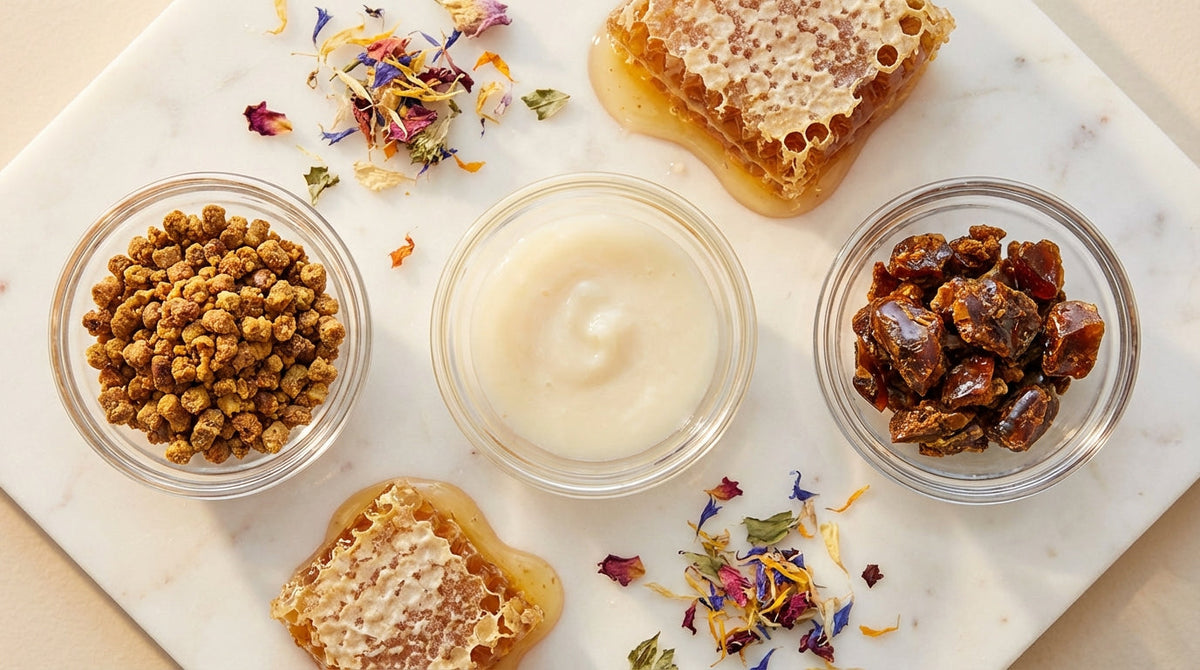
When you look at the label of a bee bread supplement, you'll typically see a short list of ingredients. But behind each one is a complex biochemistry that affects your body in distinct - and sometimes surprising - ways.
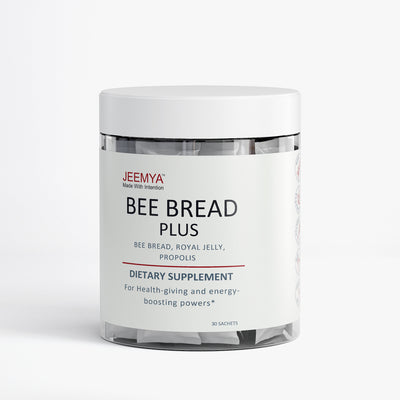
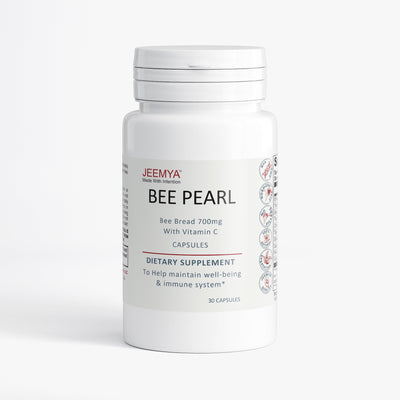
In this article, we'll break down the four key ingredients in Jeemya Bee Pearl Powder - bee bread, royal jelly, propolis, and vitamin C - and explain exactly how each one interacts with your body at the molecular level, which systems it supports, and what the current scientific research shows.
No vague "supports wellness" language. Just clear mechanisms.
Ingredient 1: Freeze-Dried Bee Bread (2,500 mg)
What It Is
Bee bread is the result of a natural fermentation process that occurs inside the hive. Worker bees collect pollen, mix it with digestive enzymes and nectar, pack it into honeycomb cells, seal it under honey and beeswax, and allow lactic acid bacteria to ferment it over approximately two weeks.
This process transforms raw pollen into a fundamentally different substance , one that's more nutrient-dense and far more bioavailable than the pollen it started as.
How It Works in the Body
Digestive System, Enhanced Nutrient Absorption The most significant difference between bee bread and raw bee pollen is bioavailability. Raw pollen has a nearly indestructible outer wall (the exine) made of sporopollenin. Your stomach acid and digestive enzymes struggle to penetrate it.
Fermentation breaks this wall open. The result: proteins are converted into free amino acids, complex sugars become simple sugars, and flavonoids and vitamins are released in forms your small intestine can absorb efficiently.
A 2022 review in Frontiers in Nutrition confirmed that the fermentation process "significantly increases the bioavailability of bioactive substances by breaking down the tough pollen shell" (Barta et al., 2022).
Cellular Defense, Antioxidant Activity Bee bread contains a diverse array of polyphenols, quercetin, kaempferol, caffeic acid, rutin, and even resveratrol. These compounds act as direct scavengers of reactive oxygen species (ROS), the unstable molecules that cause oxidative damage to cells, DNA, and proteins.
A 2024 study analyzing twelve Romanian bee bread samples identified 24 individual phenolic compounds and confirmed significant antioxidant capacity across all samples (Mărgăoan et al., 2024).
Metabolic System, Sustained Energy The combination of fermented simple sugars, B-complex vitamins (B1, B2, B3), and Coenzyme Q10 (CoQ10) in bee bread supports cellular energy production through the mitochondrial electron transport chain. Unlike caffeine or stimulants, this energy support operates at the metabolic foundation level, helping cells produce ATP more efficiently, not masking fatigue.
Immune System, Mineral-Based Support Bee bread is naturally rich in zinc, copper, iron, and manganese, all recognized cofactors for immune cell function. Zinc alone is involved in the development and function of neutrophils, natural killer cells, and T-lymphocytes.
Key Research Finding
"In vivo studies have revealed the efficiency of bee bread in relieving several pathological cases, such as hyperglycemia, hyperlipidemia, inflammation, and oxidative stress." — Antibiotics, 2022
Ingredient 2: Lyophilized Royal Jelly (500 mg)
What It Is
Royal jelly is a thick, milky-white secretion produced by the hypopharyngeal and mandibular glands of young worker bees. It's the exclusive food of the queen bee throughout her entire life, and the substance that transforms a genetically identical larva into a queen that lives 40 times longer than worker bees.
"Lyophilized" means freeze-dried, a process that preserves the bioactive compounds in royal jelly without heat degradation.
How It Works in the Body
Brain & Nervous System, Neuroplasticity Royal jelly contains 10-hydroxy-2-decenoic acid (10-HDA), a unique fatty acid not found in any other natural food source. Research published in the International Journal of Molecular Sciences (2024) has shown that 10-HDA promotes neurogenesis - the growth of new brain cells - by mimicking the effect of brain-derived neurotrophic factor (BDNF).
BDNF is the protein your brain uses to build and strengthen neural connections. It's essential for learning, memory formation, and cognitive flexibility. By stimulating similar signaling pathways, 10-HDA supports the brain's ability to form and maintain neural networks.
Skin & Connective Tissue, Collagen Synthesis 10-HDA doesn't stop at the brain. It also stimulates fibroblast activity, the cells responsible for producing collagen, the structural protein that keeps skin firm and joints flexible. Research has documented that royal jelly promotes collagen synthesis through direct fibroblast activation (Oršolić et al., 2024).
Hormonal System, Estrogen Receptor Activity 10-HDA has been found to bind to estrogen receptor beta (ER-β), exerting mild estrogen-like activity. This is particularly relevant for women approaching or in menopause, where declining estrogen levels affect bone density, skin elasticity, and mood regulation. A clinical study found that daily oral consumption of royal jelly was effective in relieving menopause symptoms (Sharif and Darsareh, 2019).
Immune System, Unique Proteins Royal jelly contains a class of glycoproteins called Major Royal Jelly Proteins (MRJPs), found exclusively in royal jelly and structurally distinct from any plant or animal protein in the typical human diet. During digestion, MRJPs are broken down into bioactive peptides that have demonstrated immunomodulatory effects, helping calibrate immune response rather than simply boosting it.
Key Research Finding
"10-HDA in Royal Jelly promotes neurogenesis by mimicking the effect of brain-derived neurotrophic factor (BDNF), supporting focus and neuroplasticity, and stimulates fibroblasts to increase collagen synthesis." — International Journal of Molecular Sciences, 2024
Ingredient 3: Propolis Extract Powder (500 mg)
What It Is
Propolis is a resinous substance that honeybees collect from tree buds, sap flows, and other botanical sources. They mix it with beeswax and enzymes, then use it to seal cracks in the hive, coat interior surfaces, and - critically - sterilize the hive environment against bacteria, fungi, and viruses.
Propolis is the hive's immune system. And the compounds responsible for that protection translate directly into effects on the human body.
How It Works in the Body
Immune System, NF-κB Pathway Modulation The most studied compound in propolis is caffeic acid phenethyl ester (CAPE). CAPE has been documented to inhibit the NF-κB signaling pathway, one of the master regulators of inflammation in the human body.
When NF-κB is chronically activated (as in persistent low-grade inflammation), it drives the production of pro-inflammatory cytokines like TNF-α, IL-1β, and IL-6. CAPE blocks this activation, effectively modulating the inflammatory response at the genetic transcription level.
A meta-analysis published in Gholami et al. (2024) confirmed that propolis supplementation significantly reduces serum IL-6, CRP, and TNF-α levels in human subjects.
Antimicrobial Defense, Direct Pathogen Action Propolis doesn't just modulate your immune system indirectly. It also acts as a direct antimicrobial agent. Research has documented its effectiveness against:
-
Gram-positive bacteria (including Staphylococcus aureus)
-
Gram-negative bacteria (including E. coli and Salmonella)
-
Fungi (including multiple Candida species)
-
Viruses (including herpes simplex)
The 2024 Romanian study found that bee bread extracts (which contain propolis compounds) demonstrated antimicrobial and antibiofilm activity against multiple clinical pathogenic strains, including first-time-documented activity against Candida krusei and Candida kefyr.
Oral Health, Biofilm Disruption Propolis has been specifically studied for oral health. Its antimicrobial compounds can restrict bacterial plaque development and periodontitis-causing pathogens, with a lower cytotoxic effect on human gum fibroblasts than chlorhexidine, the standard pharmaceutical mouthwash agent.
Cardiovascular System, Lipid & Oxidative Stress A landmark 90-day human clinical trial (Mujica et al.) demonstrated that propolis supplementation resulted in:
-
67% decrease in TBARS (a lipid peroxidation marker)
-
175% increase in reduced glutathione (GSH, the body's master antioxidant)
-
Significant increase in HDL cholesterol ("good" cholesterol)
The researchers concluded that propolis supplementation "appeared to have positive effects on oxidative status and the improvement of HDL and may thus reduce the risk of cardiovascular events."
Blood Sugar Support Multiple clinical trials have shown propolis supplementation reduces fasting blood glucose, insulin resistance (HOMA-IR), and HbA1c in patients with Type 2 diabetes. A comprehensive meta-analysis (Adeli et al., 2024) confirmed significant reductions across all glycemic indexes with propolis consumption.
Key Research Finding
"CAPE in propolis inhibits NF-κB activation, modulating the immune response by reducing pro-inflammatory cytokines." - Experimental and Therapeutic Medicine, 2015
Ingredient 4: Vitamin C (12 mg)
What It Is
L-ascorbic acid, a water-soluble essential vitamin your body cannot produce on its own.
How It Works in the Body
Antioxidant Recycling At 12 mg, the vitamin C in Jeemya Bee Pearl Powder isn't designed to replace your daily vitamin C intake. Instead, it serves a specific synergistic function: regenerating other antioxidants.
Vitamin C is the body's primary water-soluble electron donor. It recycles vitamin E (a fat-soluble antioxidant) back to its active form after it has neutralized a free radical. This creates a continuous "redox cycle", extending the effective lifespan of the antioxidants already present in bee bread and propolis.
Collagen Cofactor Vitamin C is an essential cofactor for collagen hydroxylation, the biochemical step that cross-links collagen fibers into their functional structure. Combined with royal jelly's fibroblast-stimulating 10-HDA, the vitamin C in this formula supports collagen production from two different angles: substrate preparation and cellular activation.
Iron Absorption Enhancement Vitamin C enhances non-heme iron absorption in the gut. Since bee bread is naturally rich in iron, the added vitamin C ensures optimal uptake of this mineral.
How These Ingredients Work Together: The Synergy Effect
The real power of a "whole-hive" formula isn't the sum of individual ingredients, it's the multiplicative interactions between them:
|
Synergy |
How It Works |
|---|---|
|
Antioxidant amplification |
Bee bread and propolis provide lipophilic and hydrophilic antioxidants; vitamin C regenerates them, creating a continuous redox cycle |
|
Immune calibration |
Royal jelly's MRJPs modulate immune response through hormonal signaling; propolis's CAPE modulates it through NF-κB inhibition — two distinct pathways working in concert |
|
Bioavailability enhancement |
Lactic acid metabolites in bee bread improve the solubility and absorption of the lipid-rich compounds in royal jelly and propolis |
|
Collagen production |
Royal jelly's 10-HDA activates fibroblasts; vitamin C provides the essential cofactor for collagen cross-linking |
This synergistic architecture is why Jeemya combines all three hive products rather than isolating a single compound.
Safety Profile
The overall safety profile for bee bread, royal jelly, and propolis is well-established for the general population. The primary consideration:
Allergy risk. Combining three bee-derived products means individuals with known allergies to bee stings, pollen, or other bee products should consult a healthcare provider before use. This is the single most important safety consideration.
Bee Pearl Powder is not recommended for children under 2, or for pregnant/nursing women without medical consultation.
The Bottom Line
Each ingredient in Jeemya Bee Pearl Powder targets different systems through different mechanisms:
-
Bee bread → nutrient absorption, antioxidant defense, metabolic energy, micronutrient density
-
Royal jelly → brain function, collagen synthesis, hormonal support, unique immune proteins
-
Propolis → inflammation modulation, antimicrobial defense, cardiovascular protection, blood sugar support
-
Vitamin C → antioxidant recycling, collagen cofactor, iron absorption
Together, they deliver what no single ingredient can: a broad-spectrum, multi-system nutritional support formula rooted in the natural synergy of the hive.
"The complexity of the hive, clarified for your routine."
References
-
Barta, D.G., et al. (2022). Biotechnological Processes Simulating the Natural Fermentation Process of Bee Bread and Therapeutic Properties. Frontiers in Nutrition.
-
Oršolić, N., et al. (2024). Royal Jelly: Biological Action and Health Benefits. International Journal of Molecular Sciences.
-
Armutcu, F., et al. (2015). Therapeutic potential of caffeic acid phenethyl ester and its anti-inflammatory and immunomodulatory effects. Experimental and Therapeutic Medicine.
-
Mărgăoan, R., et al. (2024). Bee Bread: A Promising Source of Bioactive Compounds. Antioxidants, 13(3), 353.
-
Bakour, M., et al. (2022). Bee Bread as a Promising Source of Bioactive Molecules. Antibiotics, 11(2), 203.
-
Pasupuleti, V.R., et al. (2017). Honey, Propolis, and Royal Jelly: A Comprehensive Review. Oxidative Medicine and Cellular Longevity.
-
Sharif, S.N. & Darsareh, F. (2019). Effect of royal jelly on menopausal symptoms. Complementary Therapies in Clinical Practice.
-
Gholami, A., et al. (2024). Meta-analysis on propolis and inflammatory mediators. Journal of Functional Foods.
-
Adeli, S., et al. (2024). Meta-analysis: propolis on glycemic indexes and liver enzymes. Phytotherapy Research.
-
Mujica, V., et al. (2017). Effect of propolis on oxidative status and lipid profile in humans. Evidence-Based Complementary and Alternative Medicine.
These statements have not been evaluated by the Food and Drug Administration. This product is not intended to diagnose, treat, cure, or prevent any disease. Always consult your healthcare provider before starting any new supplement regimen.
0 comments